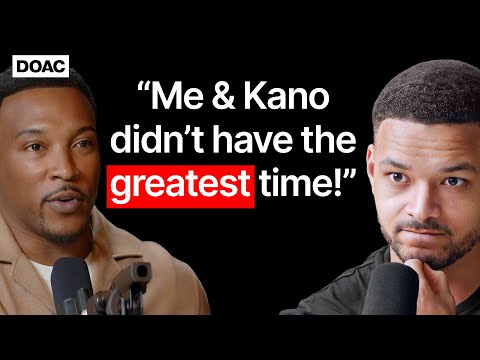
Ashley Walters: The Unheard TRUTH About Top Boy! "Me & Kano Didn't Have The Greatest Time"
Ashley Walters (guest), Steven Bartlett (host)
In this episode of The Diary of a CEO, featuring Ashley Walters and Steven Bartlett, Ashley Walters: The Unheard TRUTH About Top Boy! "Me & Kano Didn't Have The Greatest Time" explores ashley Walters Reveals Pain, Redemption And The Real Story Behind Top Boy Ashley Walters opens up about a childhood marked by an absent, alcoholic father, street role models and early fame that collided with deep anger, self‑doubt and brushes with the law. He explains how his father’s death in 2005 shattered his spiritual compass, fuelled years of ego, infidelity and self‑destruction, and still affects him today because he never truly grieved. Walters connects these wounds to his drive, perfectionism and success in both music (So Solid Crew) and acting, culminating in his career‑defining role as Dushane in Top Boy.
Ashley Walters Reveals Pain, Redemption And The Real Story Behind Top Boy
Ashley Walters opens up about a childhood marked by an absent, alcoholic father, street role models and early fame that collided with deep anger, self‑doubt and brushes with the law. He explains how his father’s death in 2005 shattered his spiritual compass, fuelled years of ego, infidelity and self‑destruction, and still affects him today because he never truly grieved. Walters connects these wounds to his drive, perfectionism and success in both music (So Solid Crew) and acting, culminating in his career‑defining role as Dushane in Top Boy.
He reflects on rebuilding himself through therapy, fatherhood, and a long‑term relationship that forces him to learn emotional communication he never saw growing up. Walters also details the creative battles behind the final season of Top Boy, the responsibility he and Kano feel to represent their community truthfully, and how the show has shifted global perceptions of Black British life.
Throughout, he wrestles with forgiveness—of his father, of himself, and of others—while emphasizing preparation, people skills, and integrity as the real engines of his longevity, more than any vague notion of “talent.”
Key Takeaways
Unresolved childhood abandonment can quietly dictate adult self‑worth and behaviour.
Walters links his father’s absence and chaotic appearances to a lifelong belief that he’s “not good enough,” driving anger, people‑pleasing and an obsession that he’d die young. ...
Get the full analysis with uListen AI
If you don’t consciously choose role models, you’ll unconsciously copy whoever’s closest.
In the vacuum left by his father, Walters gravitated to local dealers and “bad boys” who became substitute dads. ...
Get the full analysis with uListen AI
Avoided grief and trauma will resurface as ego, recklessness and relationship damage.
After his father died while he was filming Get Rich or Die Tryin’, Walters flew back for the funeral for one day and immediately returned to set, never really grieving. ...
Get the full analysis with uListen AI
Your inner voice can be your worst adviser; outsource big decisions.
Walters describes the voice in his head as “a mug” and “very vengeful,” responsible for some of his worst decisions when driven by anger, fear or jealousy. ...
Get the full analysis with uListen AI
People skills and integrity create ‘invisible PR’ that sustains a long career.
Walters credits his longevity less to raw talent and more to how he treats people: being humble off‑camera, accessible to his community, and genuinely helpful to others. ...
Get the full analysis with uListen AI
Push back creatively, even if you don’t always ‘win’—the fight improves the work.
Discussing the final Top Boy season, Walters reveals he and Kano “didn’t have the greatest time” because they were constantly fighting for script integrity, character truth and respectful representation, often against significant executive resistance. ...
Get the full analysis with uListen AI
You can’t copy someone else’s journey—but you can use your own fully.
When mentoring acting students at his Kingdom academy, Walters warns them they can’t have his path unless they literally want his prison stint, his father’s death and his traumas. ...
Get the full analysis with uListen AI
Notable Quotes
“I was obsessed with the fact that I was gonna die young.”
— Ashley Walters
“I wanted to hurt people the way I was hurt.”
— Ashley Walters
“The voice in my head is a mug… he’s made me make some terrible decisions.”
— Ashley Walters
“Hurt people hurt people. If you can forgive, you’re doing yourself a great favor.”
— Ashley Walters
“People don’t understand, we go hard for that show… and we faced a lot of resistance.”
— Ashley Walters
Questions Answered in This Episode
You said you’re still ‘paying the price’ for the reckless years after your dad’s death—what specific consequences are you dealing with today that people wouldn’t see from the outside?
Ashley Walters opens up about a childhood marked by an absent, alcoholic father, street role models and early fame that collided with deep anger, self‑doubt and brushes with the law. ...
Get the full analysis with uListen AI
If you do eventually get those tapes of your father back, how do you imagine watching them will change the way you parent your sons or relate to your older children?
He reflects on rebuilding himself through therapy, fatherhood, and a long‑term relationship that forces him to learn emotional communication he never saw growing up. ...
Get the full analysis with uListen AI
You and Kano fought hard against executive pressure on the final Top Boy season—can you give a concrete example of a story beat or character decision you pushed to change, and how it would have been different if you’d lost that fight?
Throughout, he wrestles with forgiveness—of his father, of himself, and of others—while emphasizing preparation, people skills, and integrity as the real engines of his longevity, more than any vague notion of “talent.”
Get the full analysis with uListen AI
In Kingdom, when a student clearly has trauma but wants to use it for their craft, how do you draw the line between healthy emotional mining and re‑traumatising themselves for a performance?
Get the full analysis with uListen AI
You’ve said you wouldn’t erase your dad’s death or your prison time because it might erase your children—how do you balance accepting that past with not letting it become an excuse for patterns (distance, work‑as‑self‑worth) you know you still need to change?
Get the full analysis with uListen AI
Transcript Preview
I was obsessed with the fact that I was gonna die young. (gun shots) I wanted to hurt people the way I was hurt. Some of the things that go through my head scare me. National Award! Artist. I've got 21 seconds to go. Actor. Here we go. Top Boy's in the building. Growing up, had a lot of trauma and it made me angry with the world. My dad was in prison most of my childhood. The local bad boys, they became dads to me and I started to follow in their footsteps. I'm still paying the price for those years now. But once I get in front of a camera, it's not that Ashley anymore. Top Boy. Top Boy. Top Boy. The greatest show that's ever come out of the UK. Light him up. (gun shots) It was crazy. You know, it changed my life. But filming the last season, me and Kane, we didn't have the greatest time. People don't understand, we go hard for that show. We go hard to make sure characters are being represented in the way they should be and we face a lot of resistance. How? The truth is ...
2005, you had rekindled your relationship with your father.
Yeah. And then he died, man. I never realized it would affect me that much. (heartbeat thumping) Took me to some dark places. Making decisions that were gonna come back to haunt me, you know. Um ... Yeah, man. I wanna break down now just talking about it. (instrumental music plays)
Ashley, I've got an interesting observation that I wanted to start with.
Yeah.
I ... The way you speak, the way you've been chatting to me before we started rolling, it almost reminds me of someone who has had a bit of therapy. Or has done some work on understanding the f- unobvious subconscious forces that are at play in their life.
Mm-hmm.
And what you've had to delve into, because I think as I- this is often the case with this podcast, I think our, like, earliest context shapes us in a profound way and is something that's quite hard to un-shape ourselves with, undo as we become adults. So, what is that early context that you've, um, you've had to reflect on to understand yourself?
Ah, man. So where do I start? (laughs) Um, so much. I mean, look, I- I- I s- first of all, I've had a lot of therapy, right? So I've been in a lot of situations where I've been counseled, you know, I've- I've, um, sought help, um, because I needed it, right? Um, had a lot of trauma I guess that- that has kind of stuck with me over my life and think one of the biggest things for me was, um, my dad, really. That's where I stem back to, like, growing up, um, just not having a father figure around, um, and the places that pushed me to. And don't get me wrong, like, a lot of people have gone through that and come out the other side and not been like me, but I dealt with it in, like, a really crazy sort of way, you know? It made me angry. Made me angry with the world. So all throughout my, you know, my So Solid years and my early kind of acting years, um, my attitude towards life and towards other people was very ... I mean, it was wrong, you know? It was quite negative. And I wanted to hurt people the way I was hurt. And sometimes I did, you know? Sometimes I did. It came out in a lot of different ways. Some of the people I cared about, some of the people who were close to me, and some people I didn't know. Random people, but got me into a lot of trouble with the police. Yeah, you know, I just didn't care about myself as a teen growing up. So ... And, look, I had some amazing supportive people around me, like my mum is amazing and I've got an amazing family, but that one niggling thing of kind of being slightly lost about what a man is, um, not feeling like I fit in rooms with other men, you know, ra- in groups of people and stuff like that. Just, like, having this niggling doubt about myself all the time, um, made me quite a difficult person to be around, um, growing up and t- trying to explore that. So yeah, when I ... And I didn't know it was that's why at the time. I didn't know it had anything to do with, you know, not having my dad around. Like my dad, when he was around, you know, he was in prison most of my- my childhood growing up. That was like France. He used to say he was in France. So to me and my younger brothers, like, anytime, you know, my mum would be like, "He's in France." Or someone would say he's in France or whatever, that was like code for prison. Didn't know it at the time. It was something I learned later on. But it was, he was in France a lot of times, so (laughs) you know what I mean? It was like ... Um, so there was a few phone conversations and stuff like that with him, but never had him there and then when he would turn up, he would just turn up randomly at my- at my house and stuff. And one thing I always remember is that I always wanted to go with him, right? Because he was a superhero to me. You know, I didn't care as much as the other adults cared about the fact that he was, you know, in and out of my life and what damage that was doing to me and stuff like that. I was just like, "I wanna see my dad. Everyone else has got a dad. Why haven't I got a dad?" You know? "I wanna know my dad." So ... My mum would- I- I gotta give my mum a lot of credit because she would never badmouth him in front of me even though I know that she wanted to, and she would always give me the option. So any time he would come, she was like, "Would you like to go?"And I would obviously go, and then I'd come back crying because something had happened, you know. Like one of the... You know, my dad drank a lot. I remember one time he took me to a party, it was like a family party, it was, like, after a christening or something like that. Um, and he was... He got so drunk and they threw him out. You know, he had a fight with someone in the party and he was... He got thrown out. And I remember having to, like, I, you know... I'm maybe, like, 10, 11 tops, having to carry him home (laughs) literally down the street. Like, carry this guy home, um, to, to my gran's, to his mum's. You know, being chased by the police in the car, you know. Him pushing my head down in the back. I just remember that image of him going like, "Look, keep your head down," (laughs) and stuff like that, and he was getting chased by police. And I laugh about it now. It's more an uneasy laugh that's happening.
Install uListen to search the full transcript and get AI-powered insights
Get Full TranscriptGet more from every podcast
AI summaries, searchable transcripts, and fact-checking. Free forever.
Add to Chrome