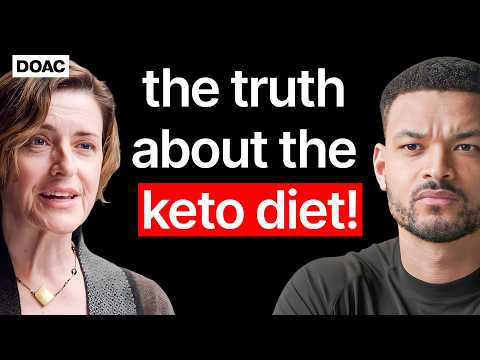
The Keto Psychiatrist: What Keto Is Really Doing To Your Body! Can It Cure 43% Of Mental Illness?
Dr. Georgia Ede (guest), Steven Bartlett (host), Narrator, Narrator
In this episode of The Diary of a CEO, featuring Dr. Georgia Ede and Steven Bartlett, The Keto Psychiatrist: What Keto Is Really Doing To Your Body! Can It Cure 43% Of Mental Illness? explores keto Psychiatry: How Ketosis May Transform Mood, Anxiety, And ADHD Harvard-trained psychiatrist Dr. Georgia Ede explains how nutrition—especially low‑carb and ketogenic diets—can rapidly and dramatically impact mental health by targeting brain energy metabolism, inflammation, and insulin resistance.
Keto Psychiatry: How Ketosis May Transform Mood, Anxiety, And ADHD
Harvard-trained psychiatrist Dr. Georgia Ede explains how nutrition—especially low‑carb and ketogenic diets—can rapidly and dramatically impact mental health by targeting brain energy metabolism, inflammation, and insulin resistance.
She describes a French inpatient study where a mildly ketogenic whole-food diet led to clinical remission in 43% of patients with chronic, treatment‑resistant bipolar disorder, depression, or schizophrenia, and reduced psychiatric medications in 64%.
Ede outlines three universal nutrition principles for brain health—nourish, protect, energize—and argues that most mainstream dietary advice fails these principles, leaving people metabolically unwell and mentally vulnerable.
She also explores personalization (not everyone needs strict keto), discusses early work on ADHD and diet, demystifies carnivore and fiber, and emphasizes the psychological and practical challenges of sustaining dietary change in real life.
Key Takeaways
Mental health is tightly linked to metabolism—especially inflammation, oxidative stress, and insulin resistance.
Ede argues that the primary drivers of many mental illnesses are not mysterious ‘chemical imbalances’ but chronic brain inflammation, oxidative stress, and impaired energy metabolism driven by insulin resistance. ...
Get the full analysis with uListen AI
Ketogenic diets can produce rapid, clinically significant improvements in severe, treatment‑resistant mental illness.
In a French inpatient retrospective study of 31 adults with long‑standing bipolar disorder, major depression, or schizophrenia (average illness duration ~10 years, ~5 psych meds each), a mildly ketogenic whole‑foods diet led to improvements in all 28 who stayed on the diet for at least 2 weeks. ...
Get the full analysis with uListen AI
Three universal principles for a brain‑healthy diet: nourish, protect, energize.
Nourish: provide all essential nutrients in bioavailable form; Ede maintains this cannot be reliably done long‑term without some animal foods (e. ...
Get the full analysis with uListen AI
Keto is not one rigid food list; ketosis is a metabolic state that can be reached in different ways.
Technically, a ketogenic diet is any way of eating that lowers insulin enough to turn on significant fat‑burning and generate ketones (β‑hydroxybutyrate ≥ 0. ...
Get the full analysis with uListen AI
Sustainability hinges on appetite and emotion, not willpower alone—and ketosis often stabilizes appetite dramatically.
Ede notes that in ketosis many people spontaneously stop thinking about food constantly, can comfortably skip meals, and experience fewer cravings because glucose and insulin are stable and appetite hormones calm down. ...
Get the full analysis with uListen AI
Some psychiatric symptoms may be highly food‑responsive, as shown in ADHD and individual case studies.
Older European ‘few‑foods’ trials in children with ADHD (simple low‑allergen whole‑foods diets of meat, some fruits, and vegetables) reported 62–82% response rates and up to ~70% apparent “cure” rates in weeks, suggesting diet can be a primary driver in a subset. ...
Get the full analysis with uListen AI
Carnivore and low‑fiber diets challenge common nutrition dogma but can be therapeutic for select people.
Ede states that meat, seafood, and poultry contain all essential nutrients, whereas no single plant food does. ...
Get the full analysis with uListen AI
Notable Quotes
“Most people will experience tremendous reductions in anxiety within three days to three weeks of starting a ketogenic diet.”
— Dr. Georgia Ede
“We now understand that the real drivers of mental health conditions are inflammation of the brain, oxidative stress, and insulin resistance or prediabetes.”
— Dr. Georgia Ede
“The ketogenic diet energizes the brain differently… it fundamentally changes the brain’s operating system.”
— Dr. Georgia Ede
“They can help you in ways no medicine can… if you have the right information about how to change your diet.”
— Dr. Georgia Ede
“If you cannot burn fat if your insulin levels are too high. When you turn down insulin, you will burn fat.”
— Dr. Georgia Ede
Questions Answered in This Episode
In the Toulouse inpatient study, what specific dietary composition and ketone levels were typical for the 43% who achieved full remission, and did their diagnoses (bipolar vs. schizophrenia vs. depression) respond differently?
Harvard-trained psychiatrist Dr. ...
Get the full analysis with uListen AI
For someone with moderate insulin resistance but severe anxiety, how would you practically phase from a standard Western diet into ketosis over 4–6 weeks to minimize keto flu and psychological destabilization?
She describes a French inpatient study where a mildly ketogenic whole-food diet led to clinical remission in 43% of patients with chronic, treatment‑resistant bipolar disorder, depression, or schizophrenia, and reduced psychiatric medications in 64%.
Get the full analysis with uListen AI
Given the strong ADHD responses in historical ‘few‑foods’ trials, what do you see as the main scientific or political reasons that guidelines still downplay diet in ADHD treatment?
Ede outlines three universal nutrition principles for brain health—nourish, protect, energize—and argues that most mainstream dietary advice fails these principles, leaving people metabolically unwell and mentally vulnerable.
Get the full analysis with uListen AI
Where do you currently draw the line between ‘therapeutic but safe’ carnivore or very‑low‑fiber diets and situations where you would actively discourage them or insist on added plant foods?
She also explores personalization (not everyone needs strict keto), discusses early work on ADHD and diet, demystifies carnivore and fiber, and emphasizes the psychological and practical challenges of sustaining dietary change in real life.
Get the full analysis with uListen AI
If a person on psychiatric medications wants to trial keto but has limited access to specialist care, what are the critical safety steps (labs, monitoring, dose changes) they and their primary doctor should prioritize in the first month?
Get the full analysis with uListen AI
Transcript Preview
Most people will experience tremendous reductions in anxiety within three days to three weeks of starting a ketogenic diet. In fact, we did a study where patients with bipolar disorder, major depression, or schizophrenia tried the ketogenic diet and 43% achieved clinical remission from their chronic mental illness, and 64% of them left on less psychiatric medication 'cause it improves the balance of chemicals in the brain. But the question is, what's causing those chemical imbalances in the first place? And so, let's start there.
Dr. Georgia Ede is a Harvard-trained psychiatrist...
... who specializes in nutritional science and mental health. She was one of the first psychiatrists to offer nutrition-based approaches as an alternative to psychiatric medications to optimize brain function and enhance performance.
People need to know how powerful nutrition strategies can be for the brain, because if you're feeding it the wrong way, things will go wrong, and that's exactly what happened to me. My health was declining in my early 40s in ways that was true for a lot of my patients, chronic fatigue and IBS, being really anxious and depressed. And so, I did all kinds of tests and they said, "There's nothing wrong." Of course there was something wrong. And so I instinctively started experimenting with my diet, and the diet that I ended up on was backwards from what we're told is healthy for us. It should theoretically kill me, but it resolved every single one of my symptoms. And so I studied for years learning things about food that most people don't know and which foods contain the nutrients the brain needs or the ingredients that damage the brain, and found three principles of nutrition. They can help you in ways no medicine can, as well as improved mood, memory, concentration, stamina, productivity. So, let's unpack that.
This has always blown my mind a little bit. 53% of you that listen to this show regularly haven't yet subscribed to this show. So, could I ask you for a favor before we start? If you like this show and you like what we do here and you wanna support us, the free, simple way that you can do just that is by hitting the subscribe button. And my commitment to you is if you do that, then I'll do everything in my power, me and my team, to make sure that this show is better for you every single week. We'll listen to your feedback, we'll find the guests that you want me to speak to, and we'll continue to do what we do. Thank you so much. Dr. Georgia Ede, how would you define wha- what it is you do?
I'm a psychiatrist specializing in nutritional and metabolic psychiatry, so how food affects the brain, and how food affects brain metabolism, and how brain metabolism affects our mental health.
This is a fairly new phrase, metabolic psychiatry. Am I right in thinking that?
Yes. It's a really, it's a very new field and really exciting field. Uh, the, the term itself was coined by Dr. Shebani Sethi, who's a metabolic psychiatrist at Stanford University, eh, maybe five years ago or so, maybe a little longer than that. So it's a very, very new field. It's even newer than the other exciting new field in psychiatry which is nutritional psychiatry.
Install uListen to search the full transcript and get AI-powered insights
Get Full TranscriptGet more from every podcast
AI summaries, searchable transcripts, and fact-checking. Free forever.
Add to Chrome