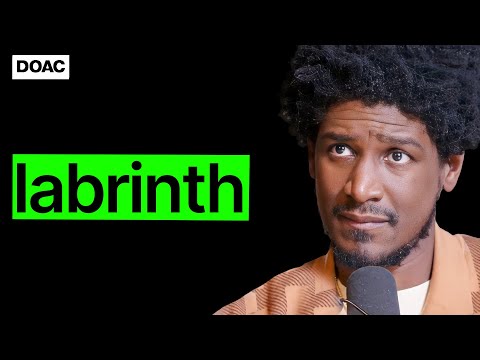
Labrinth: The Musical Genius Behind Euphoria!
Labrinth (guest), Steven Bartlett (host)
In this episode of The Diary of a CEO, featuring Labrinth and Steven Bartlett, Labrinth: The Musical Genius Behind Euphoria! explores labrinth On Fame, Trauma, Euphoria And Finding His True Voice Labrinth traces his journey from a chaotic, ultra‑religious, musical household in Hackney to global success, revealing how childhood trauma, ADHD, and people‑pleasing shaped his art and nearly broke him. He explains how early industry success with Syco, image‑crafting, and external expectations pulled him away from his authentic sound, triggering panic attacks, rage, social anxiety, and physical burnout.
Labrinth On Fame, Trauma, Euphoria And Finding His True Voice
Labrinth traces his journey from a chaotic, ultra‑religious, musical household in Hackney to global success, revealing how childhood trauma, ADHD, and people‑pleasing shaped his art and nearly broke him. He explains how early industry success with Syco, image‑crafting, and external expectations pulled him away from his authentic sound, triggering panic attacks, rage, social anxiety, and physical burnout.
A turning point came when he smashed a guitar on stage, almost injuring a camerawoman, which forced him to confront suppressed anger, a collapsing relationship with his manager, and the cost of living a life built on others’ approval. Therapy, his wife’s support, and the creative freedom of projects like HBO’s Euphoria and his LSD collaboration helped him rebuild around truth rather than validation.
He describes creativity as “articulating your soul,” talks candidly about ADHD’s impact on his relationships and career, and reframes success as becoming a clear ‘tap’ for universal creativity rather than chasing hits. Looking ahead, Labrinth wants to make a “cosmic opera” and keep “cleaning the window” of his psyche so his work stays honest, even if it means burning down expectations.
Key Takeaways
Early environments wire both your gifts and your wounds.
Labrinth’s childhood was dominated by church, strict religiosity, and a huge, intensely musical family. ...
Get the full analysis with uListen AI
People‑pleasing will build you a successful life you secretly hate.
He admits he never truly asked what he wanted; he “accommodated what everyone else wanted” — managers, labels, audiences. ...
Get the full analysis with uListen AI
Unaddressed trauma and ADHD can sabotage relationships and career execution.
Diagnosed with ADHD later, he recognized lifelong patterns: blackouts in conversations, inability to finish projects, forgetting to reply or deliver work, even when huge artists wanted albums from him. ...
Get the full analysis with uListen AI
Suppressed anger in ‘nice’ people often explodes dangerously.
He describes being a chronic people‑pleaser who one night snapped on stage: furious at his manager, feeling trapped performing for an audience he didn’t resonate with, and triggered by one disapproving fan, he hurled a guitar in the air, nearly killing a camerawoman. ...
Get the full analysis with uListen AI
Authenticity requires accepting that your ‘true’ work may not be as commercially rewarded.
He’s blunt that when artists finally make the project that means everything to them, they often expect the same numbers: “You did it for you, just do it for you… you got ten views on this one. ...
Get the full analysis with uListen AI
The right relationships can literally save your life and art.
Labrinth credits his wife as pivotal: she saw manipulative business practices, set boundaries, was vilified as ‘the problem’ by his team, and still pushed him toward therapy, coaching, and psychological tools. ...
Get the full analysis with uListen AI
Redefining success as ‘cleaning the window’ unlocks creative freedom.
His current mission is to be a clear ‘tap’ or kaleidoscope for a larger creative source — to clean the psychological ‘window’ (fear, ego, validation‑seeking) so creativity can pass through undistorted. ...
Get the full analysis with uListen AI
Notable Quotes
“In the music industry, it’s like a bunch of kids trying to get a pat on the back. That’s what we’re all doing.”
— Labrinth
“I didn’t ask myself what I wanted because I was always accommodating what everyone else wanted.”
— Labrinth
“Being you is for you, and you have to accept the consequences of being you.”
— Labrinth
“I was at a place where I couldn’t actually talk to people ’cause I had social anxiety… I felt suppressed.”
— Labrinth
“I just want to be a tap for the universe… to clean my window so the light can shine through as purely as possible.”
— Labrinth
Questions Answered in This Episode
You described Euphoria as the first time people heard your ‘hard drive’ in its rawest form. Creatively and technically, what are the biggest differences between those Euphoria pieces and the songs you made during the Syco era?
Labrinth traces his journey from a chaotic, ultra‑religious, musical household in Hackney to global success, revealing how childhood trauma, ADHD, and people‑pleasing shaped his art and nearly broke him. ...
Get the full analysis with uListen AI
When you almost hit the camerawoman with your guitar, what specific internal beliefs or stories about yourself did you have to dismantle afterwards to make sure you never got that close to the edge again?
A turning point came when he smashed a guitar on stage, almost injuring a camerawoman, which forced him to confront suppressed anger, a collapsing relationship with his manager, and the cost of living a life built on others’ approval. ...
Get the full analysis with uListen AI
You’re very honest that the ‘authentic’ work might get ten views. If a young artist came to you with a label offer that guaranteed hits but diluted their sound, how would you help them decide whether to take it or walk away?
He describes creativity as “articulating your soul,” talks candidly about ADHD’s impact on his relationships and career, and reframes success as becoming a clear ‘tap’ for universal creativity rather than chasing hits. ...
Get the full analysis with uListen AI
You say you want to make a ‘cosmic opera’ and do things with choirs no one’s done before. Can you share a concrete example of a sonic or structural idea from that project that you think would feel genuinely new to listeners?
Get the full analysis with uListen AI
You frame success now as ‘cleaning the window’ and being a tap for the universe. What practical daily habits or boundaries have you put in place—around social media, money, touring, or collaborators—to keep that window from getting dirty again?
Get the full analysis with uListen AI
Transcript Preview
My tour manager came back stage and he was like, "You know you almost killed someone today." Like, literally it's like blackouts. (dramatic music) Labyrinth, come in. (energetic music) We can make an earthquake up in here. Let's build it. I signed to Simon Cowell because my manager at the time was like, "It's a bigger check. You're in a label that is gonna prioritize you 'cause you're not like anything on their label." This business comes around it and it says, "We can turn this into money," but allowed someone else to tell me what my next direction is. Yeah. Everyone was like, "Be a star, have an entourage, and who you gonna go out with?" And I was like, "What do you mean?" "Oh, maybe Cher Lloyd." And I was like, "What? (laughs) None of this shit means anything to me." I just was like, "I'm not enjoying this." I didn't ask myself what I wanted because I was always accommodating what everyone else wanted.
When did you realize that something had to change?
Well, that's a deep one now. (dramatic music) I was at a place where I couldn't actually talk to people 'cause I had social anxiety. My manager was being weird. Our relationship was breaking down. I had no confidence. I felt suppressed. (energetic music) I got, like, diagnosed with ADHD. When I read about what it's like, I was like, "Oh, shit, that makes sense." I can't even hold a conversation with someone.
Was it prohibiting your life?
Yeah, 100%. Still does today, but I've learned to be aware of it. Let's just do something. Just let it go. Euphoria was the first time I felt people actually heard the rawest form of Lab. Getting to that point was true freedom.
What are your goals now?
The most important thing in my career is to- (music stops)
Before this episode starts, I have a small favor to ask from you. Two months ago, 74% of people that watch this channel didn't subscribe. We're now down to 69%. My goal is 50%, so if you've ever liked any of the videos we've posted, if you like this channel, can you do me a quick favor and hit the subscribe button? It helps this channel more than you know, and the bigger the channel gets, as you've seen, the bigger the guests get. Thank you, and enjoy this episode. (upbeat music) Lab, if this podcast has taught me one thing, it's that we're all created by, and defined and shaped and molded by our earliest context. So when you think about your earliest context and how that shaped who you are today, and the person you went on to be, I'm talking about the, like, deep characteristics you have, the deep passions you have, and all those things that were nurtured in those earliest years. What is your early context? What do I need to know about that context to understand you?
Install uListen to search the full transcript and get AI-powered insights
Get Full TranscriptGet more from every podcast
AI summaries, searchable transcripts, and fact-checking. Free forever.
Add to Chrome