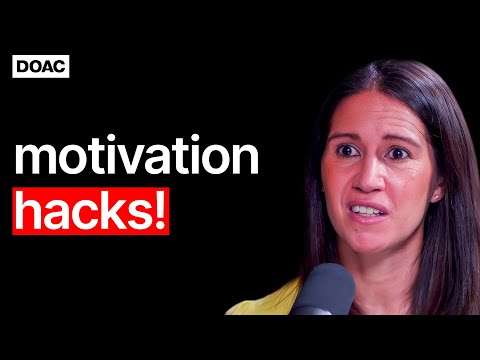
I Won 11 World Titles Because They Said I Couldn't: Anna Hemmings MBE | E65
Anna Hemmings (guest), Steven Bartlett (host), Narrator
In this episode of The Diary of a CEO, featuring Anna Hemmings and Steven Bartlett, I Won 11 World Titles Because They Said I Couldn't: Anna Hemmings MBE | E65 explores world Champion Kayaker Reveals Mindset That Beat Doubt, Illness, Limits Anna Hemmings, an 11-time World and European kayaking champion and two-time Olympian, unpacks the mental skills and environments that enabled her success despite being repeatedly told she was the “wrong” size and later being crippled by chronic fatigue syndrome.
World Champion Kayaker Reveals Mindset That Beat Doubt, Illness, Limits
Anna Hemmings, an 11-time World and European kayaking champion and two-time Olympian, unpacks the mental skills and environments that enabled her success despite being repeatedly told she was the “wrong” size and later being crippled by chronic fatigue syndrome.
She explains how belief, intrinsic motivation, and deliberate mental training (sports psychology, growth mindset, visualization) often separate winners from equally talented competitors.
The conversation dives into team dynamics, healthy conflict, vulnerability-based trust, and the dangers of self-limiting labels and identities in both sport and business.
Anna also describes how ignoring emotional needs and isolation contributed to her illness, and how reconnecting, expressing emotion, and changing her environment allowed her to return and win more world titles before moving into coaching and leadership development.
Key Takeaways
Environment and role models quietly expand or cap your sense of possibility.
Anna’s early club was explicitly focused on producing Olympians and world champions, and she trained alongside athletes going to Seoul and Barcelona. ...
Get the full analysis with uListen AI
External doubt can fuel performance if you convert it into targeted action.
A national coach told Anna she was too small and not strong enough to become a great kayaker, especially in team boats. ...
Get the full analysis with uListen AI
Confidence rests more on how you use your “mental bank” than on objective success.
We all carry a bank of past experiences. ...
Get the full analysis with uListen AI
Healthy conflict in teams depends on prior vulnerability-based trust.
You only get honest debate and challenge when people believe they won’t be punished or ridiculed for disagreeing. ...
Get the full analysis with uListen AI
Labels and narrow identities quietly limit growth and career possibilities.
Anna long self-identified as “an athlete, not a business person,” even while successfully running a company for over a decade; Steven identified as a “social media CEO. ...
Get the full analysis with uListen AI
Intrinsic motivation differs person to person and is far more sustainable than extrinsic rewards.
On bleak winter mornings, what got Anna to train wasn’t “Olympics in four years” but nearer-term drivers: hitting monthly performance targets (achievement), training with teammates (affiliation), or getting recognition for effort. ...
Get the full analysis with uListen AI
Ignoring emotional needs and social connection can somatize into serious physical illness.
Anna’s chronic fatigue syndrome left her unable to paddle slowly for 10 minutes or hold her arms up to wash her hair, despite “looking fit” and having normal blood tests. ...
Get the full analysis with uListen AI
Notable Quotes
“Most of the time, we are the ones that get in our own way.”
— Anna Hemmings
“We can only be truly great at what we do if we believe without doubt that the future is bright.”
— Anna Hemmings
“Just because they’re big doesn’t mean they’re going to be more valuable in that boat than me.”
— Anna Hemmings
“If we go through life only assessing our success on the tangible stuff, then our self-belief will be quite fragile.”
— Anna Hemmings
“The summit looks scary, but one meter doesn’t look scary.”
— Anna Hemmings
Questions Answered in This Episode
When that GB coach told you at 12 you’d never be big or strong enough, was there a specific moment or conversation afterward where you consciously decided, “I’m going to prove you wrong,” or did that resolve build gradually?
Anna Hemmings, an 11-time World and European kayaking champion and two-time Olympian, unpacks the mental skills and environments that enabled her success despite being repeatedly told she was the “wrong” size and later being crippled by chronic fatigue syndrome.
Get the full analysis with uListen AI
In reverse therapy you identified specific ‘triggers’ for your chronic fatigue; can you walk through, in detail, one day where you realized a particular situation or relationship was directly worsening your symptoms—and how you changed it?
She explains how belief, intrinsic motivation, and deliberate mental training (sports psychology, growth mindset, visualization) often separate winners from equally talented competitors.
Get the full analysis with uListen AI
You argued that leaders must believe the future is bright to perform at their best; how do you advise a CEO who genuinely doesn’t see a viable path forward but has hundreds of employees relying on them?
The conversation dives into team dynamics, healthy conflict, vulnerability-based trust, and the dangers of self-limiting labels and identities in both sport and business.
Get the full analysis with uListen AI
For someone who has always relied on external achievements (grades, promotions, medals) for self-worth, what is the first practical step you’d prescribe to shift toward the more “intangible” strengths-based confidence you described?
Anna also describes how ignoring emotional needs and isolation contributed to her illness, and how reconnecting, expressing emotion, and changing her environment allowed her to return and win more world titles before moving into coaching and leadership development.
Get the full analysis with uListen AI
Looking back, do you think the culture and structures of elite sport make illnesses like chronic fatigue more likely, and if so, what specific changes would you mandate in national programs to protect athletes’ mental and physical health without sacrificing performance?
Get the full analysis with uListen AI
Transcript Preview
All of that stuff prevents us from being at our best. We can only be truly great at what we do if we believe without doubt that-
(Instrumental music) My guest today is an 11-time European world champion in her field, Anna Hemmings. She has a remarkable story. Not only is she this incredible elite athlete, not only did she get to the Olympics twice, but she's undergone some of the most inc- incredible mind-bending adversity to get there. She's now a coach, she's now an entrepreneur, she's now an incredible businesswoman, and she has a remarkable story to tell. She's also a mother, and a wife, and all of these things. And she's, she's really incredibly self-analytical and self-aware, and as her journey unfolded, and as she rose to the top of her career, she got news which all athletes must consider to be the worst news in the world. I'm so excited for you to listen to this conversation. You're gonna get a tremendous amount of value. And I, I'll be honest, as a host, you ask the questions, but in this conversation, I had more realizations than pretty much any conversation I've had with a guest before. Without further ado. You can see I'm excited. My name is Steven Bartlett, and this is the Diary of a CEO. I hope nobody is listening, but if you are, then please keep this to yourself. (Instrumental music) Kayaking. It's, um, it's not the s- the type of sport that a child would typically dream of getting into, so I guess my first question to you is, you became a world champion in kayaking, you reached the very sort of peak of your, your, your career in that sport. How did you get into kayaking?
Yeah, you're absolutely right-
Yeah.
... it wasn't something I was going, "Mom, Mom, please take me kayaking."
Yeah.
Um, I did lots of different sports as a child and I've loved sport. My mom was always trying to get my brother and I ... Uh, partly because we enjoyed sport, but sometimes just, you know, summer holidays, going to a week of tennis camp, to a week of basketball-
Mm-hmm.
... a week of this, and it was just something that we tried. I loved being on the river. You know, the, the Thames in the summer is gorgeous, right? You know.
Mm-hmm.
It's pretty miserable right now, um, but in the summer, it's lovely. But also the club was competitive. It was, it was Elmbridge Canoe Club, and it was probably one of the best clubs in the country at the time, so this is late '80s, and, and they were all about racing. They were all about competing, they were all about, you know, working your way up to the national championships, getting on the Great Britain team, going to the world championships, making the Olympics. That was their mission.
Mm-hmm.
Install uListen to search the full transcript and get AI-powered insights
Get Full TranscriptGet more from every podcast
AI summaries, searchable transcripts, and fact-checking. Free forever.
Add to Chrome