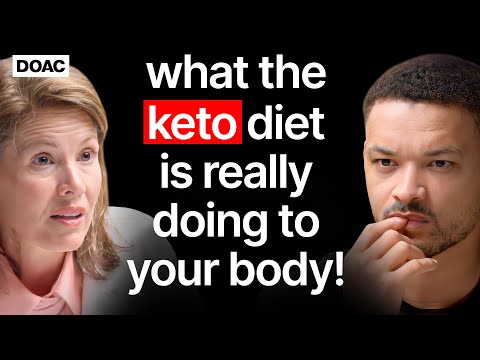
Insulin Doctor: This Is The First Sign Of Dementia! The Shocking Link Between Keto & Brain Decline!
Dr. Annette Bosworth (guest), Steven Bartlett (host)
In this episode of The Diary of a CEO, featuring Dr. Annette Bosworth and Steven Bartlett, Insulin Doctor: This Is The First Sign Of Dementia! The Shocking Link Between Keto & Brain Decline! explores doctor Reveals Ketosis, Insulin, Sardines And The First Dementia Sign Dr. Annette Bosworth (“Dr. Boz”), an internist and insulin‑resistance specialist, argues that chronically high insulin is the hidden driver behind obesity, brain fog, depression, dementia, cancer and many other chronic diseases.
Doctor Reveals Ketosis, Insulin, Sardines And The First Dementia Sign
Dr. Annette Bosworth (“Dr. Boz”), an internist and insulin‑resistance specialist, argues that chronically high insulin is the hidden driver behind obesity, brain fog, depression, dementia, cancer and many other chronic diseases.
She contends that regularly entering nutritional ketosis—via very low‑carb, high‑fat eating and structured fasting—“takes out the trash” in the body and brain, improving cognition, mood, energy, sleep, pain, and even chemotherapy tolerance.
The conversation covers how to measure and lower insulin, the practical steps of her 12‑stage ‘Keto Continuum’, the controversial ‘sardine challenge’, exogenous ketones, supplements like creatine and methylene blue, and real‑world cases from Alzheimer’s to cancer and Down syndrome.
Bosworth also shares her own struggles with obesity, a political prosecution that nearly sent her to prison, and how discipline, faith, and a clear ‘why’ underpin long‑term adherence to ketogenic living.
Key Takeaways
Chronically high insulin quietly drives many modern diseases long before blood sugar looks abnormal.
Bosworth explains that most patients are “making buckets of insulin” for years due to late‑night eating, frequent snacking, high‑carb processed foods, and constant grazing. ...
Get the full analysis with uListen AI
You cannot meaningfully burn fat or make ketones until liver glycogen and insulin fall, which often takes longer than people expect.
Glucose is stored as glycogen; as long as glycogen stores are available and insulin remains high, the body will preferentially burn sugar and lock away fat. ...
Get the full analysis with uListen AI
Ketones provide a cleaner, longer‑lasting brain fuel and can acutely improve cognitive performance and mood.
Ketones generate less oxidative ‘trash’ than glucose and cross the blood‑brain barrier even when the brain is insulin resistant. ...
Get the full analysis with uListen AI
A structured “Keto Continuum” makes ketogenic living more sustainable than all‑or‑nothing dieting.
Bosworth lays out a 12‑step continuum: starting from eating every 2–3 hours with no carb limits, then moving to <20 g total carbs (Step 2), achieving urine ketones and naturally skipping meals, then implementing time‑restricted feeding (e. ...
Get the full analysis with uListen AI
Simple measurement of blood glucose and ketones (and the Dr. Boz ratio) can guide and personalize metabolic interventions.
Using finger‑stick monitors, they measure Steven’s glucose (86 mg/dL) and ketones (0. ...
Get the full analysis with uListen AI
Targeted dietary tactics—like the sardine challenge and very high‑fat days—can break through stubborn insulin resistance.
For patients who ‘do keto’ but never see ketones, Bosworth uses extremely simple, restrictive protocols to eliminate ambiguity and drive satiety. ...
Get the full analysis with uListen AI
Ketosis appears to support brain aging and cancer care, but should be seen as metabolic support, not a magic cure.
Bosworth shares cases including a 40‑year‑old woman with Down syndrome and Alzheimer’s whose vocabulary expanded (first three‑syllable word) and function improved within weeks of strict ketosis, and her mother with relapsed T‑cell lymphoma whose tumor marker fell ~70% in six weeks on keto alone—more than expected from chemotherapy. ...
Get the full analysis with uListen AI
Notable Quotes
“Most of the reasons people come to see me could be reversed if they knew how to make ketones on a regular basis.”
— Dr. Annette Bosworth
“Little things like brain fog, or, ‘My eyes are aging,’ all of these are signals that your body has made more trash than it cleaned up.”
— Dr. Annette Bosworth
“You cannot make a ketone, you cannot burn fat, until that tank is empty.”
— Dr. Annette Bosworth
“When you’re in a ketogenic state, you wring out that inflammation and trash in their brain, and the brain is like crisp.”
— Dr. Annette Bosworth
“I really rescued my mom from the edge of death… The chemo would’ve dropped her cancer by 30%, and the ketogenic diet dropped it by 70% in six weeks.”
— Dr. Annette Bosworth
Questions Answered in This Episode
You equate many early metabolic signs—like skin tags and a darker neck—with high insulin; how accurate are these as predictors compared to lab markers like fasting insulin or HOMA‑IR, and when should someone insist on those blood tests?
Dr. ...
Get the full analysis with uListen AI
In the Down syndrome Alzheimer’s case and your mother’s lymphoma, what specific dietary and measurement protocols (exact carb grams, ketone targets, Dr. Boz ratio goals) did you use day‑to‑day, and how would you adapt them for someone starting much older or frailer?
She contends that regularly entering nutritional ketosis—via very low‑carb, high‑fat eating and structured fasting—“takes out the trash” in the body and brain, improving cognition, mood, energy, sleep, pain, and even chemotherapy tolerance.
Get the full analysis with uListen AI
You’re highly critical of fiber and say ‘fiber is for farting,’ yet many large epidemiological and interventional studies link higher fiber intake to lower cardiovascular and all‑cause mortality; how do you reconcile your clinical experience with that body of evidence?
The conversation covers how to measure and lower insulin, the practical steps of her 12‑stage ‘Keto Continuum’, the controversial ‘sardine challenge’, exogenous ketones, supplements like creatine and methylene blue, and real‑world cases from Alzheimer’s to cancer and Down syndrome.
Get the full analysis with uListen AI
For an otherwise healthy, active 30‑ or 40‑year‑old who wants better cognition but doesn’t want to live in strict keto, what would a realistic, science‑based ‘minimum effective dose’ of ketosis (days per week, hours per day, Dr. Boz ratio targets) look like?
Bosworth also shares her own struggles with obesity, a political prosecution that nearly sent her to prison, and how discipline, faith, and a clear ‘why’ underpin long‑term adherence to ketogenic living.
Get the full analysis with uListen AI
Given your political prosecution and conflict with corporate medicine, how do you advise patients to critically evaluate their own doctors’ guidance on diet and metabolic health, and what red flags suggest their clinician may be stuck in ‘Medicine 2.0’ thinking?
Get the full analysis with uListen AI
Transcript Preview
Welcome to the sardine challenge. So, the only thing on the menu for the next three days is sardines. I challenge you to try and eat three of those cans in a day, because that's a hell of a tool to help you get into a ketogenic state. And when you're in a ketogenic state, it helps burn fat. Muscle mass gets higher preserved. I've seen patients that have reversed their gray hair and bettered brain performance, concentration and energy. All of those things improve, and so I'm gonna teach you how to do an advanced ketogenic diet. (beep)
Sorry.
(laughs)
The sardine juice has gone on my iPad.
Good luck getting that off. (laughs)
Dr. Annette Bosworth is the insulin resistance specialist. With over two decades of experience, she's discovered that the key to your health isn't more treatments. It's to get into a ketogenic state.
Most people have been making buckets of insulin without knowing it. But when you have excess insulin, it's a chronic disease maker. It is what makes high blood pressure. It is what makes cancer. It is what makes debris in the brain, which is linked to depression, brain fog, Alzheimer's, and Parkinson's. And so to reverse the high insulin state, I really push my patients to do the ketogenic diet, and what unfolds is your best life ahead within a year. Like, I really rescued my mom from the edge of death.
So where do I start?
First thing is, quit eating so late at night because you're stimulating excessive production of insulin. The next thing, keep the carbs low, put the fat up, more eggs, beef brisket, ribs, pork belly.
But then people often say, when you talk about a ketogenic diet, that it's not sustainable. So you have this idea of this keto continuum, consistently keto for life.
Yeah. I mean, I've been on a ketogenic diet for 10 years, and there's 12 steps for it, and you're not gonna have to try very hard. So the first step is r-
I see messages all the time in the comments section that some of you didn't realize you didn't subscribe, so if you could do me a favor and double-check if you're a subscriber to this channel, that would be tremendously appreciated. It's the simple, it's the free thing that anybody that watches this show frequently can do to help us here to keep everything going in this show and the trajectory it's on. So, please do double-check if you've subscribed, and, uh, thank you so much, because in a strange way, you are- you're part of our history, and you're on this journey with us, and I appreciate you for that. So, yeah. Thank you. Dr. Annette Bosworth, or should I call you Dr. Boz? What is it that you know and believe and understand that you think the general public doesn't know, believe, and understand?
Hmm. That most of the reasons people come to see me could be reversed if they knew how to make ketones on a regular basis. So I'm an internist. Uh, that means, uh, if you go to an internal medicine doctor and we don't know what's wrong, you're gonna die. We take care of tough puzzles, and we do this over a long management, chronic disease management. So, I've got 25 years of studying chronic problems that deteriorate the quality of life. Lifespan, healthspan, both go in the toilet when you're chronically seeing me. And you could abort all of that destiny if routinely you were making ketones.
Install uListen to search the full transcript and get AI-powered insights
Get Full TranscriptGet more from every podcast
AI summaries, searchable transcripts, and fact-checking. Free forever.
Add to Chrome