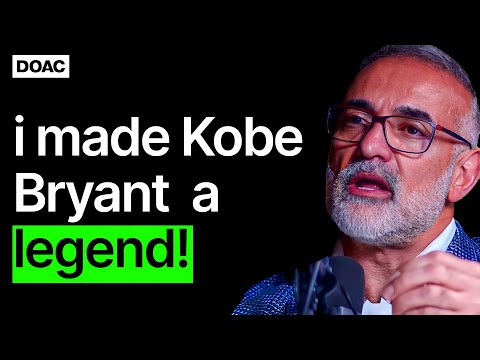
The Man Who Coached Michael Jordan AND Kobe Bryant To WIN! Tim Grover
Steven Bartlett (host), Tim Grover (guest), Narrator
In this episode of The Diary of a CEO, featuring Steven Bartlett and Tim Grover, The Man Who Coached Michael Jordan AND Kobe Bryant To WIN! Tim Grover explores tim Grover On Darkness, Obsession, And The True Cost Of Winning Tim Grover, legendary trainer to Michael Jordan, Kobe Bryant, and Dwyane Wade, unpacks the psychology of extreme winning, the role of the “dark side,” and the real mental and emotional cost of greatness.
Tim Grover On Darkness, Obsession, And The True Cost Of Winning
Tim Grover, legendary trainer to Michael Jordan, Kobe Bryant, and Dwyane Wade, unpacks the psychology of extreme winning, the role of the “dark side,” and the real mental and emotional cost of greatness.
He explains how early childhood trauma, immigrant sacrifice, and exposure to death shaped his own darkness and how he learned to channel it into performance, not destruction.
Grover contrasts being merely interested with being obsessed, emphasizing marginal gains, radical accountability, and an almost uncomfortable attention to detail as the separator at the very top.
Throughout, he challenges common self-help tropes—like balance, happiness as the main goal, and “showing up is half the battle”—arguing instead for conscious trade‑offs, ownership of consequences, and paying the price of winning over the bill of regret.
Key Takeaways
Your “dark side” can be a powerful asset—if you visit it on your terms.
Grover argues that new beginnings start in darkness (literally at midnight) and that most people run from their painful experiences, traumas, and insecurities. ...
Get the full analysis with uListen AI
Obsession, not interest, is what separates the truly great from everyone else.
Grover draws a hard line between being “interested” and being “obsessed. ...
Get the full analysis with uListen AI
Marginal gains and microscopic details are where separation actually happens.
Grover highlights how elite performers chase tiny edges: Michael Phelps training for 0. ...
Get the full analysis with uListen AI
Winning has a serious, often misunderstood impact on mental health.
Grover notes that with sustained winning comes increased scrutiny, pressure, and internal expectations. ...
Get the full analysis with uListen AI
Accountability is non‑negotiable at the top—and most people erode it once they succeed.
Michael Jordan never asked teammates to do something he wouldn’t do himself, and Grover insisted on holding Jordan accountable even when everyone else became a yes‑person. ...
Get the full analysis with uListen AI
Balance and happiness are created, not found—and the price of winning is real.
Grover pushes back on the idea of a neatly balanced life, especially for the obsessed. ...
Get the full analysis with uListen AI
“Showing up is none of the battle”—results, not attendance, define winning.
Grover dismantles the comforting maxim that “showing up is half the battle. ...
Get the full analysis with uListen AI
Notable Quotes
“When does a new day start? It starts at midnight. Is it dark outside at midnight? Yes. So for a new day and a new beginning… starts in the dark every day.”
— Tim Grover
“Winning never visits you in your daydreams. It sees you in your nightmares.”
— Tim Grover
“Interested is a hobby. Kobe Bryant was not interested in winning championships. He was obsessed.”
— Tim Grover
“Winning doesn’t make you heartless, but it teaches you to use your heart less.”
— Tim Grover
“If you think the price of winning is too high, wait till you get the bill from regret.”
— Tim Grover
Questions Answered in This Episode
You say people must ‘visit’ their darkness before it visits them. For someone who isn’t sure what their dark side even is, what are the first practical steps to safely explore it without getting overwhelmed or consumed?
Tim Grover, legendary trainer to Michael Jordan, Kobe Bryant, and Dwyane Wade, unpacks the psychology of extreme winning, the role of the “dark side,” and the real mental and emotional cost of greatness.
Get the full analysis with uListen AI
You’ve seen Mamba mentality ‘destroy more careers than it’s helped.’ Can you share a concrete example (without names) of someone who tried to copy Kobe’s obsession and how it went wrong—and what you wish they had done differently?
He explains how early childhood trauma, immigrant sacrifice, and exposure to death shaped his own darkness and how he learned to channel it into performance, not destruction.
Get the full analysis with uListen AI
When you decided to keep packing your bag after your daughter asked you to stay, what alternative path, if any, would still have allowed you to win at the level you did but with a different family trade‑off—or do you genuinely believe there was no other viable option?
Grover contrasts being merely interested with being obsessed, emphasizing marginal gains, radical accountability, and an almost uncomfortable attention to detail as the separator at the very top.
Get the full analysis with uListen AI
You argue that ‘showing up is none of the battle’ and challenge ideas of balance and happiness. How do you respond to critics who say this mindset fuels toxic work cultures, burnout, and normalized neglect of mental health and relationships?
Throughout, he challenges common self-help tropes—like balance, happiness as the main goal, and “showing up is half the battle”—arguing instead for conscious trade‑offs, ownership of consequences, and paying the price of winning over the bill of regret.
Get the full analysis with uListen AI
In today’s world of instant analytics, social media, and personal branding, how would you adapt your approach with a young Michael Jordan coming up now to protect him from external validation traps while still maximizing his obsessive edge?
Get the full analysis with uListen AI
Transcript Preview
Could you do me a quick favor? If you're listening to this, please hit the follow or subscribe button. It helps more than you know, and we invite subscribers in every month to watch the show in person.
Kobe Bryant was not interested in winning championships. Back-to-back titles! NBA champions! He was obsessed. He was the trainer for Dwyane Wade, Kobe Bryant, Michael Jordan. The book is Relentless.
Tim Rover. What is your dark side?
After every semester of anatomy class, you have dead bodies. My dad's job was to dispose of those bodies. You have to cut off their legs. You have to cut off their head. I saw him do that when I was four years old. It doesn't get any darker than that.
If I spoke to some of your clients and I asked them, "What was Tim good at for you," what would they say to me?
Elevating them to another level. Very few people understand what winning does to an individual's mental health. Winning doesn't make you heartless, but it teaches you to use your heart less. Every decision I've made, I knew what the cost was going to be. If you think the price of winning is too high, wait till you get the bill from regret.
So without further ado, I'm Steven Bartlett, and this is The Diary of a CEO: USA Edition. I hope nobody's listening, but if you are, then please keep this to yourself. (instrumental music) Tim, I read in your book, Winning: The Unforgiving Race to Greatness, chapter 12. And I don't usually start with people's books. I wanna, I wanna u- usually start somewhere else. But in chapter 12, you talk about this, this concept of the dark side and the darker side.
Yeah, we're going right there, huh? (laughs)
Yeah. Yeah. And the reason I wanna go right there is because I actually think it's the start for many people. It's the start.
It is the start.
So tell me about your dark side and where and what it came from.
This is a very unique story. So my father, uh, both my parents are of Indian descent. So they came over to the States when I was four. My mother came over first. She was a nurse practitioner, and my dad was a professor in India. So when he came over from India to the UK, he was still a professor over there. When he came from the UK to the United States, they said that his education would not transfer, that he could not... He wasn't qualified enough to teach at the university level in the States. So my dad said, "Okay, well, what, what job do you have available?" So they had a job back then, it was called a degreaser. A degreaser is an individual, doesn't... This job does not exist anymore. After every quarter or every semester of anatomy class, you have cadavers.
Install uListen to search the full transcript and get AI-powered insights
Get Full TranscriptGet more from every podcast
AI summaries, searchable transcripts, and fact-checking. Free forever.
Add to Chrome