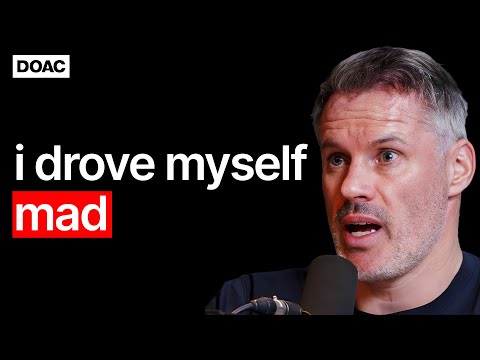
Jamie Carragher: The Untold Story of Liverpool Legend That Pushed Himself Too Far | E206
Jamie Carragher (guest), Steven Bartlett (host), Narrator, Steven Bartlett (host)
In this episode of The Diary of a CEO, featuring Jamie Carragher and Steven Bartlett, Jamie Carragher: The Untold Story of Liverpool Legend That Pushed Himself Too Far | E206 explores jamie Carragher: Obsession, Fear, And The Ruthless Cost Of Winning Jamie Carragher traces his journey from a precarious birth and working‑class Liverpool upbringing to becoming a one‑club legend defined by obsession with winning and relentless self-criticism.
Jamie Carragher: Obsession, Fear, And The Ruthless Cost Of Winning
Jamie Carragher traces his journey from a precarious birth and working‑class Liverpool upbringing to becoming a one‑club legend defined by obsession with winning and relentless self-criticism.
He reveals how his father’s hard-edged standards forged his mentality, why he would “rather cheat and win than not win,” and how that mindset led to sleepless nights, psychological turmoil, and eventually seeking a sports psychologist at his peak.
Carragher contrasts club and country loyalties, dissects elite dressing-room culture, managers’ styles, and the Ronaldo–Messi narrative, and explains why mentality and character outweigh talent at the top level.
Now a pundit and father, he reflects on leadership, fear, parenting a professional footballer, and trying to pass on a ‘no excuses’ ethos while acknowledging the personal costs of his extreme competitiveness.
Key Takeaways
An extreme winning mentality can drive success but also severe self‑punishment.
Carragher describes a mindset where winning is all that matters—he’d “rather cheat and win than not win”—which pushed him to the top at Liverpool but left him unable to sleep after mistakes, replaying errors for days, canceling social plans, and emotionally withdrawing from family. ...
Get the full analysis with uListen AI
The same psychological patterns that make you great may be impossible to ‘fix’.
At his peak under Rafa Benítez, Carragher sought out sports psychologist Bill Beswick after a minor mistake at Atlético Madrid consumed him for days. ...
Get the full analysis with uListen AI
Character and mentality often matter more than pure talent at elite level.
Carragher repeatedly argues the ‘top level’ is about mentality: withstanding criticism, bouncing back after dips, and refusing excuses. ...
Get the full analysis with uListen AI
Local-club pressure and identity radically intensify emotional stakes.
As a local lad at Liverpool, Carragher felt he was playing for his city, friends, and family—not just a club. ...
Get the full analysis with uListen AI
Great managers win in very different, even opposite, ways by leaning into their strengths.
Gérard Houllier, in Carragher’s eyes, was a CEO‑style organizer and man‑manager who built culture and authority but wasn’t a deep tactician. ...
Get the full analysis with uListen AI
Authority in a dressing room depends heavily on club culture and ownership behavior.
Carragher explains that at Liverpool, the manager traditionally enjoys quasi-religious backing from fans, which makes ‘player power’ far harder than at many clubs. ...
Get the full analysis with uListen AI
Living with ‘never lose your fear’ can fuel a career but prevent peace.
He relates advice Alex Ferguson once gave Brendan Rodgers—“never lose your fear”—and says it resonated because he’s always had that inner fear: of being dropped, being underestimated, or another pundit overtaking him. ...
Get the full analysis with uListen AI
Notable Quotes
“When I played, I’d rather cheat and win than not win.”
— Jamie Carragher
“I had to get hold of a psychologist… I was just driving myself mad with the standards I was expecting of myself.”
— Jamie Carragher
“The reason I got there was not just ability. I don’t think my ability is at Champions League-final level, but my personality and character is, and that’s what dragged me there.”
— Jamie Carragher
“For me, the top level of football is mentality.”
— Jamie Carragher
“I’ve never lost my fear. I’ve always felt like there’s some battle to win or someone coming to take my place.”
— Jamie Carragher
Questions Answered in This Episode
You said speaking to Bill Beswick made you accept that your torment over mistakes was part of what made you great—if you could go back, would you actually choose to trade a bit of that edge for a calmer life, or not?
Jamie Carragher traces his journey from a precarious birth and working‑class Liverpool upbringing to becoming a one‑club legend defined by obsession with winning and relentless self-criticism.
Get the full analysis with uListen AI
You often wonder whether playing for a non-local club would have changed your relationship with winning and losing; can you imagine a specific alternative career path (e.g. signing for Spurs at 21) and how your mentality and home life might have differed?
He reveals how his father’s hard-edged standards forged his mentality, why he would “rather cheat and win than not win,” and how that mindset led to sleepless nights, psychological turmoil, and eventually seeking a sports psychologist at his peak.
Get the full analysis with uListen AI
You described Liverpool’s near-religious deference to managers as a competitive advantage; do you see any risks in that culture, especially if the wrong manager is protected for too long?
Carragher contrasts club and country loyalties, dissects elite dressing-room culture, managers’ styles, and the Ronaldo–Messi narrative, and explains why mentality and character outweigh talent at the top level.
Get the full analysis with uListen AI
When you tell your son that his knee operation can never become an excuse, how do you balance that ‘no-excuse’ standard with making space for genuine vulnerability and mental health in elite sport?
Now a pundit and father, he reflects on leadership, fear, parenting a professional footballer, and trying to pass on a ‘no excuses’ ethos while acknowledging the personal costs of his extreme competitiveness.
Get the full analysis with uListen AI
You’ve been very candid about Ronaldo’s ego and late-career missteps; looking at your own media persona, is there anything in how you’ve gone after big names that you worry might overshadow your legacy the way you feel Ronaldo’s interview has affected his?
Get the full analysis with uListen AI
Transcript Preview
I couldn't get it out of my mind. I had to get hold of a psychologist. I was just like, "This can't go on." Jamie Carragher is a Liverpool stalwart. 730-odd appearances. There's never gonna be another Jamie Carragher. He's a winner. Carragher urged to shoot. He will, you know! Oh! (crowd cheering) That's just ridiculous. I'm not a huge Ronaldo fan. I think that's pretty obvious. It's sad for him the ways people are speaking about Messi towards the end of his career and Ronaldo and it's completely different. It's almost like he feels like he's not rated even. I've got so much admiration for him for his mental strength, to be able to withstand pressure, criticism. And I saw too many players never recover from that. I knew from the first time I played football, for me, winning was all that mattered. If you say to me, what do I miss most about being a professional footballer? It's winning. I'd rather cheat and win than not win.
When Jamie loses a game, is he different?
I punished myself when I didn't perform well, and I regret that. But there was always that thing of, "Am I good enough?" I was just driving myself mad. When I was at my absolute peak and best, that's when I needed more help. The fear in your stomach is that bad. You just, you don't want to be there. I always remember, and, uh, th- the only time I've ever did this in my whole career ... (breathes deeply)
Much of your success has been a result of a winning mentality in some of the toughest moments. Where does that come from?
The reason why I've become the player I have, I think it's-
Before this episode starts, I have a small favor to ask from you. Two months ago, 74% of people that watch this channel didn't subscribe. We're now down to 69%. My goal is 50%. So if you've ever liked any of the videos we've posted, if you like this channel, can you do me quick favor and hit the subscribe button? It helps this channel more than you know. And the bigger the channel gets, as you've seen, the bigger the guests get. Thank you, and enjoy this episode. (lively music) Jamie, when I start this podcast, I usually start with people's childhoods. But, uh, as I was reading through your story, I think this is the first time I'm gonna start before the person was even born. Because I, I read that there was a possibility that you weren't even going to be born because of a, I guess a misdiagnosis that your mother was given about you.
(sighs)
Can you take me back to that story?
Yeah. That was, uh, (sucks teeth) would've been about... (laughs) What is it? Would've been about 1977 obviously, '78 I was born. And my mum had had two miscarriages before me. And then when I, uh, well, she, she'll preg- fell pregnant with me, the, the doctors, nurses didn't know what was wrong, but they knew something was wrong. And initially, they were saying, "Uh, we think your child has got spina bifida." And I think... Well, I'm, I'm just saying it, in those days, maybe, I don't know if it's the same now, you, there was a chance she could terminate the pregnancy if, if the, if the baby was whatever, you know, didn't... And my mum was, I think was given that option. And sh- m- my mum's, my mum was very holy, I think is the right word. Uh, probably at that stage, in her early 20s, she would be going to church every day, still goes every Sunday now. So for her thing was now if... The way she says to me was, "If our Lord wants me to have th- a baby who's got spina bifida or maybe something else, that's, that's what's being decided for me. That's fine, it's my child. I love that child." And what I, what I find fascinating when you think of sort of today is that the closer it got to the, me being born, it wasn't spina bifida, but they still knew something wasn't right. And it wasn't until I was born that I had basically my insides were on the outside. So I've, I've, uh, gascro- gastroschisis, it's called, the condition. Now I've got, uh, uh, a big scar right across my stomach. I mean, if, if someone has that condition today, and, and plenty of babies do, it's a really small scar. But the, the thing that I think is f- fascinating or just makes me think wow on my mum's side is the fact that as soon as I was born, I was rushed away, straightaway to Alder Hey Children's Hospit- Hospital, which is still going strong today in Liverpool. And because of what I've gone to achieve, I've got a real link with the hospital. And, uh, through our charity, we actually funded the, uh, the ward that looks after babies who have-
Install uListen to search the full transcript and get AI-powered insights
Get Full TranscriptGet more from every podcast
AI summaries, searchable transcripts, and fact-checking. Free forever.
Add to Chrome