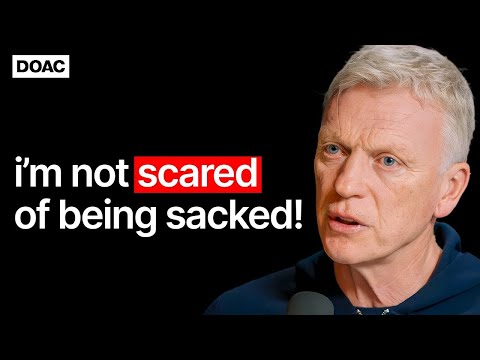
David Moyes Reveals The Truth About Man United, West Ham & His Future | E213
David Moyes (guest), Steven Bartlett (host), Narrator, Narrator
In this episode of The Diary of a CEO, featuring David Moyes and Steven Bartlett, David Moyes Reveals The Truth About Man United, West Ham & His Future | E213 explores david Moyes On Glory, Failure, Loyalty And Rebuilding West Ham United David Moyes traces his journey from Glasgow tenements and his father’s amateur coaching to managing Everton, Manchester United and West Ham, highlighting how upbringing, values and obsession with football shaped him.
David Moyes On Glory, Failure, Loyalty And Rebuilding West Ham United
David Moyes traces his journey from Glasgow tenements and his father’s amateur coaching to managing Everton, Manchester United and West Ham, highlighting how upbringing, values and obsession with football shaped him.
He gives an unusually candid account of his Manchester United tenure: how Sir Alex appointed him without an interview, why he now thinks he misread the situation, and how he feels United mishandled his sacking.
Moyes explains how management and dressing‑room culture have changed, why effort, character and love of the game matter more than pure talent in both players and coaches, and how he evaluates signings.
He outlines his ambition to “build a new West Ham”, shifting the club’s culture from flaky to resilient while nurturing young fans, and reflects on leadership tolls, family sacrifice and what long‑term success really means.
Key Takeaways
Winning cultures are built on daily standards, not just results.
Moyes describes Celtic and peak Manchester United as environments where every team at every level was expected to win, win by multiple goals, and win with style. ...
Get the full analysis with uListen AI
Character, effort and love of the game often outweigh raw talent.
When scouting, Moyes prioritises effort, dedication and whether a player truly loves football over pure technical ability. ...
Get the full analysis with uListen AI
Good recruitment is still educated guessing; the process matters more than the outcome.
Moyes freely admits that even with decades of experience and data, buying players is never certain: 'we’re still just guessing'. ...
Get the full analysis with uListen AI
Leadership style must evolve with the times while retaining honesty and edge.
He contrasts the old Scottish 'hairdryer' culture—managers screaming at halftime, players told not to make eye contact—with today’s need for more communication and emotional intelligence. ...
Get the full analysis with uListen AI
Following a dynasty manager is structurally risky, regardless of your competence.
Moyes only later learned that successors to long‑term icons (Clough, Revie, Robson, Ferguson) almost never succeed. ...
Get the full analysis with uListen AI
How an organisation gives bad news is a critical test of its values.
Moyes says he first heard he was losing the United job from the media, before any proper conversation with club leadership. ...
Get the full analysis with uListen AI
Rebuilding a club requires cultural rebranding, not just better players.
At West Ham, Moyes’ goal is to 'build a new West Ham': make the London Stadium feel like home, change the perception of the club as flaky, and embed a tougher, more consistent culture. ...
Get the full analysis with uListen AI
Notable Quotes
“I trusted Manchester United. I really did. I trusted them because of what they stood for as a football club.”
— David Moyes
“If you've got any class or any style, you have to give bad news well.”
— David Moyes
“When you manage Man United, it’s like living in the penthouse and looking out.”
— David Moyes
“I want to build a new West Ham.”
— David Moyes
“I was desperate to be successful as a manager… but maybe if I'd really looked into it in more detail, there was a huge change going to have to take place.”
— David Moyes
Questions Answered in This Episode
If you could relive the week Sir Alex offered you the United job, what three specific due‑diligence questions would you now insist on asking before accepting?
David Moyes traces his journey from Glasgow tenements and his father’s amateur coaching to managing Everton, Manchester United and West Ham, highlighting how upbringing, values and obsession with football shaped him.
Get the full analysis with uListen AI
When you decided to 'break up' a successful West Ham side, what internal data or on‑pitch signals convinced you that decline was imminent rather than just a temporary dip?
He gives an unusually candid account of his Manchester United tenure: how Sir Alex appointed him without an interview, why he now thinks he misread the situation, and how he feels United mishandled his sacking.
Get the full analysis with uListen AI
You’ve said owners increasingly influence signings—can you describe a time you overruled ownership pressure on a transfer and what the longer‑term consequences were for your relationship with them?
Moyes explains how management and dressing‑room culture have changed, why effort, character and love of the game matter more than pure talent in both players and coaches, and how he evaluates signings.
Get the full analysis with uListen AI
Given your experience of following a legendary manager, what concrete structural protections would you put in place at a big club to give the next post‑dynasty coach a genuine chance of success?
He outlines his ambition to “build a new West Ham”, shifting the club’s culture from flaky to resilient while nurturing young fans, and reflects on leadership tolls, family sacrifice and what long‑term success really means.
Get the full analysis with uListen AI
Looking at today’s football ecosystem, do you think it is still realistically possible for a club with modest resources to build a Leicester‑style title winner primarily through culture and smart recruitment rather than outspending rivals—and what would that blueprint look like in detail?
Get the full analysis with uListen AI
Transcript Preview
They would be out screaming at you at halftime. They'd be screaming at you at the end of the game. (whistle blowing) Come on, go!
What's the toll of that?
(inhales and exhales deeply)
David "the Messiah" Moyes.
One of the best known football managers across the globe. Building teams with a clear identity. So where am I looking and who am I talking to? I was desperate to be successful as a manager and I had 11 years at Everton where we were finding it really difficult to break into the top four. The phone rang and it was Sir Alex (phone thuds on desk) , and he said, "I'm retiring (camera clicks) and you're the next manager of Manchester United." No interview. Not saying, "Would you like to be?" And I met Ed Woodward the next day, back to his house again and we met the Glazers. It was three days. And that was as simple as that. To get that offer from the greatest manager maybe there ever was was a great compliment. But maybe if I'd really looked into it in more detail and more depth, there was a huge change going to have to take place. I trusted Manchester United.
Do you feel like that trust was let down?
Definitely. But my biggest regret was... (camera clicking)
We start with the story that has dominated the front pages, the sacking of David Moyes. (camera clicking) How did you find out that you were losing your job?
Media.
Oh, really?
If you've got any class or any style, you have to give bad news well. (camera clicking)
What are those steps forward to get West Ham competing at the very top of the table?
I want to build a new West Ham. (hammer thuds) A lot of supporters might not like the thought of that.
When you look at where West Ham is now, do you worry about losing your job?
I've gotta say... (text thuds)
Before this episode starts, I have a small favor to ask from you. Two months ago, 74% of people that watch this channel didn't subscribe. We're now down to 69%. My goal is 50%. So if you've ever liked any of the videos we've posted, if you like this channel, can you do me a quick favor and hit the subscribe button? It helps this channel more than you know. And the bigger the channel gets, as you've seen, the bigger the guests get. Thank you, and enjoy this episode. (upbeat music) David, take me back to the context that I need to understand in order to understand you. Take me back to Glasgow-
Mm-hmm.
... 1960s.
Yes. I was in a really good family, who were really important. And you'll probably hear me talking a lot about it now but, uh, we were a, uh, a family who we stayed in the, the West End of Glasgow in a tenement building. And, uh, we used to have to, you know, go up the, up the tenement. And if people who don't know what a tenement is, a tenement is a, you know, what we would probably think a bo- block of flats. And you go up the tenement. And they were never in Glasgow that, at that time, very, very, uh, good to look at. People looked down on them a little bit. But, uh, it was a great upbringing for me that allowed me to play my football out on the street, which at that time was, was something which everybody considered, you know, street footballers. Everybody played football on the street. And everybody in Glasgow did play football on the street, played in the park. So I started in Glasgow in the West End and that was probably where me and my family, uh, grew up.
Install uListen to search the full transcript and get AI-powered insights
Get Full TranscriptGet more from every podcast
AI summaries, searchable transcripts, and fact-checking. Free forever.
Add to Chrome