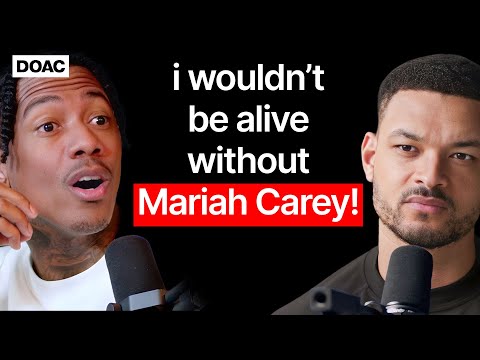
Nick Cannon: How I ACCIDENTALLY Built A $1.3 Billion Business!
Nick Cannon (guest), Steven Bartlett (host), Narrator, Narrator
In this episode of The Diary of a CEO, featuring Nick Cannon and Steven Bartlett, Nick Cannon: How I ACCIDENTALLY Built A $1.3 Billion Business! explores nick Cannon Reveals Wild ’N Out’s Billion-Dollar, Accidental Empire Blueprint Nick Cannon traces his journey from a hustling kid in the projects to building Wild ’N Out into a billion‑dollar multimedia empire, while also nurturing the careers of stars like Kevin Hart, Pete Davidson, and Kehlani. He explains how early standup, relentless work, and owning his intellectual property let him control his career instead of networks and labels. The conversation goes deep into money philosophy, ‘happy vs sad’ money, non‑exploitative talent development, and why he refuses to trap artists in traditional record contracts. Underpinning it all are life‑altering health battles with lupus and the death of his infant son, which reshaped his views on time, legacy, parenting 12 children, and what truly matters.
Nick Cannon Reveals Wild ’N Out’s Billion-Dollar, Accidental Empire Blueprint
Nick Cannon traces his journey from a hustling kid in the projects to building Wild ’N Out into a billion‑dollar multimedia empire, while also nurturing the careers of stars like Kevin Hart, Pete Davidson, and Kehlani. He explains how early standup, relentless work, and owning his intellectual property let him control his career instead of networks and labels. The conversation goes deep into money philosophy, ‘happy vs sad’ money, non‑exploitative talent development, and why he refuses to trap artists in traditional record contracts. Underpinning it all are life‑altering health battles with lupus and the death of his infant son, which reshaped his views on time, legacy, parenting 12 children, and what truly matters.
Key Takeaways
Early, obsessive reps create unfair advantages later.
Cannon started standup at 11, effectively writing, directing, performing and marketing solo shows as a kid. ...
Get the full analysis with uListen AI
Own your intellectual property and demonstrate the vision yourself.
MTV didn’t understand Wild ’N Out when he pitched it verbally, so he self‑funded a ~$100,000 pilot in a comedy club, hired cameras, designed logos, and filled the room. ...
Get the full analysis with uListen AI
Treat creativity as a full, embodied commitment—not something you ‘try’.
His advice to his kids and aspiring creators: don’t ‘try’ a craft, ‘do it’ as if there is no other option. ...
Get the full analysis with uListen AI
Prioritize ‘happy money’ over ‘sad’ or ‘bad’ money.
Cannon distinguishes money earned in joy, alignment, and fairness (‘happy money’) from money rooted in manipulation, fear, and exploitation (‘sad’ or ‘bad’ money), particularly in the music business. ...
Get the full analysis with uListen AI
High self‑belief (healthy narcissism) is required at the top—but must be balanced with empathy.
He calls it ‘the beauty of narcissism’: every great outlier he’s met knows there will never be another them, and they act accordingly. ...
Get the full analysis with uListen AI
You can build a powerful talent business without owning people.
Through N’Credible and Wild ’N Out, Cannon has helped launch major careers (e. ...
Get the full analysis with uListen AI
Brushes with death can clarify priorities around time, health, and impact.
His lupus diagnosis and repeated hospitalizations (including organ issues and pulmonary embolisms) forced him to treat health as his ‘alarm clock’—controlling water, supplements, sodium, and stress daily. ...
Get the full analysis with uListen AI
Notable Quotes
“I didn’t think Wild ’N Out would be the billion dollar conglomerate. I was just creating a show because Kevin Hart needed money to pay his rent.”
— Nick Cannon
“I may not be the most talented person in the room, but I’ll be the hardest worker in the room. That’s how you get it.”
— Nick Cannon (on Will Smith’s philosophy)
“Don’t try it. If you try it, it’s not gonna work. Do it as if there’s no other option.”
— Nick Cannon
“Money doesn’t make you happy. Happy makes you money.”
— Nick Cannon
“When you’re not afraid of dying, you focus on living.”
— Nick Cannon
Questions Answered in This Episode
When you decided to risk ~$100,000 of your own money on the Wild ’N Out pilot, what specific financial safeguards or contingency plans (if any) did you put in place, and would you recommend the same risk profile to a young creator today?
Nick Cannon traces his journey from a hustling kid in the projects to building Wild ’N Out into a billion‑dollar multimedia empire, while also nurturing the careers of stars like Kevin Hart, Pete Davidson, and Kehlani. ...
Get the full analysis with uListen AI
You’ve described Wild ’N Out as a ‘combine’ that forges stars under pressure—what concrete traits or behaviors distinguish the people who thrive in that environment (like Pete Davidson or DC Young Fly) from those who quietly disappear after a season or two?
Get the full analysis with uListen AI
Given your strong stance against exploitative contracts, how would you redesign a standard recording or management deal from scratch so it’s both fair to the artist and still a sustainable business for the company?
Get the full analysis with uListen AI
Looking back at the moments when lupus flare‑ups nearly killed you, is there anything specific you now recognize as an early warning sign—physical, emotional, or lifestyle‑related—that you wish you had taken more seriously at the time?
Get the full analysis with uListen AI
You’ve reframed grief as a potential source of purpose and strength; for a parent who has just lost a child and is still in the fog, what are the first small, practical steps you’d suggest to begin that transformation without feeling like they’re betraying their pain?
Get the full analysis with uListen AI
Transcript Preview
I didn't think Wild 'N Out would be the billion dollar conglomerate. (cash register ka-chings) I was just creating a show because Kevin Hart needed money to pay his rent. (laughing) Please welcome Nick Cannon. Entrepreneur and- Rapper, actor, host, comedian. True superstar. Who's Nick Cannon? I'm me.
Nick, you've been a pioneer. I read that one of your companies has generated more than a hundred million dollars.
That was just in our headphone sales. We have a tour that makes millions, a cruise line, restaurants. As a kid, I learned that I may not be the most talented person in the room, but I'll be the hardest worker in the room. That's how you get it. Some people play basketball. Then there's the basketball players. (laughs) Don't try it. If you try it, it's not gonna work. Do it as if there's no other option. So by the time I was 17, I started writing for Kenan & Kel.
The youngest staff writer in TV history.
Yeah. I was like Harry Potter with the pen.
(laughs)
And then Will Smith signed me. (piano music plays) I was living my dream life, but I always felt like I had a ticking clock. The latest on the health scare from Nick Cannon. Nick Cannon... Has lupus. If you don't catch it and control it, you, you could lose your life pretty quickly.
You said that you wouldn't be alive right now if it wasn't for Mariah Carey.
Yeah. It makes you question what are you gonna do with the time that you have on this planet? What impact are you gonna make? When you're not afraid of dying, you focus on living.
And then you dealt with the loss of your son, at just five months old, due to brain cancer.
You never know how strong you are till it's the only option. (hip hop music plays)
Nick, what do I have to understand about your earliest years to understand the man that you are today?
I'ma steal that question. (laughs) Uh, I'd have to say that, uh, optimism, youthful optimism. You know, some call it imagination. Uh, but I, the world was just so big, but yet so tangible for me. You know, uh, I felt even as a y- I fe- I felt like I had this magic that I could just manifest anything, uh, good or bad. You know what I mean? It was, uh, I, I lived this life to where as small as the community was, as disenfranchised and maybe not as upwardly mobile as, as, uh, one would see from the outside, I had this big imagination, and in my mind this superpower that I could be, do, or whatev- whatever I wanted, I, it was all in my grasp, and I could... I don't know where I got it from, but I was just, as a kid, as a teenager, always felt like I had this ability to, to walk in a room and get whatever I wanted.
Install uListen to search the full transcript and get AI-powered insights
Get Full TranscriptGet more from every podcast
AI summaries, searchable transcripts, and fact-checking. Free forever.
Add to Chrome