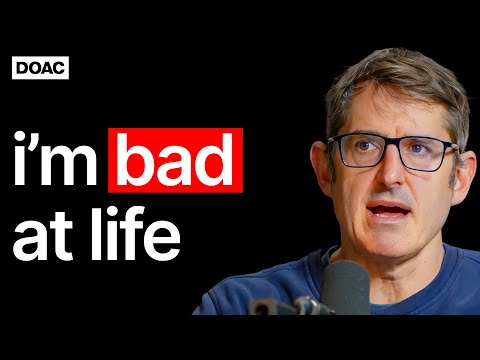
Louis Theroux: "The Thing That Makes Me Great At Work, Makes Me Bad At Life!" | E198
Louis Theroux (guest), Steven Bartlett (host)
In this episode of The Diary of a CEO, featuring Louis Theroux and Steven Bartlett, Louis Theroux: "The Thing That Makes Me Great At Work, Makes Me Bad At Life!" | E198 explores louis Theroux Confronts Workaholism, Intimacy Struggles, And Authentic Connection Louis Theroux reflects on how the traits that make him a successful documentarian—work ethic, curiosity, emotional distance, and awkward charm—have also undermined his personal relationships and capacity for intimacy.
Louis Theroux Confronts Workaholism, Intimacy Struggles, And Authentic Connection
Louis Theroux reflects on how the traits that make him a successful documentarian—work ethic, curiosity, emotional distance, and awkward charm—have also undermined his personal relationships and capacity for intimacy.
He explores his unconventional upbringing, anxious and academically driven childhood, and how work became both a coping strategy and a substitute for emotional engagement.
The conversation digs into his struggles with friendship, marriage, fatherhood, and mental health, and how his wife and family forced him to rebalance life away from constant travel and career obsession.
Louis also unpacks his interviewing philosophy, accusations of insincerity from Jimmy Savile and a former partner, and the tension between authenticity, performance, and the need for external validation in creative work.
Key Takeaways
Work can be both a coping mechanism and a socially rewarded addiction.
From childhood, Louis used work and academic achievement to manage anxiety because homework and exams felt controllable in a way that social relationships did not. ...
Get the full analysis with uListen AI
The same traits that make you excellent at your job can damage your personal life.
Louis explicitly acknowledges that his curiosity, emotional distance, and ability to create intense but temporary intimacy for documentaries make him less present and attentive as a friend and partner. ...
Get the full analysis with uListen AI
Upbringing and parental models strongly shaped his work identity and blind spots.
Both parents were first-generation university graduates with extreme work ethics—his father a highly successful novelist and travel writer, his mother a BBC producer and later therapist. ...
Get the full analysis with uListen AI
External belief and gentle pressure from others can unlock paths you wouldn’t choose alone.
Louis repeatedly took major career steps—working for Michael Moore, fronting a network TV show, launching his own production company, and creating his BBC interview series—only because others saw potential he didn’t recognize or resisted. ...
Get the full analysis with uListen AI
Non‑confrontational curiosity can be a powerful interviewing strategy, especially with troubling subjects.
Responding to criticism that he doesn’t attack hateful or extreme guests, Louis explains that his default is genuine curiosity, not indignation. ...
Get the full analysis with uListen AI
Work-focused identities often invert the proper hierarchy between life and career.
Louis describes treating relationships as a ‘life support system’ for his professional self, expecting partners to adapt around his filming schedule and travel. ...
Get the full analysis with uListen AI
Awareness of your own emotional patterns doesn’t automatically translate to change, but it’s a starting point.
Louis notes he often notices his emotions from the outside—hears his raised voice before feeling his anger, or recognizes grumpiness only when his wife flags it. ...
Get the full analysis with uListen AI
Notable Quotes
“What makes me good at my job is also what makes me bad at life.”
— Louis Theroux
“I saw my relationships as a life support system for my kind of work self, instead of the other way around.”
— Louis Theroux
“I’m just so curious about what takes someone to that place, why people do the things that they do.”
— Louis Theroux
“Your former wife said, ‘There’s nothing real about you.’ Jimmy Savile… said something about insincerity being your speciality.”
— Steven Bartlett (quoting others about Louis)
“People need help to fulfill their potential. That idea that you can just pull yourself up by the bootstraps—I don’t think that’s true, even for me.”
— Louis Theroux
Questions Answered in This Episode
You describe work giving you ‘intimacy without consequences.’ Have you ever felt that dynamic actively harmed a specific friendship or relationship, and what did it look like in practice?
Louis Theroux reflects on how the traits that make him a successful documentarian—work ethic, curiosity, emotional distance, and awkward charm—have also undermined his personal relationships and capacity for intimacy.
Get the full analysis with uListen AI
When your ex‑partner and Jimmy Savile both accused you of insincerity, did that ever lead you to consciously change your on‑camera or off‑camera behavior, or did you double down on your existing style?
He explores his unconventional upbringing, anxious and academically driven childhood, and how work became both a coping strategy and a substitute for emotional engagement.
Get the full analysis with uListen AI
You said starting your own company revealed a more creative, adventurous side you’d resisted. If you’d launched it 10–15 years earlier, what kinds of riskier or different projects do you think you might have pursued?
The conversation digs into his struggles with friendship, marriage, fatherhood, and mental health, and how his wife and family forced him to rebalance life away from constant travel and career obsession.
Get the full analysis with uListen AI
You often choose not to confront hateful or extreme views directly, prioritizing understanding over outrage. Is there a red line—a type of guest or belief—where you think a more combative, moral stance becomes necessary?
Louis also unpacks his interviewing philosophy, accusations of insincerity from Jimmy Savile and a former partner, and the tension between authenticity, performance, and the need for external validation in creative work.
Get the full analysis with uListen AI
Now that you’ve restructured your work to be more home‑based, how do you concretely measure whether you’re succeeding at ‘showing up’ for your family in ways you previously neglected?
Get the full analysis with uListen AI
Transcript Preview
What makes me good at my job is also what makes me bad at life. This is maybe more than you bargained for.
Louis Theroux!
Our next guest has interviewed everyone.
New York!
My money doesn't jiggle-jiggle. It's a cathedral of poor. That's a little offensive.
You're a very fascinating person. How do you connect with people?
I'm just so curious about what takes someone to that place, why people do the things that they do. The question I get asked most often is like, "How do you not get angry with some of these people, especially the ones who are sort of spewing hate?" If- if people see like, your attempt to wrestle intimacies from them, that's never gonna go well. I think also there's some part of me that thinks maybe the other person's got it figured out and I haven't.
Your former wife said, "There's nothing real about you." Jimmy Savile, he also said something about insincerity being your speciality.
That's good. I'm glad you brought that up.
(laughs)
I remember it vividly. First of all...
"I neglected my personal life to focus on achieving professional success. The price was paid by those nearest and dearest to me." When did you get that feedback?
I saw my relationships as a life support system for my kind of work self, instead of the other way around, saying to my wife, "Well, this is what I do." I did a lot of great segments just by being available at a moment's notice. I just think, "Oh, this isn't going well." So it became a bit of an impasse.
Is it something that comes with a cost, and is it something you want to change? Before this episode starts, I have a small favor to ask from you. Two months ago, 74% of people that watch this channel didn't subscribe. We're now down to 69%. My goal is 50%, so if you've ever liked any of the videos we've posted, if you like this channel, can you do me a quick favor and hit the subscribe button? It helps this channel more than you know, and the bigger the channel gets, as you've seen, the bigger the guests get. Thank you, and enjoy this episode. Louis, you're a very fascinating person.
Thank you.
(laughs) And I've, you know, I've... As I read through your story, I read your autobiography as well, I was trying to understand what I needed to understand about your earliest experiences to really understand the man that you are today-
Mm-hmm.
... the- the interesting personality you have, and the trajectory you went and took in your life. So please enlighten me. What- what- what are the most pertinent things that I need to know about your earliest years to understand you?
Oh, my goodness. We could... I could... I could... I'd spend two hours answering that question on its own.
Install uListen to search the full transcript and get AI-powered insights
Get Full TranscriptGet more from every podcast
AI summaries, searchable transcripts, and fact-checking. Free forever.
Add to Chrome