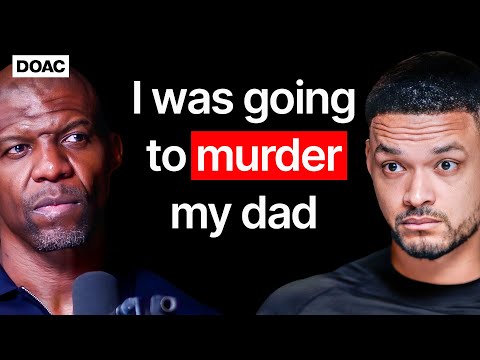
Terry Crews Breaks Down About His Sexual Abuse & Beating Up His Dad!
Steven Bartlett (host), Terry Crews (guest), Steven Bartlett (host)
In this episode of The Diary of a CEO, featuring Steven Bartlett and Terry Crews, Terry Crews Breaks Down About His Sexual Abuse & Beating Up His Dad! explores terry Crews Redefines Strength: From Violence, Porn Addiction To Healing Terry Crews shares how growing up amid alcoholism, religious extremism, and domestic violence in Flint, Michigan shaped his obsession with physical strength, people-pleasing, and emotional numbness.
Terry Crews Redefines Strength: From Violence, Porn Addiction To Healing
Terry Crews shares how growing up amid alcoholism, religious extremism, and domestic violence in Flint, Michigan shaped his obsession with physical strength, people-pleasing, and emotional numbness.
He reveals a decades-long pornography addiction that escalated to infidelity, culminating in a 2010 disclosure that nearly ended his marriage but became the catalyst for deep therapy, accountability, and rebuilding intimacy.
Crews recounts confronting his abusive father with violence, being sexually assaulted by his Hollywood agent, and choosing legal and emotional restraint over revenge—challenging conventional ideas of masculinity and toughness.
Throughout, he argues that real strength is vulnerability, boundaries, and self-knowledge, moving from competing to be “the best” to embracing being “the only” and taking full ownership of the harm he caused and the work to repair it.
Key Takeaways
Childhood environments quietly script adult behavior until they’re consciously examined.
Crews’ home combined an alcoholic, violent father and a hyper-religious, controlling mother. ...
Get the full analysis with uListen AI
Pornography can function as a powerful numbing agent, not harmless entertainment.
Exposed around age 9–10 at his uncle’s house, porn became Crews’ way to dissociate from chaos and fear: opening a magazine made “all my problems… gone. ...
Get the full analysis with uListen AI
Secrecy and success can together hide deep dysfunction for years.
By 2010 Crews was rich, famous and widely admired, which made it easy to rationalize and hide his behavior. ...
Get the full analysis with uListen AI
Real intimacy requires vulnerability and full disclosure, not just apology.
“D‑Day” in February 2010 came when his wife insisted something was still hidden, and he finally admitted paying for sexual contact years earlier. ...
Get the full analysis with uListen AI
Revenge feels powerful but is ultimately empty and ineffective.
After his father punched his mother again in front of Crews’ children, he returned home and viciously beat his father, expecting catharsis. ...
Get the full analysis with uListen AI
Boundaries and the ability to say “no” are core to healthy masculinity.
As a lifelong pleaser, Crews thought he had to obey directors, over-serve fans, and never refuse anyone. ...
Get the full analysis with uListen AI
Shifting from shame to self-compassion changes motivation and identity.
Crews distinguishes guilt (“you did something bad”) from shame (“you are bad”). ...
Get the full analysis with uListen AI
Notable Quotes
“My desire to be strong was because I knew one day I may have to kill my father.”
— Terry Crews
“Pornography numbed my pain. I had this addiction for the longest time… from about 10 all the way up to about 2010.”
— Terry Crews
“Success is the warmest place to hide, because no one's gonna call you on your shit.”
— Terry Crews
“It’s not enough to say you’re sorry. You have to do what’s within your power to make things right.”
— Terry Crews
“Don’t try to be the best. Be the only.”
— Terry Crews
Questions Answered in This Episode
You describe that beating your father felt ‘empty’ and changed nothing—if you could relive that Christmas from hell with the self-awareness you have now, what specific actions would you take instead, step by step?
Terry Crews shares how growing up amid alcoholism, religious extremism, and domestic violence in Flint, Michigan shaped his obsession with physical strength, people-pleasing, and emotional numbness.
Get the full analysis with uListen AI
In disclosure therapy with your wife, what was the single hardest question she asked you about your addiction or infidelity, and how did answering it alter the dynamic between you in the weeks that followed?
He reveals a decades-long pornography addiction that escalated to infidelity, culminating in a 2010 disclosure that nearly ended his marriage but became the catalyst for deep therapy, accountability, and rebuilding intimacy.
Get the full analysis with uListen AI
You argue that porn is deliberately wired to hook children; if you were designing a realistic cultural or policy response, what concrete safeguards would you put in place without veering into moral panic or censorship?
Crews recounts confronting his abusive father with violence, being sexually assaulted by his Hollywood agent, and choosing legal and emotional restraint over revenge—challenging conventional ideas of masculinity and toughness.
Get the full analysis with uListen AI
When your Hollywood agent assaulted you and your agency initially minimized it, what did those meetings teach you about complicity and bystander behavior in powerful institutions—and what should young actors look out for to protect themselves?
Throughout, he argues that real strength is vulnerability, boundaries, and self-knowledge, moving from competing to be “the best” to embracing being “the only” and taking full ownership of the harm he caused and the work to repair it.
Get the full analysis with uListen AI
You’ve shifted from trying to be ‘the best’ to being ‘the only’; for someone whose career and identity are built on constant comparison and competition, what is a practical 30-day plan to start making that same psychological shift without losing their edge?
Get the full analysis with uListen AI
Transcript Preview
Could you do me a quick favor if you're listening to this? Please hit the follow or subscribe button. It helps more than you know, and we invite subscribers in every month to watch the show in person.
My desire to be strong was because I knew one day I may have to kill my father. Athlete, artist, actor, Terry Crews. (upbeat music) That's right, I've always wanted to be a superhero. One of my earliest memories was my father knocking my mother out. She'd be nursing a black eye, and I would just dance in front of her, and she'd just start cracking up. In the middle of all that pain, I saw the ability to make her laugh. Pornography numbed my pain. I had this addiction for the longest time.
How did it impact your marriage?
She said I was different. I damaged my family. I damaged my wife. You gotta own up to it. You have to do what's within your power to make things right. One thing I, that, that changed for me is I stopped competing with people, and I said, "Don't try to be the best. Be the only."
So without further ado, I'm Steven Bartlett, and this is The Diary of a CEO USA Edition. I hope nobody's listening, but if you are, then please keep this to yourself. (upbeat music) Terry, I, I always start these conversations in a very similar way, but ha- having read your new book, Tough, I feel like it's never been more relevant what I'm about to say. Reading through your, your new book, especially in the first chapter, it becomes so blatantly clear how our early context shapes who we become in many ways.
Yeah.
And there's never been a more glaring example of that. So, I feel like that has to be the place we start. Can you tell me about that context in which you were raised?
Wow. Uh, first and foremost, um, I was raised in, um, Flint, Michigan, in, uh, I was born in 1968. And, and I just wanna give some context in, the fact that Flint, Michigan was the Palo Alto of the United States. When I, what I mean by that is General Motors was the most successful corporation in the world, and, you know, there were opportunities, there were money, there was homes, and people were doing very, very well, and the city was growing and, and blossoming. And my father was a foreman at Buick, um, during this time. He, he was this poor kid who moved up from Edison, Georgia, of, a town of less than 300 people, and moved, and went up north to find, to work in the factory, and became a foreman. And, uh, my mother was a housewife, um, and she was raised, born and raised in Flint. My mom had got pregnant with me before they were married, and they shortly, soon, you know, soon after got married, and what was so wild about that is that amongst all this, you know, kinda opportunity, my father was very, very abusive. And, you know, one of my earliest memories around, you know, the time I was about four or five years old was my father knocking my mother out. Um, and what was really crazy, you know, he was an alcoholic. Um, and here, here you have a man who came from... He really never shared his past with me. I had to actually find out a lot about his past later on in my adult years. Um, but I never really understood him, um, and he never really volunteered any information. And then my mother, however, was very religious. Um, she grew up in the Church of God in Christ, which was what you would call the Holiness Movement, and it was, you know, the term was Holy Rollers. And, you know, she couldn't wear makeup. She could, she wore her dresses down to her ankles. Uh, we were not allowed to go to the movies, not allowed to, uh, listen to secular music, not allowed to play sports. Uh, basically everything that I ended up doing in my life, I was not allowed to do. Um, and it was, we were in church probably six days out of a seven-day week. So, it was unindicted with religion, um, a lot of guilt, a lot of shame, a lot of, um, you know, God's gonna get you (laughs) you know, if you don't... You know, this is the way they felt they needed to keep you in line. So, there was a very toxic mix in my household, because here, you know, my father was an alcoholic and my mother's religious, and so they always went at each other, because you weren't allowed to do what my father was doing. And my mother was always challenging him and yelling at him about it, and he would go off, and, and I just wanted peace, man. It was just violent. You know, I actually wet the bed until I was 14 years old because there was not a peaceful night. You know, I would wake up to screaming, wake up to glass breaking, shouting. My fa- one time I woke up, my father was bleeding. My mother had stabbed him, and the police came. And then that day, it was like, you know, there was no such thing as domestic violence, just like there was no such thing as alcoholism, you know? It was just he can't handle his liquor. Uh, I was kinda saved by my high school because it was, it was a special school that allowed you to come because you had certain talents. And it was from seventh grade all the way to my senior year. Um, and I had art ability. And one thing about being in this religious household is that I had a really vibrant imagination because we couldn't do anything else. So, I would go to school and people would tell me about movies they saw and things that they were listening to and all this stuff, so then I would go home and draw it.... so, because I wanted to watch it so bad and be there so bad, and so I would start drawing, and I remember, you know, one thing my mom did let me do was comic books, and so I would copy the comic books and the heroes, and they had muscles, and I was like, "One day I'm gonna be like that." And, um, but I also found out, which was so wild, a little bit later, even in therapy, was just that I found that a lot of my- my desire to be strong was because I knew one day I may have to kill my father, because he was just that person. And it was intense, man. It- I- I gotta say, it was a very, very intense upbringing, um, and I became this person who just wanted to keep the peace, because there was- I just- anything to keep the peace, I became what you would call a pleaser. Like, "Mom, what do you need to do? I'll be a good boy, I promise. I'll- I'll- I'll sing in the church, I'll sing in the choir." And then my father would come home, it was like, "What? Do you want another beer? Whatever you want." You know, "I'll just make sure you- you- you don't get angry." You know? And it was just about, I was- I was exhausted, you know, and I remember just being that tired. Um, and it was- it was a lot of work, because I l- I lost all my, like, who I was. Um, it was dependent on who was around, and I was all of a sudden be what they wanted me to be. Um...
Install uListen to search the full transcript and get AI-powered insights
Get Full TranscriptGet more from every podcast
AI summaries, searchable transcripts, and fact-checking. Free forever.
Add to Chrome