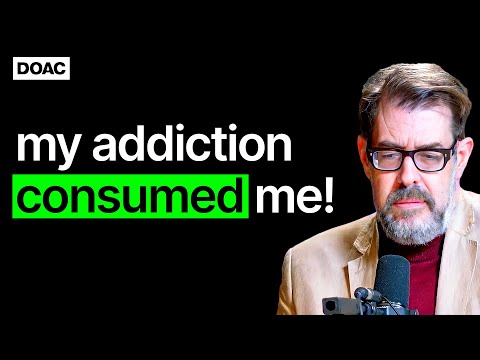
Richard Osman: The Untold Story Of A TV Legend's Addiction!
Richard Osman (guest), Steven Bartlett (host)
In this episode of The Diary of a CEO, featuring Richard Osman and Steven Bartlett, Richard Osman: The Untold Story Of A TV Legend's Addiction! explores richard Osman Reveals Hidden Addiction, Trauma, And Path To Happiness Richard Osman discusses how childhood trauma, his father's abandonment, severe visual impairment, and extreme height shaped his personality, career in TV, and later success as a bestselling novelist.
Richard Osman Reveals Hidden Addiction, Trauma, And Path To Happiness
Richard Osman discusses how childhood trauma, his father's abandonment, severe visual impairment, and extreme height shaped his personality, career in TV, and later success as a bestselling novelist.
He opens up in detail about his decades‑long food addiction, describing it as an addiction on par with alcoholism, and explains how therapy, empathy, and understanding shame helped him regain control.
Osman explores ideas of “true north,” false selves, and how unresolved trauma pushes people into addictions or masks, eventually forcing a painful course correction in adulthood.
The conversation also covers creativity, TV and publishing, late‑life love and marriage, and his evolving definition of happiness as self‑acceptance, contentment, and service to others.
Key Takeaways
Unresolved childhood trauma creates a 'false self' that eventually collapses.
Osman describes his father leaving at nine and the lie he built his life on: “Everything is okay. ...
Get the full analysis with uListen AI
Food addiction is a real, often hidden addiction driven by shame and avoidance of pain.
He explains binge‑eating as eating “like it’s Christmas Day every day” for years – not out of hunger but to avoid being alone with painful thoughts. ...
Get the full analysis with uListen AI
Shame, anxiety, and panic lose power when you stop being ashamed of having them.
Osman’s therapist taught him that shame and anxiety spiral when you become ashamed of being ashamed or anxious about being anxious. ...
Get the full analysis with uListen AI
Empathy for ‘antagonists’—including parents who hurt you—can dissolve long‑held resentment.
Meeting his father in later life, Osman came to see a man who “found himself in a situation he couldn’t get out of and ran away. ...
Get the full analysis with uListen AI
Visible difference (like extreme height) creates relentless microaggressions and body shaming.
At 6'7", Osman notes that tall jokes or comments like “Glad I wasn’t behind you” happen daily. ...
Get the full analysis with uListen AI
Creativity comes from many 'clouds' of input and the intent to connect them.
Osman experiences ideas as clouds of unrelated stimuli—TV formats, conversations, memories—that occasionally bump into each other to form something new. ...
Get the full analysis with uListen AI
Happiness is hard‑won contentment and self‑acceptance, not constant positivity.
Osman would trade some professional success for having been himself—and happier—earlier. ...
Get the full analysis with uListen AI
Notable Quotes
“Trauma is not the problem. Inability to deal with trauma is the problem.”
— Richard Osman
“I’ve eaten like it’s Christmas Day every day from my 20s and 30s.”
— Richard Osman
“It’s an addiction. There’s no other way of putting it. It’s like having a bottle of vodka, then having another bottle of vodka, then having another bottle of vodka.”
— Richard Osman
“If you see somebody as different, they do not need to be told… it’s just you and five other people every single day forever.”
— Richard Osman
“I wish I’d been more myself in those years, and I would have taken much less success and much more happiness.”
— Richard Osman
Questions Answered in This Episode
You describe food addiction as 'eating like it’s Christmas Day every day.' If you were designing a treatment pathway specifically for food addiction (distinct from standard eating disorder or addiction models), what key elements would it include?
Richard Osman discusses how childhood trauma, his father's abandonment, severe visual impairment, and extreme height shaped his personality, career in TV, and later success as a bestselling novelist.
Get the full analysis with uListen AI
Your 'true north' metaphor is powerful. How can someone practically distinguish between drifting slightly off true north versus making a necessary, healthy change that just feels uncomfortable because it’s new?
He opens up in detail about his decades‑long food addiction, describing it as an addiction on par with alcoholism, and explains how therapy, empathy, and understanding shame helped him regain control.
Get the full analysis with uListen AI
You’ve forgiven your father by deeply understanding his limitations, yet you also admit you wish you’d had a real bond. Where do you personally draw the line between empathizing with someone’s context and still holding them accountable for their choices?
Osman explores ideas of “true north,” false selves, and how unresolved trauma pushes people into addictions or masks, eventually forcing a painful course correction in adulthood.
Get the full analysis with uListen AI
In TV you saw what happens when powerful companies can 'sell anything,' even weak ideas. Looking at today’s content and creator economy, what practices do you think are quietly building similar 'fault lines' that will lead to an industry‑wide 'earthquake' later?
The conversation also covers creativity, TV and publishing, late‑life love and marriage, and his evolving definition of happiness as self‑acceptance, contentment, and service to others.
Get the full analysis with uListen AI
You said you’ve mostly been an observer and now want to 'get your hands dirty' helping others. If you had to choose one concrete project or cause to commit significant time to over the next decade, what would you pick and why?
Get the full analysis with uListen AI
Transcript Preview
My books wouldn't be as good if I, if, if I hadn't gone through that trauma.
Please welcome Richard Osman, ladies and gentlemen. (crowd cheering) Bestselling novelist, television producer, presenter...
You know, if you have a trauma of any type and- and you are looked after and you're guided through it, you can come out the other side. If, however, you're sort of left alone in your trauma, your own solutions never work. I never sat and thought, "Oh, I've got a problem with my life." But I would have addictive behaviors around food.
When did you realize that it was a strange behavior?
I mean, it's an addiction. There's no other way of putting it. It's like having a bottle of vodka, then having another bottle of vodka, then having another bottle of vodka. If you see somebody as different, they do not need to be told. I've had that with my height, you know? And I know you're just thinking, "Yeah, but it's just me." You think, yeah, but it's just you and five other people every single day. I didn't live the life I should have done for many years. I wish I'd been more myself in those years, and I would have taken much less success and much more happiness.
What, what is happiness to you?
Gosh, that's a good question. Well, here's, here's, here's the way I always think about it.
That makes a lot of sense.
Hmm, you think?
Before this episode begins, I just wanna say a huge thank you to all of our new subscribers. 74% of you that watch this channel didn't subscribe before, and we're now down to about 71%. So, that helps us in a number of ways that are quite hard to explain, but simply, the bigger the channel gets, the bigger the guests get. So if you haven't yet subscribed to The Diary of a CEO, if I could have any favors from you, if you've ever watched this show and enjoyed it, it's just to, to please hit the subscribe button. Without further ado, I'm Steven Bartlett, and this is The Diary of a CEO. I hope nobody's listening, but if you are, then please keep this to yourself. (instrumental music) Richard.
Steven.
What do I need to know about you and your earliest years to understand the man you went on to be and all the things you went on to do?
Uh, that's a good question. Well, if you mean professionally, the man I- I- I- I went on to be, um, I grew up loving popular culture, loving mainstream culture, loving mainstream television. Um, so, you know, that's always been in my soul. Uh, I came from a big working class family and now find myself in a very middle class world, so I- I- I sort of have a sense of what different people, um, from different places in Britain like to watch or like to read. Uh, so that really, and, you know, I grew up, I've, I've, I've, uh, visually, I'm very visually impaired, so I don't see the world particularly brilliantly, but I'm always listening to the world. I'm always interested in what people are saying and, you know, getting that sort of thing. Uh, so I think that combination of things means I've, I've, I've had a career of sort of working out what people might quite like and then finding the right people to help me make those things.
Install uListen to search the full transcript and get AI-powered insights
Get Full TranscriptGet more from every podcast
AI summaries, searchable transcripts, and fact-checking. Free forever.
Add to Chrome