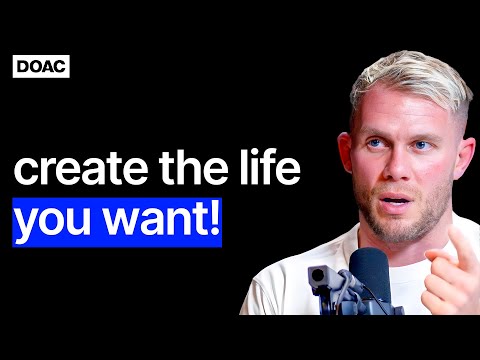
James Smith: How To Create The Life You’ve Always Wanted | E120
James Smith (guest), Steven Bartlett (host), Narrator, Narrator
In this episode of The Diary of a CEO, featuring James Smith and Steven Bartlett, James Smith: How To Create The Life You’ve Always Wanted | E120 explores james Smith Redefines Success, Fitness, and Freedom From Mental Prison James Smith, once written off at school and stuck in low-level sales jobs, explains how he built a global fitness brand by focusing on education, honesty, and relentless consistency rather than aesthetics or popularity.
James Smith Redefines Success, Fitness, and Freedom From Mental Prison
James Smith, once written off at school and stuck in low-level sales jobs, explains how he built a global fitness brand by focusing on education, honesty, and relentless consistency rather than aesthetics or popularity.
He challenges conventional narratives around careers, money, weight loss, and social media, arguing that many people are stuck in "mental jail"—living lives designed by others, numbing dissatisfaction with food, work, or distractions.
Smith details his philosophy of teaching principles over prescriptions, celebrating small wins, cultivating selective polarisation online, and designing an uncancellable life with multiple escape plans.
He also opens up about adoption, anxiety, impostor syndrome, relationships, psychedelics, and his desire for fatherhood, using these themes to explore what a genuinely fulfilling life looks like beyond wealth or external validation.
Key Takeaways
Redefine what “success” and “wealthy” mean on your own terms.
Smith considers being able to buy dinner for friends and family without checking his bank account as "wealth" and never aimed for stereotypical riches. ...
Get the full analysis with uListen AI
Treat fitness professionals like driving instructors: they should make you independent.
Smith rejects lifetime dependency on trainers and one-size-fits-all plans. ...
Get the full analysis with uListen AI
If you’re excelling in a job you hate, you can succeed in your passion.
He challenges people stuck in unfulfilling corporate roles: hitting quota for years in a job you dislike proves capability, not limitation. ...
Get the full analysis with uListen AI
Build a life that minimizes dependence on external validation and cancel risk.
Smith deliberately keeps control of his distribution (books, email list, academy, talks) so losing social or TV exposure would barely dent his business. ...
Get the full analysis with uListen AI
Address life dissatisfaction before attacking diet or discipline problems.
From coaching, Smith noticed many “yo-yo dieters” weren’t simply greedy or lazy; they were miserable in their jobs and relationships. ...
Get the full analysis with uListen AI
Use polarisation strategically: you only need a small number of true fans.
On crowded platforms, Smith uses strong, sometimes abrasive opinions to stand out, fully accepting that half the audience may dislike him. ...
Get the full analysis with uListen AI
Design outlets for expression and ego-checks to avoid “mental jail.”
Smith uses podcasting and content as therapeutic outlets to express his true thoughts, and Brazilian jiu-jitsu to keep his ego grounded—getting physically dominated after business successes reminds him he’s not invincible. ...
Get the full analysis with uListen AI
Notable Quotes
“Where the hell have you come to the conclusion that you would not succeed following your passion?”
— James Smith
“Like a driving instructor, I should not exist in your life in six months.”
— James Smith
“All wins feel the same. You don’t get an Uber surcharge on dopamine.”
— James Smith
“If you don’t wish to be criticized, do nothing, say nothing, be nothing.”
— James Smith (quoting Seneca, applying it to himself)
“I don’t think people are gluttonous and greedy. People don’t want to be this way.”
— James Smith
Questions Answered in This Episode
You argue that over-supplemented, HIIT-heavy plans cause people to blame themselves when they fail; if you had Joe Wicks in front of you now, what very specific program or messaging changes would you challenge him to make?
James Smith, once written off at school and stuck in low-level sales jobs, explains how he built a global fitness brand by focusing on education, honesty, and relentless consistency rather than aesthetics or popularity.
Get the full analysis with uListen AI
When you talk about the office worker who eats a 500-calorie toast just to kill time, what concrete first steps would you prescribe to someone in that exact position to redesign their work and home life before touching their diet?
He challenges conventional narratives around careers, money, weight loss, and social media, arguing that many people are stuck in "mental jail"—living lives designed by others, numbing dissatisfaction with food, work, or distractions.
Get the full analysis with uListen AI
You deliberately cultivate selective hatred online to grow; where do you personally draw the ethical line between polarising for impact and exploiting outrage in a way that might harm vulnerable followers?
Smith details his philosophy of teaching principles over prescriptions, celebrating small wins, cultivating selective polarisation online, and designing an uncancellable life with multiple escape plans.
Get the full analysis with uListen AI
You’ve described psychedelics as “therapy with yourself” that asked whether people like you for who you are or what you do—how has your behaviour actually changed day-to-day as a result of that specific question?
He also opens up about adoption, anxiety, impostor syndrome, relationships, psychedelics, and his desire for fatherhood, using these themes to explore what a genuinely fulfilling life looks like beyond wealth or external validation.
Get the full analysis with uListen AI
You say you want children partly to continue a lineage that almost broke with your biological mother; if your future son or daughter started showing the same school disengagement you did, how would you handle it differently from how the system handled you?
Get the full analysis with uListen AI
Transcript Preview
We've spoken about quite a few things today that I've never really-
Hmm.
... spoken about.
James Smith, the world's fastest growing online personal trainer. But he's much more than that.
Like a driving instructor, I should not exist in your life in six months. Why is it so acceptable for people to invest money into fitness professionals and them still be there three years later? 'Cause if you do your job well enough, your client leaves. If people were truly happy, I would've been, "Shut the hell up then," and I wouldn't have experienced so much growth from pointing out the inadequacies. I don't like people that presents a solution without education. It breaks me to think of the tens of thousands of people who gave up on their ambitions because they went the wrong way for advice. And when they fail the plan or don't finish it, they blame themselves. Where the hell have you come to the conclusion that you would not succeed following your passion? I just wish that maybe earlier on someone had said to me, "Okay, you're not doing well here, but this doesn't mean you're not intelligent. There is something else that you could very well at."
Quick one. Can you do me a favor if you're listening to this and hit the subscribe button, the follow button, wherever you're listening to this podcast? Thank you so much. James Smith, the world's fastest growing online personal trainer. But he's much more than that. He's an author of three books. His third one's about to come out. He's unapologetic. He is outspoken, and he says it how it is. And that's meant that he now reaches millions of people online every single week. Now I had an expectation on James. I've seen him on social media, I've seen the types of things he says when he's on telly. But the guy I met today, deeply self-aware, unbelievably humble, and so incredibly wise. And because he's so honest and straight talking, I walk away with some lessons that I genuinely believe will stay with me for a lifetime. You are gonna love this one. Trust me when I say that. Without further ado, I'm Steven Bartlett, and this is the Diary of a CEO. I hope nobody's listening, but if you are, then please keep this to yourself. (instrumental music) James, you've listened to this podcast before. Um, so y- you probably know that I tend to start in a similar place. I tend to ask my guests about their early years. But when I was reading about comments you'd made about your early years, one of the things you said is it's not- not much very interesting happened.
Yeah. I mean, it's one of those things where it's like ther- there's so many things to talk about. Let's not go there. As a young child in school, didn't have a huge amount of friends, and I think that primary and secondary school, if you had to pick five people that are never gonna accomplish anything in life, I would've been in that- that group of people. Uh, I was diagnosed with learning difficulties, which kind of been disputed. I remember Jimmy Carr talking about getting that laptop, and it's true, he had to see an educational psychologist, and at the end they were like, "James' reading and writing speed is very quick. We think he's just lazy." And throughout school, I was in the cloakroom, and they give you extra time on exams, which I didn't need because I was so bored. I'd be done with the exam 20 minutes before everyone else and just sat there, not through being intelligent but like, "I can't be bothered with this." And a lot of behavioral issues at school. Uh, if I look back at that, I almost feel like my brain was only functioning at 20% throughout the whole education system, probably up until college and dropping out of university in my first year.
Install uListen to search the full transcript and get AI-powered insights
Get Full TranscriptGet more from every podcast
AI summaries, searchable transcripts, and fact-checking. Free forever.
Add to Chrome