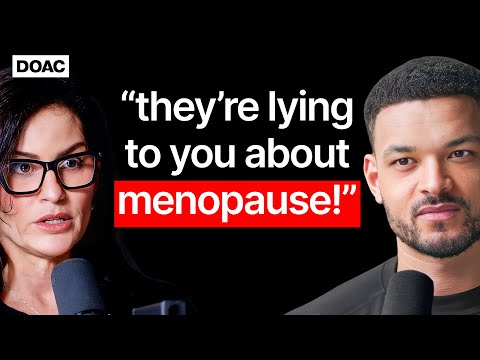
The No.1 Menopause Doctor: They’re Lying To You About Menopause! Mary Claire Haver
Mary Claire Haver (guest), Steven Bartlett (host)
In this episode of The Diary of a CEO, featuring Mary Claire Haver and Steven Bartlett, The No.1 Menopause Doctor: They’re Lying To You About Menopause! Mary Claire Haver explores menopause Revealed: Why Millions Of Women Need Truth, Not Silence Dr. Mary Claire Haver argues that while menopause is inevitable, the widespread suffering around it is largely preventable and massively under-treated. She explains that declining estrogen and testosterone affect virtually every organ system, driving symptoms from hot flashes and brain fog to depression, frozen shoulder, cardiovascular disease, diabetes and osteoporosis.
Menopause Revealed: Why Millions Of Women Need Truth, Not Silence
Dr. Mary Claire Haver argues that while menopause is inevitable, the widespread suffering around it is largely preventable and massively under-treated. She explains that declining estrogen and testosterone affect virtually every organ system, driving symptoms from hot flashes and brain fog to depression, frozen shoulder, cardiovascular disease, diabetes and osteoporosis.
Only about 10.5% of symptomatic women receive hormone therapy despite strong evidence that timely HRT can reduce all‑cause mortality and major chronic disease risks. Haver dissects how flawed reporting of the Women’s Health Initiative, medical undertraining, fat bias and entrenched sexism led to a generation of doctors who under-treat menopause and over-prescribe antidepressants.
Beyond hormones, she lays out a practical toolkit centered on strength training, protein and fiber-rich anti‑inflammatory nutrition, vitamin D, sleep, fasting, stress reduction and relationship support. She urges women to self‑advocate, normalize conversation, and for partners—especially men—to understand, validate and actively support the women in their lives through this transition.
Key Takeaways
Menopause affects nearly every organ system, not just hot flashes and periods.
Estrogen receptors exist in the brain, bones, muscles, joints, skin, kidneys, ears, and urogenital tract. ...
Get the full analysis with uListen AI
HRT, started at the right time, can reduce mortality and chronic disease risk.
Observational and re‑analysed WHI data show that women who begin HRT in perimenopause or within 10 years of menopause have lower all‑cause mortality, and reduced risks of cardiovascular disease, diabetes, and dementia. ...
Get the full analysis with uListen AI
Fear of breast cancer from HRT is largely based on misinterpreted data.
The Women’s Health Initiative’s estrogen‑plus‑progestin arm showed an increase from 4 to 5 breast cancers per 1,000 women per year—an absolute increase of 1 in 1,000, but publicized as a 25% relative increase. ...
Get the full analysis with uListen AI
Strength over skinny: muscle mass is a critical determinant of healthy aging.
In the first decade after menopause, women can lose 10–15% of their muscle mass. ...
Get the full analysis with uListen AI
Anti‑inflammatory, fiber‑rich nutrition significantly supports menopausal health.
Estrogen is a powerful anti‑inflammatory hormone; when it declines, chronic inflammation rises. ...
Get the full analysis with uListen AI
Mental health shifts around menopause are biological and treatable, not character flaws.
Rates of depression, anxiety, bipolar exacerbations, ADHD symptoms, and possibly suicidality increase during peri‑ and post‑menopause. ...
Get the full analysis with uListen AI
Women must actively self‑advocate and normalize menopause conversations with families and doctors.
Most clinicians receive minimal menopause training; funding and guidelines lag far behind fertility care. ...
Get the full analysis with uListen AI
Notable Quotes
“Menopause is inevitable. Suffering is not.”
— Dr. Mary Claire Haver
“It would be as if your testicles shriveled up and died at 51. That's the equivalent.”
— Dr. Mary Claire Haver
“In 2023, 85% of women are complaining of menopausal symptoms; 10.5% are receiving treatment or therapy.”
— Dr. Mary Claire Haver
“I was a horrible menopause provider for probably 15 years.”
— Dr. Mary Claire Haver
“My mantra is: menopause is inevitable, suffering is not. But you're going to have to advocate for yourself because society has failed us.”
— Dr. Mary Claire Haver
Questions Answered in This Episode
You argue that estrogen is better at prevention than cure; for a woman in her late 50s who is more than 10 years past menopause, what specific benefits and risks still realistically remain on the table if she starts HRT now?
Dr. ...
Get the full analysis with uListen AI
Given the underfunding of menopause research and the legacy of the WHI, what exact changes in medical school curricula or guidelines would you implement first to stop new doctors repeating the same under‑treatment you admit you once practiced?
Only about 10. ...
Get the full analysis with uListen AI
For a woman who cannot or does not want to use systemic hormones (for example, due to prior hormone‑sensitive cancer), which three non‑hormonal interventions from your ‘toolkit’ have the strongest evidence for reducing cardiovascular and fracture risk, and how should she prioritize them?
Beyond hormones, she lays out a practical toolkit centered on strength training, protein and fiber-rich anti‑inflammatory nutrition, vitamin D, sleep, fasting, stress reduction and relationship support. ...
Get the full analysis with uListen AI
You described menopause as a factor in many divorces and also as a catalyst for women to stop carrying others’ emotional load; where do you personally draw the line between a woman rightly reclaiming boundaries and a hormone‑driven reaction that might resolve with treatment and support?
Get the full analysis with uListen AI
The Galveston Diet and fasting protocols you recommend require planning and discipline—how would you pragmatically adapt your approach for a low‑income, shift‑working woman with caregiving responsibilities who has little time, money, or control over her food environment?
Get the full analysis with uListen AI
Transcript Preview
In 2023, 85% of women are complaining of menopausal symptoms, 10.5% are receiving treatment or therapy. I mean, it would be as if your testicles shriveled up and died at 51. That's the equivalent.
Let's get started.
Dr. Marie Claire Haver. Renowned menopause expert.
With more than two million followers. Helping countless women through their menopause experiences.
Menopause is inevitable, suffering is not. But a woman is more likely to be prescribed an antidepressant for her menopause than hormone therapy. Women by the thousands were like, "Oh my God, I had no idea." That's when I realized, no one's talking about this. So here's their laundry list of symptoms, we've categorized about 70. So there's brain fog, changes in her sexual function, weight gain. But here's the scary things, and the studies have been done. We see either a new onset or worsening of depression, anxiety, bipolar, ADHD, risks for cardiovascular disease and diabetes increases, recurrent urinary tract infections, which is a major cause of death for women. They're suffering in silence and I was one of those women. I want to see my grandkids one day. I want to watch these women I've raised grow up and, you know, be the women they're meant to be. And that choice might get taken away from me if I'm not careful. But there's lots of things that we can do. For example, we see a dramatic loss of muscle mass. Focus on strength training, this is going to determine your longevity as you age. Strength over skinny. What about your diet? I developed a program for my patients, and it's not rocket science, it's...
Whether you're a man or a woman, menopause is going to affect you, because it's going to affect 50% of our society. And there is 1.2 billion women being affected by menopause right now. And whether you're a man or a woman, most of us don't have the answers. How do we help? How do we talk about it? What is it? How does it affect the human body? If you're in a relationship with a woman that's in perimenopause, which can start at 30, up to a woman that is currently going through menopause in her 40s or 50s or 60s, what should you do to support her? What can she do to support herself? This subject of menopause has exploded in public conversation, thankfully. But there's still so many unanswered questions. And that's why today, I invited one of the leading voices on menopause globally onto my show. Even as a man that won't go through menopause myself, but has a partner and a mum that certainly will, there's something that everyone can learn from this. And I implore all men who maybe clicked on this episode or were sent this link to listen. Please just listen, because you can learn something too. And for everybody new to this channel, can you do me a favor? If you like what we do here, you like the guests we have on, and you like the show that we bring to you, can you hit the subscribe button? It is the single thing and the only thing I'll ever ask of you. I would love you to join us on this journey. And if you do, I will repay you and that is a promise. Do we have a deal? Thank you. Dr. Marie Claire Haver, why do you do what you do?
Install uListen to search the full transcript and get AI-powered insights
Get Full TranscriptGet more from every podcast
AI summaries, searchable transcripts, and fact-checking. Free forever.
Add to Chrome