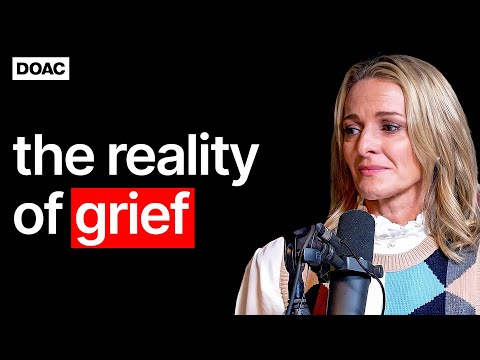
Gabby Logan Opens Up About Her Heartbreaking Past | E191
Gabby Logan (guest), Narrator, Steven Bartlett (host), Narrator
In this episode of The Diary of a CEO, featuring Gabby Logan and Narrator, Gabby Logan Opens Up About Her Heartbreaking Past | E191 explores grief, Graft, And Midlife: Gabby Logan On Loss And Reinvention Gabby Logan traces how a nomadic footballing childhood, her father’s unprocessed trauma, and the sudden death of her 15‑year‑old brother shaped her drive, defenses, and career in broadcasting.
Grief, Graft, And Midlife: Gabby Logan On Loss And Reinvention
Gabby Logan traces how a nomadic footballing childhood, her father’s unprocessed trauma, and the sudden death of her 15‑year‑old brother shaped her drive, defenses, and career in broadcasting.
She describes building self-esteem through hard work, then losing and rebuilding it in male-dominated media cultures that normalized drinking, sexism, and overwork.
In midlife, menopause and her husband Kenny’s prostate cancer forced both of them to confront mortality, mental health, and the need for honest communication at home.
Across grief, career, and marriage, Logan emphasizes talking openly, doing the unglamorous groundwork, nurturing non‑work passions, and designing midlife as an intentional “second half,” not a decline.
Key Takeaways
Early self-esteem is one of the greatest gifts parents can give.
Logan contrasts her own confidence leaving school with her dyslexic husband’s lack of it, arguing that every child needs at least one adult to identify and affirm their ‘star’ before they leave education. ...
Get the full analysis with uListen AI
Unprocessed trauma doesn’t disappear; it leaks out through coping behaviors.
Her father endured a brutal football culture, the Bradford City fire, and the loss of his son without proper psychological support, medicating with alcohol instead. ...
Get the full analysis with uListen AI
Sudden bereavement reshapes your worldview and your relationships for decades.
Daniel’s death at 15 created a permanent ‘before and after. ...
Get the full analysis with uListen AI
Distraction and overwork are socially rewarded but emotionally expensive coping strategies.
After Daniel’s death, Logan ‘became queen of joining in’ at university—clubs, jobs, constant busyness—to outrun her pain. ...
Get the full analysis with uListen AI
Career breakthroughs often rest on unglamorous groundwork plus proactive opportunism.
She spent years on unsociable local radio shifts (3–4 a. ...
Get the full analysis with uListen AI
Toxic work cultures can erode identity; fitting in isn’t always worth the cost.
At 1990s Sky Sports she tried to match ‘laddish’ banter and after‑shift drinking in a male, Fleet Street‑influenced newsroom. ...
Get the full analysis with uListen AI
Midlife can be a designed second act—if you address biology, identity, and communication.
Logan’s sense that ‘nothing felt as exciting anymore’ turned out to be perimenopause, not personality change. ...
Get the full analysis with uListen AI
Notable Quotes
“There is a before and there's an after, and that day is that day that really defined so many things for me.”
— Gabby Logan (on her brother’s death)
“The greatest gift you can give children is self-esteem… somebody needs to tell you you are good at something before you're on your way.”
— Gabby Logan
“He did all of this and never sat down with anybody and took stock… if he was that sportsperson now, there'd be a sports psychologist at the club.”
— Gabby Logan (about her father)
“Your shit thing's happened.”
— Gabby Logan’s therapist (as recalled by Gabby)
“If I had no fear, I would… go and try and work in LA for a year. I always wanted to work in American TV. It would be pretty much Oprah Winfrey.”
— Gabby Logan
Questions Answered in This Episode
You described years of semi-subconscious ‘waiting for the next terrible thing’ after Daniel’s death; if you were working with someone in that mindset today, what specific exercises or practices would you suggest to help them feel safe again in the world?
Gabby Logan traces how a nomadic footballing childhood, her father’s unprocessed trauma, and the sudden death of her 15‑year‑old brother shaped her drive, defenses, and career in broadcasting.
Get the full analysis with uListen AI
Looking back at 1990s Sky, is there a particular incident of sexism or ‘lad culture’ that you now wish you’d called out publicly at the time—and what stopped you from doing so then?
She describes building self-esteem through hard work, then losing and rebuilding it in male-dominated media cultures that normalized drinking, sexism, and overwork.
Get the full analysis with uListen AI
You said counseling was crucial after your brother’s death; how did you choose a therapist and what did the most effective sessions actually look like in terms of what you talked about and did?
In midlife, menopause and her husband Kenny’s prostate cancer forced both of them to confront mortality, mental health, and the need for honest communication at home.
Get the full analysis with uListen AI
As a high-profile woman going through menopause on live TV, were there specific on-air moments or work decisions that were directly influenced by your symptoms or your HRT—and how did you manage that with producers and colleagues?
Across grief, career, and marriage, Logan emphasizes talking openly, doing the unglamorous groundwork, nurturing non‑work passions, and designing midlife as an intentional “second half,” not a decline.
Get the full analysis with uListen AI
If you did move to LA tomorrow to pursue an ‘Oprah-style’ show, what would you deliberately do differently from your UK broadcasting career in terms of format, boundaries, and how much of your own story you put on screen?
Get the full analysis with uListen AI
Transcript Preview
You'd wake up just with those first thoughts of the day would just ... Oh, God. I did have a, a fear that I was gonna ...
Gaby Logan! One of the most recognizable broadcasters, she's become synonymous with the Olympics, football, and rugby.
Oh, no.
It was a very male-dominated environment. And there certainly were people who exhibited kind of machismo. And there, there were times where I felt like I was trying to conform, but it didn't make me feel very good. I wasn't happy. My dad was, um, assistant manager of Bradford City when the fire there took 56 lives, and we were all there at the game that day. Bodies are being dragged away from that stand. It's a seminal day of my life, really, because there is a before and there's an after. And that day is that day that really defined lot, so many things for me.
Can you still remember that you get a phone call from your mother about your brother?
It's a day that I have relived so many times in my mind. I can't express how shocking that is because he was fine, you know? (laughs) In my mind, immediately created a narrative that he had been run over or he had been in a car accident, and then very quickly my mum started to tell me actually what had happened.
Before this episode begins, I just wanna say a huge thank you to all of our new subscribers. 74% of you that watch this channel didn't subscribe before, and we're now down to about 71%. So, that helps us in a number of ways that are quite hard to explain, but simply, the bigger the channel gets, the bigger the guests get. So if you haven't yet subscribed to The Diary of a CEO, if I could have any favors from you, if you've ever watched this show and enjoyed it, it's just to, to please hit the subscribe button. Without further ado, I'm Steven Bartlett, and this is The Diary of a CEO. I hope nobody's listening, but if you are, then please keep this to yourself. Gaby, to understand you and to understand the trajectory of your life and how you've ended up to be where you are today, and the, the passions you pursued, the person you became, what do I need to understand about your earliest context?
I hope I've gone into that in my book, and I've tried to understand that myself. And one of the biggest compliments somebody has paid me who's read the book is somebody I work with really closely, and she just said to me, "I get so much about you from some of the stories you've told of, as, as a child even." We can all point to big incidents that happen in life, but actually sometimes it's just the small things that create, um, in your mind an urgency or they create, um, a desire or a passion that, you know, um, still burns inside you and you wonder where it came from. Um, so I think you probably would need to understand a bit about the parenting that I received and the context of our family life and where, when we moved around and how our lives, uh, were predicated by my dad's job and what he did and the background that he had as well.
Install uListen to search the full transcript and get AI-powered insights
Get Full TranscriptGet more from every podcast
AI summaries, searchable transcripts, and fact-checking. Free forever.
Add to Chrome