Harvard Professor: REVEALING The 7 Big LIES About Exercise, Sleep, Running, Cancer & Sugar!!!
Steven Bartlett (host), Dr Daniel E. Lieberman (guest), Narrator
In this episode of The Diary of a CEO, featuring Steven Bartlett and Dr Daniel E. Lieberman, Harvard Professor: REVEALING The 7 Big LIES About Exercise, Sleep, Running, Cancer & Sugar!!! explores harvard Professor Exposes Exercise Myths, Cancer Risks, And Comfort Crisis Harvard evolutionary biologist Daniel Lieberman explains how mismatches between our evolved bodies and modern lifestyles drive chronic diseases, and why movement is one of our most powerful yet underused medicines.
Harvard Professor Exposes Exercise Myths, Cancer Risks, And Comfort Crisis
Harvard evolutionary biologist Daniel Lieberman explains how mismatches between our evolved bodies and modern lifestyles drive chronic diseases, and why movement is one of our most powerful yet underused medicines.
He debunks common myths about sitting, sleep, running, and weight loss, showing that modest, regular activity profoundly reduces risks of cancer, cardiovascular disease, dementia, and functional decline with age.
Lieberman argues humans evolved to be active when it’s necessary or rewarding, not to "exercise" for its own sake, so social structures, incentives, and compassion are essential to help people move more in an inactive world.
He emphasizes strength training as we age, smarter running mechanics, foot strengthening, environmental nudges (like taxing sugar), and a shift from treatment to prevention in medicine and workplaces.
Key Takeaways
Frequent light movement matters more than demonizing sitting or chasing 10,000 steps.
Hunter-gatherers sit as much as Westerners, but they interrupt sitting every 10–15 minutes, which switches on metabolic and cellular processes that improve blood sugar and gene expression. ...
Get the full analysis with uListen AI
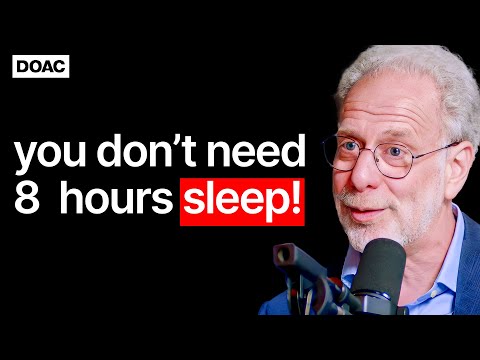
Seven hours of sleep is often more optimal than the rigid eight‑hour rule.
Field studies on people without electricity or screens show they naturally sleep about 6–7 hours a night without napping. ...
Get the full analysis with uListen AI
Strength training is critical to slow age-related decline and maintain independence.
Loss of muscle mass (sarcopenia) with age triggers a vicious cycle: weaker muscles reduce activity, which accelerates further muscle loss and frailty. ...
Get the full analysis with uListen AI
Exercise is one of the most powerful tools for cancer prevention—and it’s underused.
Many cancers are diseases of energy and hormonal imbalance. ...
Get the full analysis with uListen AI
Exercise helps with weight—but mostly by preventing gain and regain, not rapid loss.
At the commonly prescribed 150 minutes per week, exercise only burns modest calories—about a mile’s walking per day—so weight loss is small and slow. ...
Get the full analysis with uListen AI
Our comfort-obsessed environment undermines foot health, posture, and natural movement.
Stiff, cushioned, arch‑supportive shoes act like a cast, letting intrinsic foot muscles atrophy and contributing to problems like plantar fasciitis. ...
Get the full analysis with uListen AI
Lasting exercise habits are driven by social structure, accountability, and compassion, not guilt.
Humans evolved to be active when activity was necessary or rewarding; in a modern world where it’s rarely necessary, the reward is often social (friends, teams, dancing, clubs, accountability contracts). ...
Get the full analysis with uListen AI
Notable Quotes
“Genes load the gun and environment pulls the trigger.”
— Daniel Lieberman
“People evolved to be physically active for two reasons and two reasons only: when it’s necessary and when it’s rewarding.”
— Daniel Lieberman
“We spend approximately 3% of our medical budget on prevention, and yet 75% of the time the disease is a preventable disease. It’s a completely backward, stupid system.”
— Daniel Lieberman
“We evolved to be grandparents, but grandparents in the old days weren’t retiring to Florida… they were working until they died.”
— Daniel Lieberman
“Anything is better than nothing. You don’t have to swim the English Channel or run a marathon to get the benefits of exercise.”
— Daniel Lieberman
Questions Answered in This Episode
You showed that seven hours of sleep is often optimal—how should someone who routinely needs nine hours interpret that data, and when does long sleep become a red flag versus just individual variation?
Harvard evolutionary biologist Daniel Lieberman explains how mismatches between our evolved bodies and modern lifestyles drive chronic diseases, and why movement is one of our most powerful yet underused medicines.
Get the full analysis with uListen AI
If a government actually adopted your nudging agenda—taxing sugar, subsidizing healthy food, funding public dancing—what specific policy package would you prioritize first to get the biggest health gains within ten years?
He debunks common myths about sitting, sleep, running, and weight loss, showing that modest, regular activity profoundly reduces risks of cancer, cardiovascular disease, dementia, and functional decline with age.
Get the full analysis with uListen AI
You argue that running doesn’t inherently destroy knees, but that form matters; how would you design a simple, evidence-based beginner running program that transitions a sedentary person safely from walking to pain-free running?
Lieberman argues humans evolved to be active when it’s necessary or rewarding, not to "exercise" for its own sake, so social structures, incentives, and compassion are essential to help people move more in an inactive world.
Get the full analysis with uListen AI
Given that foot weakness and supportive shoes are a classic mismatch, what would a realistic 6–12 month progression toward stronger feet and more minimal footwear look like for someone with a history of plantar fasciitis?
He emphasizes strength training as we age, smarter running mechanics, foot strengthening, environmental nudges (like taxing sugar), and a shift from treatment to prevention in medicine and workplaces.
Get the full analysis with uListen AI
You’ve shown exercise is incredibly powerful for cancer and chronic disease prevention, yet budgets still prioritize treatment—what do you think are the main political or economic forces blocking a true prevention-first healthcare model, and how could they realistically be overcome?
Get the full analysis with uListen AI
Transcript Preview
A lot of people exercise because they believe it will help them to lose fat.
One of the biggest debates on the planet.
What advice have you got for me?
So this is not a well-known fact, but-
Daniel Lieberman.
He studies and teaches-
... how humans are supposed to live.
Author and professor at Harvard University. Exercise. Disease.
Sleep.
Nutrition.
He has the answers on all of those things that most of us care about.
We evolved to be very physically active, working in the fields, hunting, gathering. But now we live in a world where only 50% of Americans ever exercise, and the rest of the world is headed our way. Cancers, depression, anxiety can attribute that to less physical activity. In fact, women who get a 150 minutes of physical activity a week have a 30 to 50% lower breast cancer risks. I mean, it's crazy, right? The problem is that we spend 3% of our medical budget on prevention, and yet 75% of the time, the disease is a preventable disease. It's a completely backward, stupid system.
When you started writing this book about exercise, was there any instant changes that you implemented into your own life?
Strength training. The more I study the importance of doing weights, especially as you age, the more I started kicking myself for being lazy about that. When people retire, they become less active. They tend to lose muscle, and then that starts off a vicious cycle.
So would you say we shouldn't retire?
Well, it's a very modern Western concept. And yes, we do pay a price for it.
So how does one go from having a negative opinion towards exercise to becoming an exerciser?
As an evolutionary biologist, there are multiple ways of doing that. So...
Daniel, what are some of the biggest myths within exercise?
Gosh, there are so many. One of the most common, of course, is ...
Daniel Lieberman. He's been to every corner of the world, visiting native tribes to understand how humans are supposed to live. And now he has the answers on all of those things that most of us care about on sleep, nutrition, exercise, disease. You know, on disease, he says that 74% of them can be prevented, and he knows how to prevent them. Aging, running, are we born to run? He tells me this story of a CEO that forces his employees to exercise, and the impact that that's had on that company. And he talks about how as humans, we've evolved to either use it or lose it. So maybe, maybe retirement is a really bad idea for many of us. One of the most thought-provoking, pivotal conversations I've had on this show. You're really going to take a lot from this one. And I suspect, after listening, you'll probably start running too, for exercise, or from some of the decisions you've spent your life making. Daniel, your work is so, so incredibly im- impressive, reaches such an incredible depth, charters new territory, and it's been an unbelievable, clearly very passion-driven career you had. So my first question for you is, why are you doing this?
Install uListen to search the full transcript and get AI-powered insights
Get Full TranscriptGet more from every podcast
AI summaries, searchable transcripts, and fact-checking. Free forever.
Add to Chrome