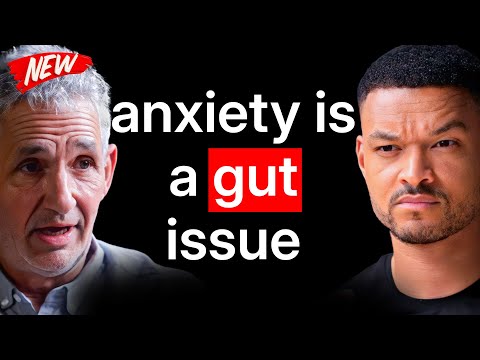
The Microbiome Doctor: Doctors Were Wrong! The 3 Foods You Should Eat For Perfect Gut Health!
Tim Spector (guest), Steven Bartlett (host)
In this episode of The Diary of a CEO, featuring Tim Spector and Steven Bartlett, The Microbiome Doctor: Doctors Were Wrong! The 3 Foods You Should Eat For Perfect Gut Health! explores gut microbes, inflammation, and food choices reshape brain health prevention Tim Spector links rising dementia risk and many “brain diseases” to whole-body drivers—especially inflammation, metabolism (blood sugar control), and signals originating in the gut microbiome.
Gut microbes, inflammation, and food choices reshape brain health prevention
Tim Spector links rising dementia risk and many “brain diseases” to whole-body drivers—especially inflammation, metabolism (blood sugar control), and signals originating in the gut microbiome.
He argues medicine has over-focused on brain chemistry in isolation, while emerging evidence ties immune activity, diet, oral health, and lifestyle (sleep/fasting, social connection, stress/trauma) to cognition and mood.
Spector shares an “8 rules for gut health” framework emphasizing plant diversity, fermented foods, less ultra-processed food, and a focus on food quality over calories.
The conversation also covers coffee, gluten misconceptions, the potential and risks of GLP-1 drugs, cautious curiosity about keto for brain metabolism, and environmental concerns like microplastics.
Key Takeaways
Treat the brain as part of the body, not a separate system.
Spector argues many mental and neurodegenerative conditions share common roots—immune activation and metabolic dysfunction—so brain prevention overlaps with general health behaviors, especially diet-driven inflammation control.
Get the full analysis with uListen AI
Gut-to-brain signaling is largely one-way (gut → brain).
He highlights the vagus nerve with the claim that ~80% of signaling travels from gut to brain, supporting why dietary changes can rapidly affect mood and energy before measurable blood changes.
Get the full analysis with uListen AI
Diet upgrades often improve mood and energy first.
Across ZOE interventions and a TV-family makeover example, participants reported early improvements in energy, alertness, and mood after shifting away from highly processed diets—creating a reinforcing feedback loop for healthier eating.
Get the full analysis with uListen AI
Aim for plant diversity—“30 plants per week.”
Different microbes specialize in different substrates; eating many plant types increases helpful species and their metabolites (e. ...
Get the full analysis with uListen AI
Fermented foods may reduce inflammation quickly and meaningfully.
He cites a Stanford study (small sample) where high fermented-food intake reduced inflammatory markers and notes ZOE member self-tracking where ~half reported better mood/energy and less hunger after adding ~3 ferments/day.
Get the full analysis with uListen AI
Prebiotics (feeding microbes) can outperform probiotics (adding microbes).
Spector describes a ZOE trial where a diverse plant-based prebiotic blend shifted many more “good vs bad” microbes than a single-strain probiotic, reframing probiotics as more of an immune “signal” than a lasting gut seed.
Get the full analysis with uListen AI
Quality beats calories for sustainable weight and metabolic health.
He argues calorie counting and low-fat/low-calorie products often backfire by increasing hunger; instead prioritize minimally processed whole foods and avoid ultra-processed products engineered to drive overeating.
Get the full analysis with uListen AI
Ultra-processed foods harm via additives and hyperpalatability.
Beyond sugar/salt/fat, he emphasizes emulsifiers, sweeteners, colorants, etc. ...
Get the full analysis with uListen AI
Many “gluten problems” are actually ultra-processed food problems.
He notes a large perception gap (many avoid gluten; few medically need to) and suggests reactions often come from processed bread, fillings, and additives rather than gluten itself.
Get the full analysis with uListen AI
Oral health may be tied to dementia risk.
He claims flossing is associated with a large dementia-risk reduction and frames it through oral microbiome inflammation potentially influencing brain inflammation—an example of microbes “in the wrong place” causing harm.
Get the full analysis with uListen AI
Time-restricted eating can help, but personalization matters.
He recommends a 12–14 hour overnight fast and avoiding late-night snacking for gut lining and circadian benefits, while acknowledging adherence varies widely and some people feel excessively hungry.
Get the full analysis with uListen AI
GLP-1 drugs could transform public health, but need lifestyle pairing and monitoring.
Spector sees major benefit for obesity/diabetes and possibly dementia risk reduction, but worries people take them without dietary education and raises open questions about long-term effects on motivation, risk-taking, and behavior.
Get the full analysis with uListen AI
Notable Quotes
“For forty years, we've been down, going down the wrong path.”
— Tim Spector
“The whole idea of assessing food by calories is wrong.”
— Tim Spector
“Eighty percent of the signals go gut to brain. Only twenty percent go brain to gut.”
— Tim Spector
“Fermented food is any food that's been transformed by microbes into something better.”
— Tim Spector
“If it says zero fat, it's a sign it's unhealthy, you should avoid it.”
— Tim Spector
Questions Answered in This Episode
On the flossing claim: what specific study designs support the “nearly half” dementia risk reduction, and what confounders (income, healthcare access, smoking) were controlled for?
Tim Spector links rising dementia risk and many “brain diseases” to whole-body drivers—especially inflammation, metabolism (blood sugar control), and signals originating in the gut microbiome.
Get the full analysis with uListen AI
You mention a new ZOE gut scoring method (100 common microbes, 50 good/50 bad). Which microbes are in that panel, and how strongly does the score predict hard outcomes (A1c, LDL, incident disease)?
He argues medicine has over-focused on brain chemistry in isolation, while emerging evidence ties immune activity, diet, oral health, and lifestyle (sleep/fasting, social connection, stress/trauma) to cognition and mood.
Get the full analysis with uListen AI
For the Stanford fermented-food study (n≈28), what fermented foods were used, what was the comparison diet, and how durable was the ~25% inflammation reduction after stopping?
Spector shares an “8 rules for gut health” framework emphasizing plant diversity, fermented foods, less ultra-processed food, and a focus on food quality over calories.
Get the full analysis with uListen AI
If probiotics don’t “seed” the gut, which use-cases still justify them (e.g., post-antibiotics, IBS, traveler’s diarrhea), and what strains have the best evidence?
The conversation also covers coffee, gluten misconceptions, the potential and risks of GLP-1 drugs, cautious curiosity about keto for brain metabolism, and environmental concerns like microplastics.
Get the full analysis with uListen AI
You suggest Parkinson’s may start in the gut via alpha-synuclein traveling up the vagus nerve. What evidence would conclusively prove causality, and what dietary intervention trials are underway?
Get the full analysis with uListen AI
Transcript Preview
Studies show that if you are flossing, you can reduce your risk of dementia by nearly half, which is quite impressive. So I started to research the brain much more, and it made me realize this link with the brain and the gut is absolutely crucial, and how that influences many things in our brain. For example, things like depression, mood changes, fatigue, and energy. But for forty years, we've been going down the wrong path. We've got so distracted by treating the brain as something so different to the rest of the body.
So what do we do about it if we want to have optimally healthy brains?
So-
Professor Tim Spector is one of the top one hundred most cited scientists worldwide.
And he's back to reveal the critical role our gut plays with our physical and mental health-
Our cognition-
And the prevention of chronic disease.
We can dramatically improve our lives and our health just by making the right food choices. And I've got eight rules for gut health, which work for all health. So first thing, pivot your protein, then there's quality, not calories. The whole idea of assessing food by calories is wrong. Calorie-restricted diets have been shown for the vast majority of people not to work. Your hunger signals go up, and hunger is the main driver of obesity, and we'll get into the other rules.
And what about coffee?
So drinking between two and five cups of coffee reduces your risk of heart disease by about twenty-five percent.
And then, what do you think of almonds?
So there's lots of studies showing they're good for your cognition and mood.
And what about your views on GLP-1s like Ozempic?
I think from a public health perspective, they're going to transform medicine, and we ought to be taking it much more seriously, but I've got two real worries about them. My f- first worry is that...
Listen, my, my team gave me a script that they asked me to read, but I'm just going to ask you, um, in the nicest way I possibly can. Thank you, first and foremost, for choosing to subscribe to this channel. It is, um, it's been one of the most incredible, crazy years of my life. I never could have imagined. I had so many dreams in my life, but this was not one of them. And the very fact that these conversations have resonated with you and you've given me so much feedback is something I will always be appreciative of, and I almost carry a weight, a sort of burden of, uh, responsibility to pay you back. And the favor I would like to ask from you today is to subscribe to the channel, if you, um, would be so obliged. It's completely free to do that. Roughly about forty-seven percent of you that listen to this channel frequently currently don't subscribe to this channel. So if you're one of those people, please come and join us. Hit the subscribe button. It's the single free thing you can do to make this channel better, and every subscriber sort of pays into this show and allows us to do things bigger and better and to push ourselves even more. And I will not let you down if you hit the subscribe button, I promise you. And if I do, please do unsubscribe, but I promise I won't. Thank you. [upbeat music] Professor Tim Spector, who is, um, who's this lovely lady, and how does she tie into the work you're focused on right now?
Install uListen to search the full transcript and get AI-powered insights
Get Full TranscriptGet more from every podcast
AI summaries, searchable transcripts, and fact-checking. Free forever.
Add to Chrome