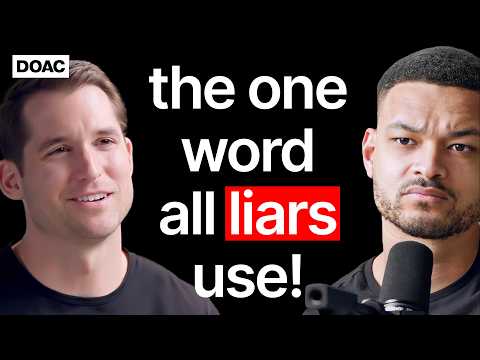
The Speaking Coach: The One Word All Liars Use! Stop Saying This Word, It's Making You Sound Weak!
Jefferson Fisher (guest), Steven Bartlett (host), Narrator, Narrator
In this episode of The Diary of a CEO, featuring Jefferson Fisher and Steven Bartlett, The Speaking Coach: The One Word All Liars Use! Stop Saying This Word, It's Making You Sound Weak! explores master Conversation: Three Rules To Argue Less, Influence Far More Trial attorney and communication coach Jefferson Fisher explains how small shifts in language radically change relationships, careers, and conflict outcomes. Drawing on courtroom experience and viral content, he lays out a three-part framework: say it with control, say it with confidence, and say it to connect.
Master Conversation: Three Rules To Argue Less, Influence Far More
Trial attorney and communication coach Jefferson Fisher explains how small shifts in language radically change relationships, careers, and conflict outcomes. Drawing on courtroom experience and viral content, he lays out a three-part framework: say it with control, say it with confidence, and say it to connect.
He shows how breath, silence, and shorter answers convey power; how to replace people‑pleasing and over‑apologizing with clear, assertive language; and how to frame difficult conversations so you unravel disagreements instead of ‘winning’ arguments and losing relationships.
Fisher also unpacks handling disrespectful people, spotting and disarming lies, setting boundaries, and dealing with triggers—both in others and ourselves. Throughout, he emphasizes that what you say next has a compounding ripple effect on your reputation, opportunities, and even how your children will eventually communicate.
Key Takeaways
Use a ‘conversational breath’ to stay in control instead of fight-or-flight.
Before responding in disagreement or conflict, take a subtle double inhale through the nose and a controlled exhale (a shortened physiological sigh). ...
Get the full analysis with uListen AI
Slow down your words and embrace pauses to project authority.
Fast, pressured speech makes you sound anxious and out of control; slower, deliberate phrasing signals composure and conviction. ...
Get the full analysis with uListen AI
Eliminate weakening words like ‘just,’ over‑apologies, and verbal fillers in key moments.
Words such as ‘just’ (“just checking in”), constant ‘I’m sorry,’ and fillers like ‘like’ and ‘um’ subtly signal hesitation and low status, especially in professional contexts. ...
Get the full analysis with uListen AI
Use an assertive voice by balancing self-respect and respect for others.
Assertiveness is the midpoint between passive and aggressive: direct, honest, and respectful. ...
Get the full analysis with uListen AI
Frame difficult conversations around a clear goal and shared ‘contract.’
Before a tough talk, set a conversational frame in three steps: (1) what you want to talk about, (2) how you want to walk away, and (3) asking for buy‑in. ...
Get the full analysis with uListen AI
Stop trying to ‘win’ arguments; aim to unravel and understand instead.
Treating arguments as something to win often costs you the relationship: you may get the last word but end up first in line to apologize. ...
Get the full analysis with uListen AI
Handle disrespect and lies with silence, repetition, and questions of intent—not counterattacks.
When insulted or belittled, insert 5–7 seconds of silence, then ask them to repeat it (“Can you say that again? ...
Get the full analysis with uListen AI
Notable Quotes
“When you look to win an argument, you will often lose the relationship.”
— Jefferson Fisher
“Confidence is not what you have before; confidence is the outcome. Confidence is as assertive does.”
— Jefferson Fisher
“Insecurities are very loud. Confidence, on the other hand, is very quiet.”
— Jefferson Fisher
“Instead of handing out remote controls to your emotions, get in the habit of giving out manuals.”
— Jefferson Fisher
“What you say today affects how your children will talk to their children.”
— Jefferson Fisher
Questions Answered in This Episode
You argue that ‘confidence is as assertive does’; how would you coach someone through their very first truly assertive statement if they’ve spent decades people‑pleasing and fear a major backlash?
Trial attorney and communication coach Jefferson Fisher explains how small shifts in language radically change relationships, careers, and conflict outcomes. ...
Get the full analysis with uListen AI
In situations where there is a real power imbalance—like a junior employee and an abusive boss—how far can your ‘questions of intent’ and silence tactics realistically go before they put that employee at risk?
He shows how breath, silence, and shorter answers convey power; how to replace people‑pleasing and over‑apologizing with clear, assertive language; and how to frame difficult conversations so you unravel disagreements instead of ‘winning’ arguments and losing relationships.
Get the full analysis with uListen AI
You strongly discourage trying to win arguments, but in public debates about harmful ideas (e.g., misinformation, bigotry), isn’t there a danger that prioritizing relationship over ‘winning’ could let damaging claims stand unchallenged?
Fisher also unpacks handling disrespectful people, spotting and disarming lies, setting boundaries, and dealing with triggers—both in others and ourselves. ...
Get the full analysis with uListen AI
Can you walk through a detailed, real-world example of taking a classic ‘next conversation’—one that usually happens after both people cool down—and proactively turning it into the first conversation instead?
Get the full analysis with uListen AI
Your strategies are highly language-specific (e.g., removing ‘just,’ ‘sorry,’ ‘but’); how would you adapt this framework across cultures and languages where politeness conventions or power distance norms are very different from the U.S. or U.K.?
Get the full analysis with uListen AI
Transcript Preview
When somebody is belittling you or being rude or being disrespectful, what we typically want to do is throw it right back, because now they got a win. Instead of that, here's what I would want you to do. One, you're gonna have five to seven seconds of silence. (clock ticking) Two, you're gonna ask them to say it again, because a lot of time in arguments people take it back. And three, this is where it gets fun. I want you to say... That's where your real power is, because it shows that you're the one in control and they're the ones that are not. I'm Jefferson Fisher, I'm a board certified trial attorney, and I help people resolve conflict, resolve problems. And I can change two words and change your life just by what you decide to say next. Because what you say truly has the power to change everything. For example, I teach that you never want to win an argument. When you look to win an argument, you will often lose the relationship. That's your prize. Congrats. So instead of seeing arguments as something to win, see them as something to unravel. And if you can just ask them the question, "What am I missing?" I promise you, that is the most effective tool that you can use for a difficult conversation.
But what about when you're dealing with someone that you don't like?
The secret to dealing with someone you don't like is to-
And then could you explain to me this image here?
So this is all about how to say no.
And how does one learn that?
Start with (beep) then end with (beep) .
Really?
That right there is very, very effective.
I've got so many questions. This has always blown my mind a little bit, 53% of you that listen to this show regularly haven't yet subscribed to the show. So could I ask you for a favor before we start? If you like this show and you like what we do here and you wanna support us, the free, simple way that you can do just that is by hitting the subscribe button. And my commitment to you is if you do that, then I'll do everything in my power, me and my team, to make sure that this show is better for you every single week. We'll listen to your feedback, we'll find the guests that you want me to speak to, and we'll continue to do what we do. Thank you so much. Jefferson Fisher. I'm incredibly intrigued by so many of the things that you produce content about, but also this phenomenal book. So if we, if we start from the beginning, who, who are you and what is the mission that you're on?
I'm Jefferson Fisher. I'm a board certified trial attorney, and I teach people how to argue less and say more. Um, and I'm on a mission to help change everything about someone simply by what they decide to say next.
Install uListen to search the full transcript and get AI-powered insights
Get Full TranscriptGet more from every podcast
AI summaries, searchable transcripts, and fact-checking. Free forever.
Add to Chrome