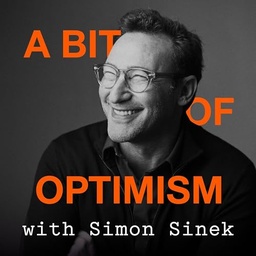
 Simon Sinek
Why Young People Don't Have 'The Hunger' for Work (And What Leaders Need to Hear) | Dr. Eliza Filby
Simon Sinek and Dr. Eliza Filby on why work feels different now: generations, insecurity, and new loyalty.
In this episode of Simon Sinek, featuring Simon Sinek and Dr. Eliza Filby, Why Young People Don't Have 'The Hunger' for Work (And What Leaders Need to Hear) | Dr. Eliza Filby explores why work feels different now: generations, insecurity, and new loyalty Generational labels are becoming more fragmented because shared cultural experiences, media, and “shared truth” have eroded, pushing people toward micro-identities and belonging-seeking subgroups.
At a glance
WHAT IT’S REALLY ABOUT
Why work feels different now: generations, insecurity, and new loyalty
- Generational labels are becoming more fragmented because shared cultural experiences, media, and “shared truth” have eroded, pushing people toward micro-identities and belonging-seeking subgroups.
- Work no longer provides the stability, life script, and social rewards it once did, driving skepticism, “conspiracy culture” inside organizations, and the rise of squiggly careers and solopreneurship.
- Filby argues we increasingly live in an “inheritocracy,” where the Bank of Mum and Dad (and broader family support) replaces corporate loyalty as the primary route to housing and security.
- The often-criticized lack of “hunger” in young workers is framed as a rational response to broken incentives—mass layoffs, weakened meritocracy, and transactional workplaces—rather than simple entitlement.
- AI should be treated like a new “generation” in the workplace: let it handle countable productivity tasks while humans double down on uncountable value—care, wisdom-sharing, and communication—to rebuild trust and mastery paths.
IDEAS WORTH REMEMBERING
7 ideasIf you can’t offer stability, you must offer meaning, belonging, and development.
Filby’s core leadership challenge is redefining the employee value proposition in an age where long-term job security is no longer credible; companies must become places to learn, belong, and grow even if tenure is shorter.
“Entitlement” can be an adaptive strategy to corporate rule changes.
Sinek reframes “pay me first, then you’ll see” as a rational response to layoffs and broken reciprocity: when companies show little loyalty, employees optimize for immediate returns and portability.
Family wealth is replacing work loyalty as the main engine of mobility.
The Bank of Mum and Dad funding down payments and cushioning risk reshapes motivation, retention, and who can afford career experimentation—creating leadership and equity challenges in hiring and advancement.
Big-ticket inflation + cheap lifestyle luxuries fuels visible spending and hidden dependence.
Filby explains why younger workers may appear to “spend everything”: housing, education, childcare, and healthcare ballooned post-2008 while travel/tech/eating out got comparatively cheaper and socially rewarded online.
Hyper-individualism is measurably rising—and it shows up in workplace norms.
Filby cites a shift from 12% (1952) to 80% (1990) of Americans saying they are “very important,” connecting it to smaller families, intensive parenting, individualized schooling, and algorithmic personalization—culminating in “Dirty Kitchen Syndrome” and weaker communal responsibility at work.
Hybrid/remote work reduced low-stakes bonding, making trust and learning harder to build.
With fewer informal moments (kitchens, hallway chats, observation), young workers miss tacit professional norms and mentoring; leaders must intentionally recreate connection and reciprocal responsibility.
AI should automate the countable so humans can specialize in the uncountable.
Filby’s optimism: let AI handle inboxes and grunt output, while humans focus on care, intergenerational wisdom transfer, and clear communication—plus rebuilding the path to mastery that grunt work traditionally provided.
WORDS WORTH SAVING
5 quotesThe biggest question that leaders need to ask themselves is… what am I offering in the age of uncertainty? If I can’t offer stability… what am I offering you?
— Dr. Eliza Filby
You do realize that your employees are more likely to get on the housing ladder by being loyal to their parents than being loyal to you.
— Dr. Eliza Filby
Young people come into your office and be like, ‘Give me a raise and you’ll see what I can do.’
— Simon Sinek
What percentage of people in the US… said they were very important… in 1952? … 12%. … [In 1990] 80%.
— Dr. Eliza Filby
Gen AI is the next generation in the workforce… the plucky young intern who’s doing all the work at double speed… and needs to be managed.
— Dr. Eliza Filby
QUESTIONS ANSWERED IN THIS EPISODE
5 questionsWhen you say generations are “fragmenting,” which forces matter most—technology pace, loss of shared media, or hyper-individualism—and how should leaders respond differently to each?
Generational labels are becoming more fragmented because shared cultural experiences, media, and “shared truth” have eroded, pushing people toward micro-identities and belonging-seeking subgroups.
What are practical, measurable ways a company can offer “belonging” without relying on perks or performative culture—especially in hybrid environments?
Work no longer provides the stability, life script, and social rewards it once did, driving skepticism, “conspiracy culture” inside organizations, and the rise of squiggly careers and solopreneurship.
If the Bank of Mum and Dad is now a top “stability provider,” how should employers rethink pay, benefits, and career paths to avoid reinforcing inheritocracy?
Filby argues we increasingly live in an “inheritocracy,” where the Bank of Mum and Dad (and broader family support) replaces corporate loyalty as the primary route to housing and security.
You link conspiracy culture to workplace distrust—what internal comms practices reduce rumor spirals when layoffs or reorganizations happen?
The often-criticized lack of “hunger” in young workers is framed as a rational response to broken incentives—mass layoffs, weakened meritocracy, and transactional workplaces—rather than simple entitlement.
How should companies redesign reward systems so teamwork, care, and mentorship (the “uncountable work”) are recognized without turning them into soulless KPIs?
AI should be treated like a new “generation” in the workplace: let it handle countable productivity tasks while humans double down on uncountable value—care, wisdom-sharing, and communication—to rebuild trust and mastery paths.
EVERY SPOKEN WORD
Install uListen for AI-powered chat & search across the full episode — Get Full Transcript
Get more out of YouTube videos.
High quality summaries for YouTube videos. Accurate transcripts to search & find moments. Powered by ChatGPT & Claude AI.
Add to Chrome