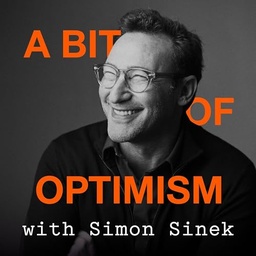
 Simon Sinek
Why This Baseball Team Has a 4.2 Million Person Waitlist With Jesse Cole | A Bit of Optimism Podcast
Simon Sinek and Jesse Cole on how Savannah Bananas engineered joy-first baseball with relentless experimentation.
In this episode of Simon Sinek, featuring Simon Sinek and Jesse Cole, Why This Baseball Team Has a 4.2 Million Person Waitlist With Jesse Cole | A Bit of Optimism Podcast explores how Savannah Bananas engineered joy-first baseball with relentless experimentation Jesse Cole explains that the Bananas were born from putting themselves in non-baseball fans’ shoes and treating baseball as a canvas for a live “show” that removes boredom and maximizes joy.
At a glance
WHAT IT’S REALLY ABOUT
How Savannah Bananas engineered joy-first baseball with relentless experimentation
- Jesse Cole explains that the Bananas were born from putting themselves in non-baseball fans’ shoes and treating baseball as a canvas for a live “show” that removes boredom and maximizes joy.
- The organization operates with Disney-like control of end-to-end experience and detail (from upper-deck engagement to food pricing), believing remarkable experiences are the best marketing.
- Cole describes a culture of constant experimentation—trying 15–20 new things nightly and debriefing with “Learn, Change, Plus”—to keep the product from getting stale.
- Players and staff are positioned as co-creators of belonging, often coming from rejection in traditional paths and finding renewed identity and purpose through entertaining while competing for real wins.
- The Bananas’ growth strategy prioritizes long-term fandom and accessibility (face-value ticketing, free YouTube games, limited sponsorship dependence) over maximizing short-term revenue.
IDEAS WORTH REMEMBERING
7 ideasDesign for the least-privileged seat, not the best one.
The Bananas repeatedly “win the upper deck” by spending time in nosebleeds, staging interactions there, and ensuring distance/price never equals a lesser emotional experience—an approach Simon contrasts with airlines’ neglect of economy class.
Make the product so remarkable that marketing becomes documentation.
Cole claims they spend “zero dollars marketing,” instead investing in moments worth sharing and then capturing them for social; the experience itself drives word-of-mouth and growth.
Treat your offering as a living show that is never finished.
Borrowing Disney’s “plus the show,” the team runs nightly innovation with 15–20 new bits and an LCP report after every game to iterate fast without losing the core purpose.
Be explicit about who you are not for.
Cole says the Bananas are not for baseball traditionalists; clarity about the target audience (families and fun-seekers) enables bold rule-breaking and consistent decision-making.
Optimize for how people feel when they leave, not just what they consumed.
Cole doesn’t want fans to leave devastated after a loss; the model prioritizes togetherness, joy, and feeling seen—ending with rituals like singing “Stand By Me.”
Accessibility can be a growth engine, not a charity add-on.
They keep ticket prices reasonable, built a face-value secondary market, offer free food in Savannah, and stream games free on YouTube—then rely on fandom-driven merchandise and repeat attendance to sustain the business.
Belonging is a scalable strategy when embedded in behaviors.
From players signing for hours to stories like Logan Moody sitting with a grieving fan, or Reggie evolving into “motivational coach,” the culture operationalizes inclusion through consistent rituals and expectations.
WORDS WORTH SAVING
5 quotesWin the upper deck.
— Jesse Cole
Every night is someone’s first show.
— Jesse Cole
We invest everything in the experience, and we capture that and share that.
— Jesse Cole
I’m in one financial meeting a year. It’s less than two hours.
— Jesse Cole
Only at Disneyland… we can only see a father and his son.
— Simon Sinek
QUESTIONS ANSWERED IN THIS EPISODE
5 questionsWhat are a few examples of the 15–20 “new things” you try each night, and how do you decide what’s worth testing?
Jesse Cole explains that the Bananas were born from putting themselves in non-baseball fans’ shoes and treating baseball as a canvas for a live “show” that removes boredom and maximizes joy.
How does the “Learn, Change, Plus” report work in practice—who writes it, who reads it, and what gets changed the next day?
The organization operates with Disney-like control of end-to-end experience and detail (from upper-deck engagement to food pricing), believing remarkable experiences are the best marketing.
You say you’re “not for baseball traditionalists”—what feedback or backlash most tested your commitment to that positioning?
Cole describes a culture of constant experimentation—trying 15–20 new things nightly and debriefing with “Learn, Change, Plus”—to keep the product from getting stale.
How do you recruit and train players to balance elite performance with constant performance/entertainment demands without burnout?
Players and staff are positioned as co-creators of belonging, often coming from rejection in traditional paths and finding renewed identity and purpose through entertaining while competing for real wins.
What are the economics behind keeping games free on YouTube and tickets accessible—what revenue streams replace sponsorships and TV rights?
The Bananas’ growth strategy prioritizes long-term fandom and accessibility (face-value ticketing, free YouTube games, limited sponsorship dependence) over maximizing short-term revenue.
EVERY SPOKEN WORD
Install uListen for AI-powered chat & search across the full episode — Get Full Transcript
Get more out of YouTube videos.
High quality summaries for YouTube videos. Accurate transcripts to search & find moments. Powered by ChatGPT & Claude AI.
Add to Chrome