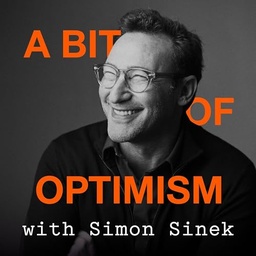
 Simon Sinek
The Leadership Advice Nobody Follows (But Everyone Should) from Top Leadership Expert
Simon Sinek and Don Yaeger on appreciation, mentorship, and people-first leadership that builds lasting performance.
In this episode of Simon Sinek, featuring Don Yaeger and Simon Sinek, The Leadership Advice Nobody Follows (But Everyone Should) from Top Leadership Expert explores appreciation, mentorship, and people-first leadership that builds lasting performance John Wooden’s success came from focusing on human standards, relationships, and teammate behavior rather than obsession with winning and outcomes.
At a glance
WHAT IT’S REALLY ABOUT
Appreciation, mentorship, and people-first leadership that builds lasting performance
- John Wooden’s success came from focusing on human standards, relationships, and teammate behavior rather than obsession with winning and outcomes.
- Appreciation is a learnable practice: what you look for is what you find, and consistently recognizing what’s going right increases trust, performance, and goodwill in relationships and teams.
- True mentorship is non-transactional and evolves like friendship; it’s defined by generosity, mutual learning, and making time—not status, hierarchy, or career leverage.
- People-first leadership at scale (e.g., Delta) works through a “virtuous cycle” of investing in employees so they can better serve customers, sustaining premium performance and loyalty.
- Short-termism (boards, Wall Street, boosters) pushes leaders toward panic, blame, and underdevelopment of talent, which erodes culture and long-term resilience.
IDEAS WORTH REMEMBERING
7 ideasMake appreciation a job, not an afterthought.
Yaeger’s letter-writing habit forces him to actively look for what he values; the same mechanism works at work—“catch people doing things right” and you’ll see (and get) more of it.
Build standards of character that apply to everyone, especially stars.
Wooden didn’t manage ego by special treatment; he set clear “standards of being” (e.g., team rules, gratitude rituals) and enforced them equally, which creates psychological safety and fairness.
Focus on greatness in process, not championship outcomes.
Wooden’s Pyramid of Success emphasizes behaviors (industriousness, team-first) that compound into sustainable excellence; the paradox is that de-centering winning often produces more winning over time.
Use rituals that reinforce gratitude before regret arrives.
Wooden’s monthly love letters after his wife’s death—and his admission that he wished he’d said “all of it” earlier—illustrate a leadership lesson: don’t postpone meaningful recognition to “someday.”
Mentorship is mutual and relationship-based, not a request or a transaction.
Both Sinek and Yaeger describe mentorship as evolving over time through repeated, generous availability; the mentor gains energy and perspective, and the mentee brings preparation and application back.
Employee-first leadership creates a self-funding performance loop.
Ed Bastian’s “virtuous cycle” invests in employee success (assets, training, appreciation), which improves customer experience and revenue, enabling further investment—reinforced by profit sharing (10%) framed as a “love letter.”
Short-term pressure drives blame and weakens the bench; long-term thinking builds resilience.
Examples like IBM’s public chastising after a single missed quarter show how panic spreads; leaders who repeatedly develop people (Marquet’s repeated reps) create depth, adaptability, and calmer crisis response.
WORDS WORTH SAVING
5 quotesYour job becomes find things I like.
— Simon Sinek
Coach Wooden said, 'You will often find what you're looking for.'
— Don Yaeger
When Don asked if there was anything in those letters he wished he would've said while she was alive, Wooden replied, 'All of it.'
— Simon Sinek
A mentor is somebody who makes time for you.
— Simon Sinek
He would live stream to all employees, and he would tell them what he knew—and when he didn't know the answer.
— Don Yaeger
QUESTIONS ANSWERED IN THIS EPISODE
5 questionsWooden’s rules (like hair length) weren’t about control—how do you design “standards of being” that are enforceable without becoming arbitrary or paternalistic?
John Wooden’s success came from focusing on human standards, relationships, and teammate behavior rather than obsession with winning and outcomes.
Yaeger’s love-letter ritual works because it’s scheduled—what would an equivalent weekly or monthly appreciation ritual look like inside a team or organization?
Appreciation is a learnable practice: what you look for is what you find, and consistently recognizing what’s going right increases trust, performance, and goodwill in relationships and teams.
Delta’s employee-first philosophy sounds compelling; what are the concrete mechanisms leaders can use to ensure it doesn’t become marketing while frontline reality lags?
True mentorship is non-transactional and evolves like friendship; it’s defined by generosity, mutual learning, and making time—not status, hierarchy, or career leverage.
Sinek distinguishes mentors from champions—how should someone intentionally build a ‘mentor network’ (seasonal mentors, industry mentors, peer mentors) without making it transactional?
People-first leadership at scale (e.g., Delta) works through a “virtuous cycle” of investing in employees so they can better serve customers, sustaining premium performance and loyalty.
In a gig-economy career path, where mentors may also be competitors, what are realistic ways to form trust-based mentorships outside formal workplaces?
Short-termism (boards, Wall Street, boosters) pushes leaders toward panic, blame, and underdevelopment of talent, which erodes culture and long-term resilience.
EVERY SPOKEN WORD
Install uListen for AI-powered chat & search across the full episode — Get Full Transcript
Get more out of YouTube videos.
High quality summaries for YouTube videos. Accurate transcripts to search & find moments. Powered by ChatGPT & Claude AI.
Add to Chrome