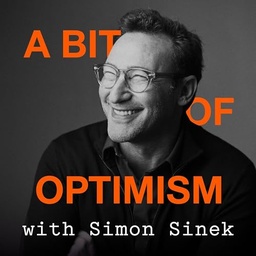
 Simon Sinek
Nice Guys Finish Last? The Founder of KIND Snacks Disagrees | A Bit of Optimism Podcast
Simon Sinek and Daniel Lubetzky on daniel Lubetzky on naïveté, KIND, capitalism, and peacebuilding through business.
In this episode of Simon Sinek, featuring Simon Sinek and Daniel Lubetzky, Nice Guys Finish Last? The Founder of KIND Snacks Disagrees | A Bit of Optimism Podcast explores daniel Lubetzky on naïveté, KIND, capitalism, and peacebuilding through business Daniel Lubetzky argues that “naïveté” can be an entrepreneurial advantage because not fully grasping the odds enables people to attempt hard, meaningful projects anyway.
At a glance
WHAT IT’S REALLY ABOUT
Daniel Lubetzky on naïveté, KIND, capitalism, and peacebuilding through business
- Daniel Lubetzky argues that “naïveté” can be an entrepreneurial advantage because not fully grasping the odds enables people to attempt hard, meaningful projects anyway.
- The episode contrasts values-driven brand building (KIND) with modern short-term capitalism, criticizing profit-extraction models like private equity roll-ups and incentive systems that reward layoffs and brand dilution.
- Lubetzky explains how founder identity shapes culture and why brands collapse when new managers chase line extensions and short-term promotions instead of protecting the brand’s core promise.
- He shares specific cultural practices from KIND—ownership for all, trust-based transitions, and transparent feedback—to show how high-trust organizations reduce dysfunction and preserve integrity.
- Lubetzky connects his peacebuilding mission to his father’s Holocaust survival story and describes using “business as peacemaking” to align incentives, reduce stereotypes, and take incremental steps toward cooperation in conflict zones.
IDEAS WORTH REMEMBERING
7 ideasNaïveté can be functional, not foolish.
Both Sinek and Lubetzky frame naiveté as the willingness to attempt what others won’t because you’re not paralyzed by how hard it will be—often a prerequisite to building anything novel.
A brand is a promise—and line extensions can break it.
Lubetzky’s Balance Bar example shows how chasing trends (organic, keto, new variants) can confuse customers about what a brand stands for, accelerating decline even if each launch looks “strategic” short-term.
Founder values are a renewable resource only if protected by systems.
He notes cultures often dilute after founders exit; preserving the “essence” requires explicit guardrails and leadership incentives aligned to long-term trust, not short-term promotion metrics.
Short-term profit maximization creates long-term distrust and value destruction.
They argue Friedman-style “maximize profits within the rules” sets a low ethical bar and encourages behavior that erodes customer trust, employee commitment, and faith in institutions—fueling populism.
Layoffs shouldn’t be a business model.
They distinguish unavoidable corrections (e.g., overhiring) from routinized “annualized” layoffs to hit arbitrary projections, which quietly destroys productivity, morale, and loyalty across the organization.
High-trust cultures reduce firing and improve performance.
Lubetzky describes KIND’s approach: early feedback, transparent conversations, and treating most misalignment as a communication problem—reserving “shown the door” for rare, serious misconduct.
Commerce can be a bridge-building tool when it aligns incentives.
Lubetzky’s “business of peacemaking” thesis is that trade creates shared interests, breaks stereotypes through human contact, and can enable incremental cooperation even when politics is frozen.
WORDS WORTH SAVING
5 quotesNaiveté describes the willingness to believe that things can be better even when the world around us suggests otherwise.
— Simon Sinek
A brand is a promise, and a great brand is a promise well-kept.
— Daniel Lubetzky
Their only product is to make money.
— Simon Sinek
We love that our products don't kill you.
— Daniel Lubetzky
You can’t make peace with your friends. You can only make peace with your enemies.
— Simon Sinek
QUESTIONS ANSWERED IN THIS EPISODE
5 questionsLubetzky says KIND wasn’t built “to sell”—what concrete decisions did you make early that would have been different if an exit had been the goal?
Daniel Lubetzky argues that “naïveté” can be an entrepreneurial advantage because not fully grasping the odds enables people to attempt hard, meaningful projects anyway.
On brand dilution: how do you define the “essence” of a brand in a way future managers can’t misinterpret or game?
The episode contrasts values-driven brand building (KIND) with modern short-term capitalism, criticizing profit-extraction models like private equity roll-ups and incentive systems that reward layoffs and brand dilution.
You gave everyone stock options after six months—what did that change (behaviorally) in execution, accountability, or retention, and what were the downsides?
Lubetzky explains how founder identity shapes culture and why brands collapse when new managers chase line extensions and short-term promotions instead of protecting the brand’s core promise.
Your trust-based transition system required people leaving to help replace themselves; how did you enforce that without coercion, and what happened when it failed?
He shares specific cultural practices from KIND—ownership for all, trust-based transitions, and transparent feedback—to show how high-trust organizations reduce dysfunction and preserve integrity.
You criticize private equity roll-ups for extraction—what would a “positive consolidation” model look like in practice, and what incentives would keep it from drifting into extraction?
Lubetzky connects his peacebuilding mission to his father’s Holocaust survival story and describes using “business as peacemaking” to align incentives, reduce stereotypes, and take incremental steps toward cooperation in conflict zones.
EVERY SPOKEN WORD
Install uListen for AI-powered chat & search across the full episode — Get Full Transcript
Get more out of YouTube videos.
High quality summaries for YouTube videos. Accurate transcripts to search & find moments. Powered by ChatGPT & Claude AI.
Add to Chrome