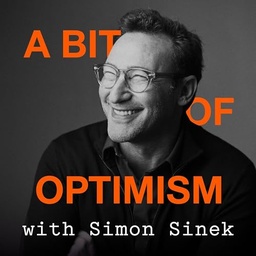
 Simon Sinek
AI Can Do Everything…Except This (Why Humans Still Win) with Will Guidara | A Bit of Optimism
Simon Sinek and Will Guidara on aI accelerates tasks; human hospitality remains enduring competitive advantage today.
In this episode of Simon Sinek, featuring Simon Sinek and Will Guidara, AI Can Do Everything…Except This (Why Humans Still Win) with Will Guidara | A Bit of Optimism explores aI accelerates tasks; human hospitality remains enduring competitive advantage today They argue that as AI makes transactions faster and cheaper, genuinely human moments—kindness, attention, and making people feel seen—become more valuable and “AI-proof.”
At a glance
WHAT IT’S REALLY ABOUT
AI accelerates tasks; human hospitality remains enduring competitive advantage today
- They argue that as AI makes transactions faster and cheaper, genuinely human moments—kindness, attention, and making people feel seen—become more valuable and “AI-proof.”
- Guidara distinguishes excellence as “table stakes” and frames unreasonable hospitality as the true differentiator that builds loyalty and long-term competitive advantage.
- They critique short-term, easily measured metrics (clicks, impressions, quarterly ROI) as misleading proxies that can cause companies to underinvest in what actually drives durable value.
- Guidara shares a practical redeployment model: when technology removes low-value tasks, keep people and redirect their time toward deeper relationship-building rather than layoffs.
- The conversation broadens into a personal “ratio” framework (results over effort) to reduce unhealthy comparison, reveal hidden costs, and protect relationships and well-being from score-chasing behavior.
IDEAS WORTH REMEMBERING
7 ideasKindness and genuine attention are durable differentiators in an AI world.
Automation can replicate information and process, but it cannot reliably replace the feeling of being seen, heard, and cared for; companies that preserve human connection will stand out as human access becomes a “luxury.”
Excellence is the baseline; hospitality is the competitive advantage.
Guidara argues that top-tier execution (great product, technically perfect service) is merely fulfilling the promise you make to customers; what creates lasting preference is creatively investing in relationships.
Use AI savings to deepen human moments, not just cut headcount.
Short-term profitability gains from automation are tempting, but the smarter play is to reinvest part of those savings into more human, memorable service that compounds into trust and loyalty over time.
Redeployment beats reduction when technology removes friction.
Guidara’s reservation example shows how moving bookings online reduced customer hassle, while keeping the reservations team enabled richer guest profiling and personalization—turning efficiency into better hospitality.
What’s easiest to measure can be the least important.
Clicks, impressions, and near-term ROI often dominate because they’re measurable, but love, trust, and loyalty are harder to quantify; underinvesting in them is “reckless in the long term.”
Incentives shape shallow decision-making.
They note that agencies and managers optimize for what they’re paid to track (clicks, short-term lift), which can block high-impact, relationship-building initiatives that pay off later.
Track a ‘quality’ ratio alongside performance metrics.
Sinek’s “A over hours” framing generalizes to business: pair quantity (revenue, growth, stock price) with quality signals (renewals, repeat purchase, employee engagement) to avoid hollow wins like stock pops from layoffs.
WORDS WORTH SAVING
5 quotesThe only competitive advantage that exists in the long term, in my view, is hospitality.
— Will Guidara
A person has become a luxury, that you have to earn a person.
— Simon Sinek
We did not fire a single person from our reservations team… Rather, we redeployed them… getting to know [guests] and understanding how we could make their meal more special.
— Will Guidara
Just because it’s harder to measure doesn’t mean it matters less. In fact, it means it matters more.
— Will Guidara
It’s not even a little bit hard, it just requires trying a little bit harder.
— Simon Sinek
QUESTIONS ANSWERED IN THIS EPISODE
5 questionsIn your view, what specific elements of “hospitality” are truly AI-proof, and which parts will AI eventually replicate convincingly?
They argue that as AI makes transactions faster and cheaper, genuinely human moments—kindness, attention, and making people feel seen—become more valuable and “AI-proof.”
Guidara calls excellence “table stakes.” How can a company objectively define its table stakes so teams don’t confuse baseline competence with differentiation?
Guidara distinguishes excellence as “table stakes” and frames unreasonable hospitality as the true differentiator that builds loyalty and long-term competitive advantage.
In the reservations redeployment story, what concrete scripts, training, or guest-intel systems enabled the team to personalize without being intrusive?
They critique short-term, easily measured metrics (clicks, impressions, quarterly ROI) as misleading proxies that can cause companies to underinvest in what actually drives durable value.
What are the best “quality metrics” equivalents to repeat purchase in industries with long sales cycles (B2B, healthcare, higher ed)?
Guidara shares a practical redeployment model: when technology removes low-value tasks, keep people and redirect their time toward deeper relationship-building rather than layoffs.
How should leaders redesign compensation and agency relationships so brand-building work isn’t crowded out by click-based optimization?
The conversation broadens into a personal “ratio” framework (results over effort) to reduce unhealthy comparison, reveal hidden costs, and protect relationships and well-being from score-chasing behavior.
EVERY SPOKEN WORD
Install uListen for AI-powered chat & search across the full episode — Get Full Transcript
Get more out of YouTube videos.
High quality summaries for YouTube videos. Accurate transcripts to search & find moments. Powered by ChatGPT & Claude AI.
Add to Chrome