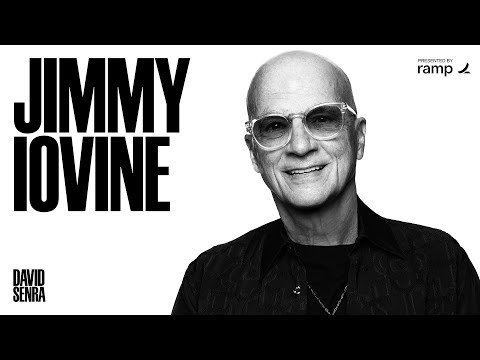
Jimmy Iovine: Building Interscope Records & Beats by Dre
David Senra (host), David Senra (host)
In this episode of David Senra, featuring David Senra and David Senra, Jimmy Iovine: Building Interscope Records & Beats by Dre explores jimmy Iovine on greatness, vertical integration, and obsessive creative drive Iovine argues the culture has shifted from “greatness” to “fame” to “attention,” with social media incentivizing “corny” behavior and hollow visibility over craft.
Jimmy Iovine on greatness, vertical integration, and obsessive creative drive
Iovine argues the culture has shifted from “greatness” to “fame” to “attention,” with social media incentivizing “corny” behavior and hollow visibility over craft.
He recounts how he learned to serve artists first—working with Lennon, Springsteen, Petty, Bono, Dre—pairing humility with “brutal honesty + respect” to make the work better.
On business, he explains his instinct to “move laterally” (vertical integration): own more of the chain from artists and distribution to hardware (Beats) and fan relationships, because the music industry historically avoids direct customer ownership.
He critiques streaming’s economics and artist disempowerment, warns labels not to repeat mistakes in AI by licensing away enterprise value, and closes with lessons on fear-driven ambition, the “bend in the pipe,” therapy, and the long search for peace.
Key Takeaways
Attention can replace greatness—then corrode culture.
Iovine says the currency shifted from being great to being famous to simply capturing attention, with social media amplifying performative behavior that feels “corny” and often detached from real craft.
Get the full analysis with uListen AI
The job is to serve the artist, not your ego.
His foundational lesson from Springsteen’s camp—“This is not about you”—became a career operating system: if the artist on the other side of the glass isn’t winning, nothing else matters.
Get the full analysis with uListen AI
Truth-telling works only when paired with deep respect.
Iovine frames his reputation as “brutal honesty” but insists the missing ingredient is respect; the goal is clarity that improves the product, not dominance or humiliation.
Get the full analysis with uListen AI
Gatekeepers are obstacles to route around—legally and creatively.
To break Dre/Snoop despite radio and MTV resistance, he bought radio ads that were essentially “G Thang” with no voiceover, and pressured MTV to program it next to Guns N’ Roses—forcing demand to surface.
Get the full analysis with uListen AI
Streaming’s core flaw is treating music like an ATM, not a relationship.
He argues streaming services deliver convenient access but don’t empower artists to communicate with fans; without giving artists tools and audience access, services risk irrelevance as social platforms fill that gap.
Get the full analysis with uListen AI
The music industry’s chronic weakness is not owning the customer.
From record stores to radio to MTV to streamers, labels outsourced end-user relationships; Iovine believes real leverage comes from direct customer connection and owning more of the value chain.
Get the full analysis with uListen AI
Beats succeeded by fusing culture, design, and distribution—then showing up everywhere.
He saw ugly, uncool headphones as “opportunity hiding in plain sight,” insisted on embedding Beats in music videos, and defined marketing as empathy: understanding what people feel and want at scale.
Get the full analysis with uListen AI
AI is a reset opportunity—unless labels repeat the streaming mistake.
He’s “all in” on AI as a tool that will raise the middle of music while not dethroning true greats, but warns labels not to just license catalogs broadly; they must build enterprise value around AI rather than feed “a dragon that will eat them.”},{
Get the full analysis with uListen AI
Notable Quotes
“"We've gone from fame replacing great... But now it's taken another leap... It's gone to attention."”
— Jimmy Iovine
“"Most of my friends, if they go viral, they're devastated."”
— Jimmy Iovine
“"This is not about you. This is about Bruce Springsteen and about the record we're making."”
— Jimmy Iovine (quoting John Landau)
“"Brutal honesty, but an enormous amount of respect."”
— Jimmy Iovine
“"Marketing is empathy."”
— Jimmy Iovine
Questions Answered in This Episode
On the ‘attention’ shift: what specific behaviors or incentives make today’s world feel ‘corny,’ and how would you redesign platforms to reward ‘great’ instead?
Iovine argues the culture has shifted from “greatness” to “fame” to “attention,” with social media incentivizing “corny” behavior and hollow visibility over craft.
Get the full analysis with uListen AI
Streaming fix: what exact product features would ‘give artists their audience’—messaging tools, data portability, fan clubs, commerce, ticketing—and who should own them?
He recounts how he learned to serve artists first—working with Lennon, Springsteen, Petty, Bono, Dre—pairing humility with “brutal honesty + respect” to make the work better.
Get the full analysis with uListen AI
Economics: do you think user-centric payout (each household’s subscription split by what they listen to) is the cleanest fix to the ‘family plan’ distortion you described?
On business, he explains his instinct to “move laterally” (vertical integration): own more of the chain from artists and distribution to hardware (Beats) and fan relationships, because the music industry historically avoids direct customer ownership.
Get the full analysis with uListen AI
Beats playbook: if you were starting Beats today without guaranteed music-video distribution, what modern channels would replace MTV + radio ads as the gatekeeper bypass?
He critiques streaming’s economics and artist disempowerment, warns labels not to repeat mistakes in AI by licensing away enterprise value, and closes with lessons on fear-driven ambition, the “bend in the pipe,” therapy, and the long search for peace.
Get the full analysis with uListen AI
Vertical integration: where is the line between ‘moving laterally’ and spreading too thin—how did you decide which poles to drop and which one to reel in?
Get the full analysis with uListen AI
Transcript Preview
[upbeat music] I wanna start with what you were just saying before we started recording. I was like, "Rob, hurry up and run, run the tape." You said, "We live in a corny world."
We've gone from fame replacing great, right? So it became more important at one point to be famous than to be great, because there's a currency. You had to be great at one time to get a record deal, to do all that stuff, and then that sort of dwindled as it- as time went on, which, which is fine. But it has absolutely replaced great, and what you can do on the internet, and marketing yourself, and all this other stuff, because you can make a lot of money just being famous. But now, it's taken another leap, which is fascinating. It's gone to attention, and sometimes that leads or contributes to a very corny world. I think social media has the biggest impact that I've seen in my lifetime-
Mm-hmm
... you know?
And that contributes to people being corny for attention on social media, you think?
Yeah! Well, [chuckles] because i- you can make money, and the people that don't need money want attention, and they wanna be the top of the news, or the sp- viral, or, um, you know... Most of my friends, if they go viral, they're devastated. Do you know what I'm saying? [laughing]
[laughing]
They're like, "Oh, shit!" Or they don't even know.
I think not even knowing would be the place that I would aspire to be in. Like, I wanna make great work. Obviously, I'm public-facing, 'cause I happen to be obsessed with podcasts, and I wanna make some of the best podcasts in the world. But I try to just... I mean, it comes from you. I did this video, I c- I obviously did the founders episode on you, because you've been one of the people I most admire for a long period of time. And you have-- we did this clip that got almost, like, two million views of your advice about, you know, why do the horses have blinders on them?
[chuckles]
And when you... It's one of my favorite things. Every time I post it, it, it, it still, like, resonates, and I post things to remind myself, where it's like, "Hey, I'm chasing after greatness," right? "And it doesn't matter. I can't look left, and I can't look right and worry about what other people are doing." This is one of the things I most admire about you. We were d- we spent a, a, a few hours together at your house yesterday. You were very kind to invite me over there again. And you pulled up this insane video from you from 2004, which is four or five years before Spotify was, uh, founded, and you essentially were talking about what you saw as the technological shift happening in the music industry. What was that video about?
I always wanted Interscope to move laterally. I didn't want to keep drilling the same hole. I hate drilling the same hole. Just, that's just me. I get bored wh- drilling the same hole. That's kind of why I've jumped around industries a little bit, and got to learn on the fly a lot, you know? So, but that was about, around 2000, we had this little TV show called, uh, Jimmy and Doug's Farm Club. It was about uploading your music to Interscope, and we would put you on our TV show, and it was fantastic, and it worked. And what I really wanted to do was have a, a music streaming service of all you can eat.
Install uListen to search the full transcript and get AI-powered insights
Get Full TranscriptGet more from every podcast
AI summaries, searchable transcripts, and fact-checking. Free forever.
Add to Chrome