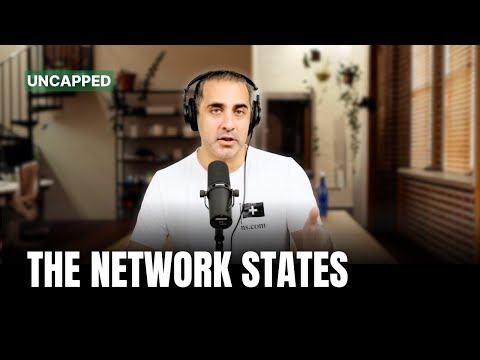
Balaji Srinivasan Breaking Down Modern Politics and Starting a New Country | Ep. 24
Balaji Srinivasan (guest), Jack Altman (host), Jack Altman (host), Jack Altman (host)
In this episode of Uncapped with Jack Altman, featuring Balaji Srinivasan and Jack Altman, Balaji Srinivasan Breaking Down Modern Politics and Starting a New Country | Ep. 24 explores balaji maps four-way politics and argues for network-state exit strategy Balaji reframes US politics from a left–right spectrum into four interacting factions: the internet, Blue America, Red America, and China, each pair producing a different conflict (tech lash, wokeness, Trump backlash, trade war).
Balaji maps four-way politics and argues for network-state exit strategy
Balaji reframes US politics from a left–right spectrum into four interacting factions: the internet, Blue America, Red America, and China, each pair producing a different conflict (tech lash, wokeness, Trump backlash, trade war).
He argues twin economic disruptions—internet-driven collapse of legacy media revenue and China’s manufacturing rise—radicalized domestic US politics post-2013 and set up today’s escalations.
On tariffs, he claims they’re mostly being used bluntly and destructively, accelerating a “World Minus One” realignment where countries deepen non-US trade ties and reduce dependence on America.
He concludes that the true successors to American empire are China (physical manufacturing/military) and the internet (media/money), motivating his push to build internet-native communities that can become new jurisdictions (Network School → Network State).
Key Takeaways
US politics is better modeled as four factions, not two.
Balaji’s map separates the internet, Blue America, Red America, and China, arguing that each axis generates a distinct conflict (tech lash, wokeness, Trump backlash, trade war) and explains why coalitions keep reshuffling.
Get the full analysis with uListen
Wokeness is framed as downstream of collapsing legacy-media economics.
He argues shrinking media revenues created “extreme message discipline” and incentives for ideological escalation, summarizing it as “go broke, go woke” rather than the reverse.
Get the full analysis with uListen
Tech’s posture shifted from surprise to organized resistance.
He describes tech being caught off guard by the “tech lash” for years, then rallying post-2020, with the Musk/Twitter (X) acquisition portrayed as a decisive “beachhead” that reduced online censorship pressure across platforms.
Get the full analysis with uListen
China treated the trade war as a signal to decouple revenue from the US.
Balaji claims China moved from trying to negotiate to aggressively diversifying toward Global South markets and going “vertical” in sectors like EVs, solar, shipbuilding, and drones—creating a growing physical-world gap.
Get the full analysis with uListen
Broad tariffs function like surprise taxes that break supply chains.
He emphasizes modern cross-border supply chains (e. ...
Get the full analysis with uListen
Dollar printing advantages insiders and acts like global dilution.
Using the Cantillon effect, he argues those closest to new money (state-linked entities/banks/asset holders) benefit first, while global dollar holders absorb inflation—turning US monetary expansion into a kind of worldwide tax and redistribution.
Get the full analysis with uListen
The next political alignment may be “blue + red vs tech.”
He predicts a coalition where progressives oppose capital and conservatives oppose immigrants, while centrists blame phones/social media—making “technologists” a visible class target for anger about AI, crypto, and social disruption.
Get the full analysis with uListen
His proposed ‘exit’ is jurisdictional: build internet communities into new polities.
Balaji argues the solution “may not be in America,” advocating Network School-style communities that can scale from membership to founding, eventually forming Network States with new governance and friendlier institutional platforms.
Get the full analysis with uListen
Notable Quotes
“So it's actually not two factions, left and right. It's four factions: the internet, Blue America, Red America, China.”
— Balaji Srinivasan
“It was, 'Go broke, go woke.' Brokeness preceded wokeness.”
— Balaji Srinivasan
“Tariffs are a bad strategy when they're used in a, in a stupid way.”
— Balaji Srinivasan
“Dollar inflation is global taxation.”
— Balaji Srinivasan
“The successors to American empire are China and the internet.”
— Balaji Srinivasan
Questions Answered in This Episode
In your four-faction model, what measurable indicators would show one faction gaining or losing power (e.g., media revenue, FDI flows, manufacturing share, crypto market structure)?
Balaji reframes US politics from a left–right spectrum into four interacting factions: the internet, Blue America, Red America, and China, each pair producing a different conflict (tech lash, wokeness, Trump backlash, trade war).
Get the full analysis with uListen AI
What evidence most strongly supports your claim that media revenue collapse *caused* ideological “message discipline” and wokeness rather than merely correlating with it?
He argues twin economic disruptions—internet-driven collapse of legacy media revenue and China’s manufacturing rise—radicalized domestic US politics post-2013 and set up today’s escalations.
Get the full analysis with uListen AI
You describe Elon’s X purchase as a “D-Day” beachhead—what specific downstream policy changes across other platforms do you attribute to it, and how would you quantify that effect?
On tariffs, he claims they’re mostly being used bluntly and destructively, accelerating a “World Minus One” realignment where countries deepen non-US trade ties and reduce dependence on America.
Get the full analysis with uListen AI
If tariffs are “99.9% used incorrectly,” what would a concrete, targeted US industrial strategy look like (Sematech-style) for 2–3 sectors today?
He concludes that the true successors to American empire are China (physical manufacturing/military) and the internet (media/money), motivating his push to build internet-native communities that can become new jurisdictions (Network School → Network State).
Get the full analysis with uListen AI
Your “World Minus One” thesis implies US diplomatic isolation—what countervailing forces (security alliances, capital markets, immigration pull) could prevent that outcome?
Get the full analysis with uListen AI
Transcript Preview
So it's actually not two factions, left and right. It's four factions: the internet, Blue America, Red America, China. Blue America versus the internet is a tech lash. Blue America versus Red America is wokeness. Red America versus Blue America is Trump. Red America versus China is a trade war. [upbeat music]
Do you ever wonder what it's like to live in a startup society on an abandoned island? Well, let me show you. [grunting] This place is an oasis for gym rats and startup founders. I've been living in this real-life experiment called The Network School, ran by Balaji Srinivasan, where we're kind of testing what creating a new nation would feel like. This week, I had group workouts every morning. Sometimes I hit two-a-days because the energy here just makes it easy to stay dialed in. I led my first class to over forty people. I had to hit them with that Riz 101, and I'll share more about that later. I went to a few classes this week, and Balaji talks on AI and the future of tech. Took a field trip to the Super AI conference in Singapore, it's just an hour away, and I wrapped it all up with a fun-ass weekend-long sports tournament competing for a fancy genetics kit. Oh, and we get three healthy meals a day, plus hours of deep convos with insanely interesting people. It's gonna really hurt going back to real life, I'm not gonna lie. This place feels fake in the best way possible. I almost forgot that World War III started this week.
All right, Balaji, I've been really looking forward to this. Thanks a bunch for doing this with me.
Awesome. Good to be here.
So I want to start the conversation by just sort of getting your latest lay of the land of how you view, like, the political map. You know, whether it's sort of like the left, the right, uh, tech, crypto, America, other countries. Like, what is your latest mental map of the political field?
So I will reduce it to a few graphs, and then from that, derive a bunch of other things. So the first graph is one that shows the internet disrupting Blue American media, where Blue American media was sixty-seven billion dollars in revenue around the year two thousand, and it crashed to, like, sixteen, seventeen billion in revenue by around twenty ten, twenty eleven, twenty twelve, and then Google and Facebook rose, okay? So the internet disrupted blue media, and you know the saying, "Go woke, go broke." It was actually in reverse. It was, "Go broke, go woke." Brokeness preceded wokeness, where essentially, with media revenue cratering seventy-five percent, everybody had to have extreme message discipline to retain their jobs in US media, and they felt their pie shrinking. And they, uh, the tech guys who they had thought of as just another part of the Democrat Party, suddenly we were seemingly coming for all the marbles, starting in, you know, the, the two thousand and eight to twenty twelve window. And so the, the blues radicalized, and, uh, th- thus began both the tech lash and wokeness by about twenty thirteen. The other graph is China disrupting Red America by disrupting manufacturing, and China also flips Republicans and Red American manufacturing around the same time, around twenty ten. And so Red America's economically hurting. That leads to Trump, which is also a backlash against Blue American wokeness, and it leads to the trade war against China. So it's actually not two factions, left and right, it's four factions: the internet, Blue America, Red America, China. The internet versus-- Blue America versus the internet is a tech lash. Blue America versus Red America is wokeness. Red America versus Blue America is Trump. Red America versus China is a trade war. And all of that started heating up post-twenty thirteen after these twin disruptions, with a reaction by both blues and reds to try to regain the ground that they had lost, and they were fighting each other, but they're also fighting out of the plane. Now, what happened was tech, as, as we know, 'cause we were in the middle of that, was just completely taken aback, most people, by the tech lash. I gave a talk on it in twenty thirteen, where I put two and two together, and I can match to historical trends, which I'll talk about in a second. But I could see that we needed what I called Silicon Valley's ultimate exit, right? Which is a play on words, right? Exit is obviously like, you know, exiting a company and-
Install uListen to search the full transcript and get AI-powered insights
Get Full TranscriptGet more from every podcast
AI summaries, searchable transcripts, and fact-checking. Free forever.
Add to Chrome