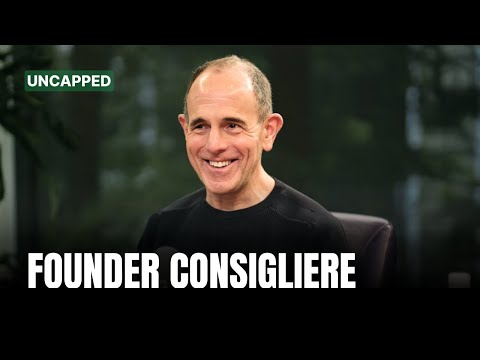
Comparative Advantages | Keith Rabois, Managing Director at Khosla Ventures | Ep. 2
Jack Altman (host), Keith Rabois (guest)
In this episode of Uncapped with Jack Altman, featuring Jack Altman and Keith Rabois, Comparative Advantages | Keith Rabois, Managing Director at Khosla Ventures | Ep. 2 explores keith Rabois on outlier founders, conviction, and VC decision-making frameworks Rabois argues that venture returns are driven by identifying rare outlier founders early—often when they have only a deck—because that’s where competition is lowest and alpha is highest.
Keith Rabois on outlier founders, conviction, and VC decision-making frameworks
Rabois argues that venture returns are driven by identifying rare outlier founders early—often when they have only a deck—because that’s where competition is lowest and alpha is highest.
He looks for “superpowers”: founders who rank in the top 1–10 basis points on a trait (or an unusually powerful combination of traits) and ideally a strong match between that trait and the company’s needs.
He frames VC value for great founders as primarily being a trusted consigliere who provides frameworks (not answers), emotional steadiness, and context-rich feedback—especially during crises.
The conversation also covers fund-level advantages (technical “air cover,” ability to fund contrarian ideas through multiple rounds), capital/valuation discipline in AI, and the growing—but risky—entanglement between tech and government.
Key Takeaways
Pre-product-market investing is attractive because competition is lowest there.
Rabois prefers investing when there’s only a deck and no metrics because most investors can’t underwrite that stage; he frames it as “compete where there’s no competition,” creating room for differentiated judgment.
Get the full analysis with uListen AI
Venture performance requires a true comparative advantage, not just access.
He notes industry returns are broadly mediocre; to deliver standout LP outcomes, a VC must have an “alpha” edge—his is founder evaluation extremely early, before consensus forms.
Get the full analysis with uListen AI
Iconic founders are ‘spiky’—top-basis-point on a specific trait.
Rather than seeking balanced profiles, he looks for a singular superpower (tenacity, discipline, sales, intelligence, etc. ...
Get the full analysis with uListen AI
Best-case underwriting is when the founder’s superpower matches the company’s core challenge.
If the trait maps tightly to the business (e. ...
Get the full analysis with uListen AI
An unusual combination of elite traits can be its own signal.
He cites Max Levchin (world-class technologist + strategist) and Jack Dorsey (technology + design taste + strategy) as examples where rare overlaps reduce uncertainty and increase conviction.
Get the full analysis with uListen AI
Top VC value to top founders is frameworks and mirroring, not directives.
He describes being a “consigliere” who offers conceptual frameworks and a ‘cartoon mirror’—exaggerating positives/negatives to help founders see tradeoffs—measuring success by whether the founder’s “eyes light up” a couple times.
Get the full analysis with uListen AI
Decision-making—not sourcing—is the central craft once a firm has deal flow and can win.
Assuming access to good opportunities, the differentiator becomes making the right calls at the right prices; he studies misses (e. ...
Get the full analysis with uListen AI
Conviction should drive portfolio construction; smaller funds can skew to ‘dead sure.’
He claims ~90% of his best investments were ones he felt immediately high conviction on (Airbnb, YouTube, Palantir), implying small funds should concentrate on highest-certainty opportunities rather than filling a quota of low-conviction bets.
Get the full analysis with uListen AI
Fund scale helps carry contrarian bets to the consensus inflection point.
Khosla’s capital base allows doubling/tripling down until the company turns ‘contrarian to consensus’; this matters especially in deep tech where externally legible milestones arrive later.
Get the full analysis with uListen AI
AI investing requires distinguishing capital needs by layer and enforcing price discipline.
He views foundation/model-layer efforts as legitimately capital intensive (often needing $30–$50M for milestones), while warning application-layer startups can be harmed by over-raising and by copying foundation-layer valuations without matching economics.
Get the full analysis with uListen AI
Tech’s closer relationship with government is both opportunity and danger.
He attributes the shift partly to perceived Democratic stigmatization of success and partly to tech recalibrating after being heavily partisan; he also warns proximity invites early regulation and regulatory capture by incumbents.
Get the full analysis with uListen AI
Operators tend to be better VCs; non-operators must manufacture a clear ‘why me.’
Rabois argues builders have tactical/emotional context and credibility; for career investors, he suggests carving out a non-consensus vertical to build genuine expertise and a differentiated reason founders should partner with them.
Get the full analysis with uListen AI
Notable Quotes
““The only way to produce great returns… is you have to have an alpha, you have to have a comparative advantage.””
— Keith Rabois
““Every founder that really succeeds has a superpower… in the top one to ten basis points in the world on some trait.””
— Keith Rabois
““For the best founders, being a consigliere is, like, ninety-nine percent of the value.””
— Keith Rabois
““The really best founders actually ask for conceptual frameworks, not answers.””
— Keith Rabois
““Ninety percent of the best stuff I’ve ever invested in… I was dead sure of.””
— Keith Rabois
Questions Answered in This Episode
When you say a founder must be top 1–10 basis points at a trait, what are your most reliable ways to test that in a 30–60 minute pre-PMF meeting?
Rabois argues that venture returns are driven by identifying rare outlier founders early—often when they have only a deck—because that’s where competition is lowest and alpha is highest.
Get the full analysis with uListen AI
Can you share examples of ‘trait-company mismatch’ that still worked—and what pricing/sizing adjustments you made to compensate?
He looks for “superpowers”: founders who rank in the top 1–10 basis points on a trait (or an unusually powerful combination of traits) and ideally a strong match between that trait and the company’s needs.
Get the full analysis with uListen AI
You mention two patterns: a single superpower match vs rare Venn-overlap traits. How do you avoid over-indexing on charisma or “spikiness” that’s not durable?
He frames VC value for great founders as primarily being a trusted consigliere who provides frameworks (not answers), emotional steadiness, and context-rich feedback—especially during crises.
Get the full analysis with uListen AI
What’s your personal “conviction scoring” rubric (1–10) on day one, and what variables most often cause you to revise it later?
The conversation also covers fund-level advantages (technical “air cover,” ability to fund contrarian ideas through multiple rounds), capital/valuation discipline in AI, and the growing—but risky—entanglement between tech and government.
Get the full analysis with uListen AI
In the Robinhood vs Faire stories, the trigger was board involvement. What other seemingly ‘small’ terms or dynamics have become major decision signals for you?
Get the full analysis with uListen AI
Transcript Preview
[upbeat music] All right, Keith, thanks so much for doing this. I appreciate you making time.
Pleasure to be with you.
I know you're busy. I know there's a lot of flying going on, and I'm committed to talking fast to keep up with you during this podcast. [laughing]
Ask the questions as slowly as you like.
I will. Very fast, though. Um, okay, so the, the first thing I want to talk to you about is the whole idea of investing in outliers. And, um, I saw you recently talk about something that resonated with me, where you're like, "You know, the top fifteen basis points of people, those are the founders that, like, make the companies that matter, both to the world, probably also, like, to venture returns." The question I have is: how do you marry that with being, like, a very early-stage, pre-product-market-fit investor? And, um, maybe to put a little bit more context around it, we all kind of know what, like, great looks like when you meet, like, a fully developed founder, like the Collisons or Brian Chesky. Like, today, like, I think anybody could walk into the room with them and be like, "This person's amazing." But you operate, for the most part, at the very early stages. And so just talk to me about, like, what makes great... Like, how do you know what great is at those early stages? Like, what's inside your brain as you're, like, saying that, talking about pre-product-market-fit investing?
Well, the reason why I think it's wonderful to be a pre-product-market investor is very few people can do it. So, like, as you point out, as companies grow up, as founders mature, many, many investors can figure out these people are excellent, this company's excellent, the P&L's amazing, et cetera. So in venture, the returns are mediocre across the venture industry. So the only way to produce great returns that are impressive to LPs is you have to have an alpha, you have to have a comparative advantage, competitive advantage of some sort. And so mine is to find founders when they have nothing but a keynote deck, because there is nothing else for people to go on. There's no other-- There's not maybe even a product, so they can't even look at the product. There's almost surely not product metrics and absolutely not financial metrics. So I think this is the most amazing thing for me, because what do other investors do except throw up their hands [chuckles] and kind of barf? Um, so you want to compete, like, you know, kind of a Peter Thiel-ism, compete where there's no competition. Truthfully, there's virtually no competition on a keynote deck and founders for undiscovered founders. Once you've created, you know, X billion-dollar company, you're gonna start your next company, sure, there's competition. You're gonna start another company, I'm sure there'll be competition to invest in you around. But you're talking about people starting their first company from scratch, and they just have a keynote deck and a co-founder, that's awesome, because almost nobody else wants to do what I do. So then the question is, can you do it well? Like, it's kind of like you have to be contrarian and right. [chuckles] Not just bet on people, like, but you also have to be right. And, you know, a reasonable fraction in, in an early stage of investing, call forty percent.
Install uListen to search the full transcript and get AI-powered insights
Get Full TranscriptGet more from every podcast
AI summaries, searchable transcripts, and fact-checking. Free forever.
Add to Chrome