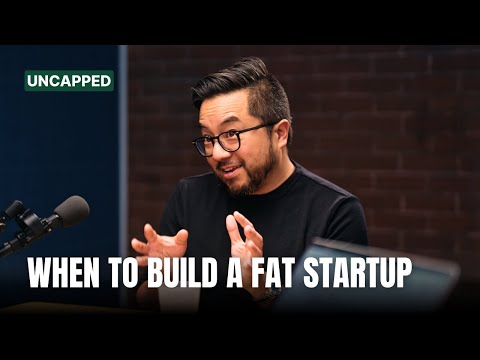
Running Y Combinator Like a Founder | Garry Tan | Ep. 7
Garry Tan (guest), Jack Altman (host)
In this episode of Uncapped with Jack Altman, featuring Garry Tan and Jack Altman, Running Y Combinator Like a Founder | Garry Tan | Ep. 7 explores garry Tan on founder-mode leadership, YC strategy, AI, politics insights Tan describes taking a “zero-based accounting” approach to YC—pruning programs and decisions back to what would be built from scratch—while treating culture (who you hire/fire/promote) as the core lever.
Garry Tan on founder-mode leadership, YC strategy, AI, politics insights
Tan describes taking a “zero-based accounting” approach to YC—pruning programs and decisions back to what would be built from scratch—while treating culture (who you hire/fire/promote) as the core lever.
He argues YC’s edge comes from builder-partners with massive reps who help founders avoid common failure modes (“ways to die”) rather than dictating a single correct path.
On startups, he contrasts lean vs. “fat startups,” saying the fat path works when you have elite investor access, but most founders must earn their way there by starting lean.
He expects vertical AI software to bloom with bold, provable ROI claims, while competition will push teams to move fast—often by automating internally with agents rather than hiring huge teams—and he shares his motivation and theory of change for local/state political reform.
Key Takeaways
Run YC (or any org) from first principles, not legacy inertia.
Tan frames his leadership as “zero-based accounting”: if you wouldn’t rebuild a program/process from scratch today, question why it exists. ...
Get the full analysis with uListen AI
Pruning is hard because culture decisions are hard.
He ties organizational health to saying no—often to people—because culture is implemented through concrete choices (hire/fire/promote). ...
Get the full analysis with uListen AI
Founder mode often follows a board-driven drift—and a reclaiming moment.
Tan points to Brian Chesky’s COVID-era reset at Airbnb as a template: founders can realize the company is being run to others’ playbooks and then reassert ownership of culture and strategy.
Get the full analysis with uListen AI
YC’s ‘pick rate’ is driven by builders judging builders—and high-volume reps.
Rather than mystical selection, Tan attributes YC’s advantage to “game recognize game”: partners who have built products can assess teams quickly, and the accelerator’s throughput gives pattern-recognition other investors rarely match.
Get the full analysis with uListen AI
The best YC help is preventing ‘ways to die,’ not prescribing ‘the way to win.’
Tan describes partners as benevolent guides who mainly know how startups fail: cofounder blowups, wrong investors, bad early hires, scattered focus, running out of money. ...
Get the full analysis with uListen AI
Avoid dogma: fat/lean and focus/compound depend on access and capability.
He’s blunt that fat startups work if you can recruit elite capital/talent (e. ...
Get the full analysis with uListen AI
AI enables unusually strong ROI claims; differentiation still comes from classic moats.
He highlights vertical AI where demos can credibly promise step-function efficiency (e. ...
Get the full analysis with uListen AI
Notable Quotes
““We need to go zero-based accounting.””
— Garry Tan
““Culture is everything… who do you fire, and who do you hire, and who do you promote?””
— Garry Tan
““Game recognize game.””
— Garry Tan
““We just know how not to die, actually.””
— Garry Tan
““If you can get Keith Rabois to invest in your startup, you should do a fat startup.””
— Garry Tan
Questions Answered in This Episode
What were the most important specific “pruning” decisions you made at YC under the zero-based accounting approach (and what did you intentionally keep)?
Tan describes taking a “zero-based accounting” approach to YC—pruning programs and decisions back to what would be built from scratch—while treating culture (who you hire/fire/promote) as the core lever.
Get the full analysis with uListen AI
You said partners mostly help founders “not die.” Which 3 failure modes are most common today (AI era) versus 5–10 years ago?
He argues YC’s edge comes from builder-partners with massive reps who help founders avoid common failure modes (“ways to die”) rather than dictating a single correct path.
Get the full analysis with uListen AI
In what situations do you think YC advice should be more directive (if any), versus staying purely “soft advisor”?
On startups, he contrasts lean vs. ...
Get the full analysis with uListen AI
What signals most reliably indicate a founder can do the ‘fat startup’ path responsibly (beyond having a top investor willing to fund it)?
He expects vertical AI software to bloom with bold, provable ROI claims, while competition will push teams to move fast—often by automating internally with agents rather than hiring huge teams—and he shares his motivation and theory of change for local/state political reform.
Get the full analysis with uListen AI
For vertical AI startups making big efficiency claims, what proof do you require before believing it’s real (metrics, workflows, retention, error rates, liability)?
Get the full analysis with uListen AI
Transcript Preview
and if you can get Keith Rabois to invest in your startup, you should do a fat startup.
Yeah, exactly.
And, you know, and a few other of our friends, obviously. Like, if Elad will do it, like, if Elad, you know, there-- we, we sort of know all the people who can and will do it.
Yeah.
And, like, if they want you to do a fat startup, you should do a fat startup with them.
[upbeat music] All right, Garry, thank you so much for doing this. It's great to be here. I appreciate you making time for it.
Jack, thanks a lot for having me.
Yeah, I know you're super busy, and, um, I'm really excited to have this conversation. Um, you're now, I think, two years into running YC. Is that, that, that's about right? And you've really been running it like a founder, uh, from my perspective, and I kinda wanna start by getting inside your own mentality, and what's the headspace that's let you do that? 'Cause you've made a lot of changes that I think have been really good, that have broadly been received as really good, but that were not easy to do. I think you've done a lot of stuff that, um, has required the confidence of a founder, and you've acted like that. So can you talk a little bit about what headspace you came into when you started running YC?
Definitely. I mean, the great thing about YC is that, um, we're, we, we need to go zero-based accounting. So literally, uh, if we were, you know, starting YC from scratch again, all the things that we would add, you know, we would add in that moment, like, we're keeping those things. Um, and that's, like, a very freeing thing to actually have the people who support you and, like, are your board. You know, for them to say that is just... You just have, you know, sort of not totally carte blanche, but you have, like, as close to it as you could, while not being, like, directly the owner of the thing.
When you had that conversation and you're thinking zero-based accounting for YC, like, what is, what is order of business number one? Like, what must be true first order of business for you, for YC to thrive and be what you want it to be?
I mean, I guess from an abstract standpoint, um, 'cause there are lots of specifics that I don't want to get into [chuckles] but, um, from the most abstract standpoint, like, I view YC as this, like, tree of prosperity. And then, um, you know, like it or not, every organization in the world, uh, no matter how dominant, could use, uh, a little bit of pruning. Like, this is a garden, and, uh, in order for... You know, if you have fruit trees in your backyard-
Right
... you know that, uh, in order to actually have a good bloom, you know, sort of a good crop coming out of your fruit trees, you've got to do all this pruning, you know, months or sometimes, you know, in the years in advance of that.
Install uListen to search the full transcript and get AI-powered insights
Get Full TranscriptGet more from every podcast
AI summaries, searchable transcripts, and fact-checking. Free forever.
Add to Chrome