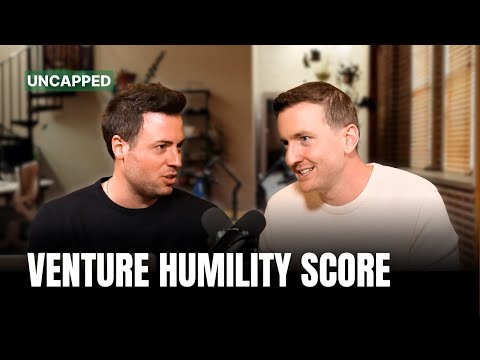
From BoxGroup to Benchmark and Back | Greg Rosen, Partner at BoxGroup | Ep. 22
Greg Rosen (guest), Jack Altman (host)
In this episode of Uncapped with Jack Altman, featuring Greg Rosen and Jack Altman, From BoxGroup to Benchmark and Back | Greg Rosen, Partner at BoxGroup | Ep. 22 explores boxGroup’s Switzerland venture strategy: win by seeing more, earlier Rosen argues collaborative venture is inherently anti-scale unless you refuse to lead rounds, because leading breaks the trust required to be “Switzerland” in syndicates.
BoxGroup’s Switzerland venture strategy: win by seeing more, earlier
Rosen argues collaborative venture is inherently anti-scale unless you refuse to lead rounds, because leading breaks the trust required to be “Switzerland” in syndicates.
BoxGroup scales by increasing deal velocity (70–80 investments/year from ~5,000–6,000 qualified opportunities), trading ownership for better access and lower adverse selection.
He contends venture has become far more competitive; since most investors can’t realistically get 2–10x better at picking, the practical response is to see more opportunities earlier and make it easy for founders to say yes.
The conversation also covers operating mechanics (single-trigger decisions, pods, ‘help people get to yes,’ calendar auditing) and closes with views on AI-native developer tools and speculative brain-computer interfaces.
Key Takeaways
Collaborative venture collapses the moment you start leading rounds.
Rosen says even leading a small number of seed rounds creates immediate trust issues: other investors assume you’ll withhold the best deals. ...
Get the full analysis with uListen AI
BoxGroup trades ownership for access to better companies (adverse selection avoidance).
Instead of maximizing percentage ownership, they optimize to be in the right outlier companies. ...
Get the full analysis with uListen AI
If venture got harder and your process didn’t change, you implicitly accepted lower returns.
Rosen frames venture as see→pick→win→value; with competition up, unchanged inputs mean worse outputs. ...
Get the full analysis with uListen AI
“If there’s a deck, it’s too late” is a sourcing strategy, not a slogan.
They try to meet ‘the human before the company,’ often before someone leaves their job. ...
Get the full analysis with uListen AI
Single-trigger + ‘get to yes’ culture is a structural advantage at seed.
Consensus processes push risk down and slow decisions, which breaks early-stage velocity. ...
Get the full analysis with uListen AI
The alpha is usually in the ‘non-obvious middle,’ not the “obviously great” bucket.
Rosen claims “obviously great” deals often perform worse due to higher prices and different dynamics. ...
Get the full analysis with uListen AI
Calendar auditing reveals most investors waste time on ‘VC-only’ activity.
He calls VC networking and performative events ‘empty calories’ unless they directly lead to founders or portfolio impact. ...
Get the full analysis with uListen AI
Notable Quotes
““Collaborative venture is hard… it has to be anti-scale in certain dimensions.””
— Greg Rosen
““The second you start leading those rounds, you just can’t be Switzerland.””
— Greg Rosen
““We see on average about five to six thousand qualified opportunities a year… and make about seventy to eighty investments a year.””
— Greg Rosen
““If there’s a deck, it’s too late.””
— Greg Rosen
““Consensus-driven decision-making at Seed doesn’t work, in my opinion.””
— Greg Rosen
Questions Answered in This Episode
What specific behaviors (and boundaries) let BoxGroup remain ‘Switzerland’ while still taking meaningful check sizes—especially when they’re most excited about a company?
Rosen argues collaborative venture is inherently anti-scale unless you refuse to lead rounds, because leading breaks the trust required to be “Switzerland” in syndicates.
Get the full analysis with uListen AI
You said ‘obviously great’ deals as a basket perform worse—what are the main drivers (price, competition, founder behavior), and how do you quantify that internally?
BoxGroup scales by increasing deal velocity (70–80 investments/year from ~5,000–6,000 qualified opportunities), trading ownership for better access and lower adverse selection.
Get the full analysis with uListen AI
How do you define a ‘qualified or referred opportunity’ in the 5,000–6,000/year figure, and what filters prevent the top-of-funnel from becoming pure noise?
He contends venture has become far more competitive; since most investors can’t realistically get 2–10x better at picking, the practical response is to see more opportunities earlier and make it easy for founders to say yes.
Get the full analysis with uListen AI
What are the most effective outbound channels for meeting ‘the human before the company’ (campus, events, job-change scraping, referrals), and which have declined in ROI recently?
The conversation also covers operating mechanics (single-trigger decisions, pods, ‘help people get to yes,’ calendar auditing) and closes with views on AI-native developer tools and speculative brain-computer interfaces.
Get the full analysis with uListen AI
Single-trigger can increase false positives—what guardrails prevent over-investing when one person is simply ‘in a good mood’ or over-squinting?
Get the full analysis with uListen AI
Transcript Preview
you are better off just focusing on the thing that you are outlier in. And like, I think the biggest thing is just figuring out what that is.
Which of the archetypes you are, and then-
Which of the archetypes. Like, if, if you have, like, hyper-networker, philosopher, uh, and specialist, like, there's probably more, but, like, of those three-
Yeah
... like, which one are you?
Yeah.
Where do you have an advantage? And then just focus all your energy and effort on being amazing there.
[music] All right, Greg, I am very happy to be here with you, and I'm gonna give a little disclaimer that I cajoled you into doing this, and you normally wouldn't, but, uh, you're one of my best friends, and so you're doing this favor for coming on.
[chuckles]
So thanks for doing this. Is this, like, your first podcast?
This is my first podcast. I heard this is like a small boutique. No one really knows about it, right?
It's a small little thing, and you agreed to do it once, and then you're, you're never-
Never again.
Never again.
Yeah. Don't invite me back.
Okay, so I wanna start with one of the things that you've taught me a lot about, which is the idea of collaborative venture. What's interesting about it to me is it used to be the case in venture that s- funds were smaller and collaborative was, like, the nature of how the whole world worked, and funds would, like, sort of, like, team up and, like, do rounds together. And then at some point in the last ten, 15 years, I think it swung to a place where funds got huge, people got sharp elbows, people wanted lots of ownership and whatever, and so a lot of that went away. Um, and so in some sense, that declined. But Box is, like, bigger than ever, doing more than ever. And so I wanted to just start by hearing your overall view on this, like, collaborative venture model.
Yeah, collaborative venture is hard, um, and almost by definition, it has to be anti-scale in certain dimensions, right? And so for us, like, if we started leading seed rounds or Series-A rounds, and, and certainly beyond that, we would lose our collaborative Switzerland nature.
Yep.
So instead, what we said is, "Okay, that is an easy way to scale capital, is start leading rounds, writing larger and larger checks." Um, and that's what others have done and why it's, like, hard to stay collaborative.
That's, like, usually what happens, right?
That's usually what happens, right? Everyone starts a new fund and, uh, or new firm, and they say: "We're gonna be super collaborative, we're gonna work together," and then all of a sudden, they start leading one, two, three deals, and the second that happens, it's this binary moment, right?
You either make it or you don't?
Ro- because if you're, if you're col... If we're collaborative, right, we're BoxGroup, and then let's say we make 80 investments a year, and let's say we only lead two or three seeds of that. Now, when I'm sharing a deal with you or anyone else in the market, you're gonna be thinking in the back of your mind, "Is this fully being shared, all the deals, or is it the one or two deals that they're leading and actually most excited about I'm not getting shared, I'm not seeing?" And so it's this binary moment that, like, the second you start leading those rounds, you just can't be Switzerland. And for us, we have been, you know, since the beginning of BoxGroup, f- you know, 15-plus years ago to now, it is like we are not doing that. We are Switzerland, and, and, and that's, I think, what's enabled us to, like-
Install uListen to search the full transcript and get AI-powered insights
Get Full TranscriptGet more from every podcast
AI summaries, searchable transcripts, and fact-checking. Free forever.
Add to Chrome