Former CAA Talent Agent Turned Investor with $70B in AUM on AI and Venture Strategy | Ep. 29
Thomas Laffont (guest), Jack Altman (host)
In this episode of Uncapped with Jack Altman, featuring Thomas Laffont and Jack Altman, Former CAA Talent Agent Turned Investor with $70B in AUM on AI and Venture Strategy | Ep. 29 explores coatue’s Thomas Laffont on AI cycle, venture strategy, and founders Laffont frames the current AI moment as a cycle shift driven by escalating competitive intensity and a move from cash-flow-funded buildouts to leveraged, existential spending—highlighting Oracle and AI labs as key signals.
Coatue’s Thomas Laffont on AI cycle, venture strategy, and founders
Laffont frames the current AI moment as a cycle shift driven by escalating competitive intensity and a move from cash-flow-funded buildouts to leveraged, existential spending—highlighting Oracle and AI labs as key signals.
He explains Coatue’s “wide aperture” approach: investing across public and private markets from inception through IPO, guided by themes (semis, data centers, power, models, and the evolving data layer) rather than rigid stage buckets.
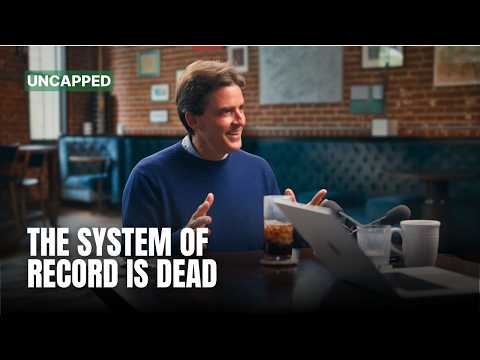
On enterprise software, he argues the “system of record” is depreciating as data unlocks from SaaS silos into platforms like Snowflake/Databricks, while value migrates to agents and intelligence built atop broader datasets.
He also covers venture dynamics—zero-sum competition, conflicts and disclosure, decision-making by internal momentum—and closes with personal lessons on mentorship, integrity, and craft (from golf to meticulous ‘gift-wrapping’ as a young professional).
Key Takeaways
AI capex is shifting from optional to existential.
Laffont contrasts earlier AI spend (funded by massive FCF at Meta/Google/Microsoft) with a newer phase where even cash-flow-negative players (e. ...
Get the full analysis with uListen AI
Competition in cloud is intensifying beyond the old oligopoly.
He notes the market feels structurally different with Oracle pushing aggressively into cloud/AI and GPU-specialists like CoreWeave emerging, expanding the set of serious infrastructure contenders.
Get the full analysis with uListen AI
Infrastructure will capture durable AI value: chips, data centers, and power.
Laffont’s highest-conviction layer is foundational: semiconductors (NVIDIA and Broadcom highlighted), plus the physical constraints of data center buildout and electricity generation as AI demand scales.
Get the full analysis with uListen AI
Near-term “power trades” favor deployable generation, not science projects.
He’s constructive on nuclear (including behind-the-meter deals) and natural-gas generation (e. ...
Get the full analysis with uListen AI
Models matter, but applications are fuzzier—data becomes the bridge.
He expects foundational models to consolidate around a handful of leaders, while admitting app-layer outcomes are less clear; he positions the data layer as the critical enabler for agent-driven applications.
Get the full analysis with uListen AI
SaaS data lock-in is breaking; systems of record are depreciating.
Citing Workday’s move to integrate with Snowflake/Databricks, he argues SaaS vendors will compete on agentic outcomes (HR/finance intelligence) more than on being the exclusive storage location for customer data.
Get the full analysis with uListen AI
“Always record” enterprise interactions will reshape compliance and management.
He predicts most enterprise interactions will be recorded by default and analyzed by agents, enabling proactive coaching/compliance interventions—though he acknowledges compliance leaders may initially see this as a nightmare.
Get the full analysis with uListen AI
Cross-stage investing reduces the ‘one-shot’ VC mentality.
Because Coatue can invest across multiple rounds and into public markets, Laffont believes you can “miss a round, not the company,” lowering zero-sum behavior relative to firms that must win a single early entry point.
Get the full analysis with uListen AI
Conflicts can be managed with disclosure and rigorous information controls.
He draws a line at directly backing identical competitors when deeply involved (e. ...
Get the full analysis with uListen AI
Great firms often decide by momentum, not by one dramatic committee vote.
Coatue solicits early cross-team input (public + private expertise), iterates continuously, and lets weak ideas lose steam—making the investment committee more of a checkpoint than the arena for first-principles debate.
Get the full analysis with uListen AI
Notable Quotes
“What was different about the Oracle announcement… is now you're seeing kind of some leverage come into… it’s actually not just the free cash flow-positive companies that are investing.”
— Thomas Laffont
“I do think the system of record is dead.”
— Thomas Laffont
“Every interaction within the enterprise, within three years, will be recorded… the default is gonna be record on.”
— Thomas Laffont
“The thing I dislike the most about venture is… the zero-sum nature of the business at times.”
— Thomas Laffont
“A lesson I learned at CAA is… star quality is real.”
— Thomas Laffont
Questions Answered in This Episode
On the Oracle signal: what specifically in that announcement implied “leverage” and a new risk regime for AI infrastructure spend?
Laffont frames the current AI moment as a cycle shift driven by escalating competitive intensity and a move from cash-flow-funded buildouts to leveraged, existential spending—highlighting Oracle and AI labs as key signals.
Get the full analysis with uListen AI
If the cloud market share could shift meaningfully (e.g., Oracle to ~15%), what leading indicators should investors watch to confirm that trajectory?
He explains Coatue’s “wide aperture” approach: investing across public and private markets from inception through IPO, guided by themes (semis, data centers, power, models, and the evolving data layer) rather than rigid stage buckets.
Get the full analysis with uListen AI
You say “system of record is dead”—which parts survive (validation, security, coordination), and which vendors are most at risk (Salesforce, ServiceNow, Workday) versus best positioned to adapt?
On enterprise software, he argues the “system of record” is depreciating as data unlocks from SaaS silos into platforms like Snowflake/Databricks, while value migrates to agents and intelligence built atop broader datasets.
Get the full analysis with uListen AI
How do you expect Snowflake/Databricks to change if they become the coordination hub—not just storage/compute? What new product surface area do they need?
He also covers venture dynamics—zero-sum competition, conflicts and disclosure, decision-making by internal momentum—and closes with personal lessons on mentorship, integrity, and craft (from golf to meticulous ‘gift-wrapping’ as a young professional).
Get the full analysis with uListen AI
Your ‘always record’ prediction collides with privacy and labor law—what’s the realistic adoption path (opt-in, agent-only visibility, retention policies)?
Get the full analysis with uListen AI
Transcript Preview
I looked at maybe the top ten to fifteen P&L winners that I've had over my career on the private side. Without exception, my first opportunity to invest was a no. It might have been a no from me to the company passing, or vice versa, the company passing on me. [upbeat music]
I am really excited to be here with you today, Thomas. Thanks so much for taking the time for this.
Very excited.
Um, so my note to myself on this first topic is, uh, this time it's different, and, um, a lot of people recently, in the, you know, last few weeks, have been saying things that are, you know, implying that a bubble might be going. And, you know, it's like, you know, there was a tweet from Brian at Sequoia that was like, "You know, this is a good time to sell your company." There have been a lot of blog posts written, you know, behind, you know, closed doors. It's a frequent topic of conversation, like valuations are expensive. We're back to twenty twenty-one multiples for a certain flavor of company. Obviously, you know, Coatue has gone through, over its last twenty-five years of existence, a bunch of cycles, so you've seen this happen many times. And so I'm curious, sort of your spot temp check, it's fall twenty twenty-five, how do you make sense of where we are in, in the cycle and sort of in capital deployment?
Yeah, so I've been lucky to be doing this for a while, um, almost twenty-five years now, and there are a few seminal moments that I recall as a tech investor. Um, the first was the iPhone and Apple, and the quarterly earnings that would come out, and the absolute blowout. You know, if, if consensus was one, they would print three or five. You just didn't see those kinds of beats and the magnitude of [clears throat] the transformation that Apple was, uh, bringing into the market with the iPhone. So that was kind of one, right? Um, the second I remember, like it was yesterday, was NVIDIA, when it guided its data center business to be up one hundred percent year over year, and no one thought that that could be possible. So that was obviously, um, that and the, the ChatGPT moment kind of happening at the same time, right? I do think the Oracle announcement from two weeks ago was, um, [lips smack] really profound and important as well. Um, just a fascinating story of how long Oracle's been around and how it's been able to shed its skin and reinvent itself. Um, what was interesting about that, um, specific company is, if you look at the AI infrastructure build-out up to this point, had really been funded with, um, cash flows from big companies, right? So, um, Meta, Google, Apple, uh, Microsoft, generating incredible amounts of revenue, having very high operating margins, very high cash flow margins, and the ability to, um, invest, right, uh, some of those cash flows into this, uh, AI, uh, build. What was different about the Oracle announcement, um, [lips smack] is now you're seeing kind of some leverage come into, right? Where it's actually not just the free cash flow-positive companies that are investing, it's actually free cash flow-negative companies that are investing, right? So OpenAI, as an example, right, is making a, a huge bet, right? It's not producing free cash yet, um, but it kind of sees, uh, a version of the future where it- demand for its products kinda keep increasing. So, um, I do think that's something that, um, we spend a lot of time kind of looking at and thinking about. Uh, the question now will be: Does the competitive intensity between the hyperscalers really start to intensify, right? We kinda had a staid oligopoly, I would say, where Amazon kind of started, then Microsoft, and then Google kinda crept in-
Install uListen to search the full transcript and get AI-powered insights
Get Full TranscriptGet more from every podcast
AI summaries, searchable transcripts, and fact-checking. Free forever.
Add to Chrome