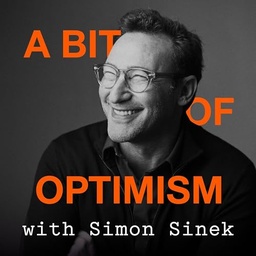
 Simon Sinek
The Real Reason You Feel Empty (Even When Life Looks Good) | Musician Mike Posner
Simon Sinek and Mike Posner on why external success feels empty—and how chosen hardship restores peace.
In this episode of Simon Sinek, featuring Simon Sinek and Mike Posner, The Real Reason You Feel Empty (Even When Life Looks Good) | Musician Mike Posner explores why external success feels empty—and how chosen hardship restores peace Mike Posner describes feeling “trapped under the weight of success,” where fame and money failed to close an internal “peace gap” between his potential and his lived contribution.
At a glance
WHAT IT’S REALLY ABOUT
Why external success feels empty—and how chosen hardship restores peace
- Mike Posner describes feeling “trapped under the weight of success,” where fame and money failed to close an internal “peace gap” between his potential and his lived contribution.
- They argue that real growth requires discomfort—either hardships life delivers or risks we consciously choose—because comfort and avoidance tend to perpetuate anxiety and emptiness.
- Posner frames “Art as alchemy,” where artists transmute pain into beauty that helps audiences name ineffable feelings and feel less alone.
- They distinguish authentic vulnerability and art from attention-seeking “broadcast” behavior, emphasizing that intention determines whether sharing pain creates connection or simply “turns pain to pain.”
- The conversation culminates in a paradox: the goal isn’t endless grit or extreme feats, but the calm and self-acceptance that often emerges through properly bounded challenge and honest living.
IDEAS WORTH REMEMBERING
5 ideasExternal wins can amplify internal emptiness if your life feels misaligned.
Posner’s “Is this it?” moment highlights an internal asymmetry—having “all the stuff” but sensing more to give—where more optimizing (biohacks, supplements, status) can’t substitute for meaning and integrity.
Hardship isn’t just inevitable—it’s psychologically necessary for growth.
They argue people often claim to want comfort, yet “crave challenges” because difficulty reveals capacities and lessons that ease never teaches.
Choose small, purposeful discomforts before life forces larger ones.
You can “inject” risk through honest conversations, ownership of mistakes, or career moves that require courage—without needing extreme stunts like crossing the country.
Vulnerability is the risk of losing what you hope to keep.
Whether in relationships (not ghosting, having the hard talk) or work, vulnerability means stepping into outcomes you can’t control, which is where learning and connection occur.
Art becomes healing when it transforms pain into shared meaning, not into attention.
Posner differentiates capital-A Art from commoditized content: if the intent is fellowship (“me too”), it alchemizes pain; if the intent is likes/followers as relief, it compounds pain.
WORDS WORTH SAVING
5 quotesI realized that I was 30 years old, I was trapped under the weight of my own success. I've got a few hits, got a few million dollars, and I'm just sort of looking around like, "Is this it?"
— Mike Posner
There was this asymmetry between, like, what I had to give to the world and what I had given to the world, and I couldn't figure out how to close that gap.
— Mike Posner
In fact, it was so devoid of hardship that it was empty. We need hardship. We pretend that we don't want any challenges in our life. In actuality, we crave them.
— Mike Posner
My life was a fraud, and my reason for existence was convincing people that I was not a fraud.
— Mike Posner
On Everest, I was like, "This is a really dumb way to die- if I die here."
— Mike Posner
QUESTIONS ANSWERED IN THIS EPISODE
5 questionsMike describes an “asymmetry” between what he had to give and what he’d given—what are practical signs someone is experiencing this “peace gap” versus normal restlessness?
Mike Posner describes feeling “trapped under the weight of success,” where fame and money failed to close an internal “peace gap” between his potential and his lived contribution.
Where exactly is the line between healthy boundaries/mental health and the “avoidance” Mike calls mental weakness—how would you distinguish them in real scenarios like work conflict or dating?
They argue that real growth requires discomfort—either hardships life delivers or risks we consciously choose—because comfort and avoidance tend to perpetuate anxiety and emptiness.
If intention is the key difference between art and attention-seeking broadcasts, how can creators audit their own motives when both connection and career incentives are present?
Posner frames “Art as alchemy,” where artists transmute pain into beauty that helps audiences name ineffable feelings and feel less alone.
Mike says he risked his life for self-improvement and calls that selfish—what’s a healthier model for challenge that builds character without becoming performative or extreme?
They distinguish authentic vulnerability and art from attention-seeking “broadcast” behavior, emphasizing that intention determines whether sharing pain creates connection or simply “turns pain to pain.”
In the snake-bite moment, attention increased when he was hurt—how should public figures (or anyone online) handle situations where suffering is rewarded?
The conversation culminates in a paradox: the goal isn’t endless grit or extreme feats, but the calm and self-acceptance that often emerges through properly bounded challenge and honest living.
Chapter Breakdown
Why success can still feel empty: “Is this it?”
Simon sets up Mike Posner’s story: major hits and external success followed by a deeper sense of hollowness once the “party ends.” Mike introduces the core tension—having what he was supposed to want while feeling an inner gap that achievement didn’t close.
Pain as a teacher: learning from lived experience instead of concepts
Mike and Simon discuss the idea that teachers are often given pain, and that wisdom carries more weight when it comes from experience. They explore how hardship, once metabolized, can become guidance for others.
Art without elitism: finding beauty in everyday moments
A playful exchange about sounding “elitist” (“as an art lover”) turns into a discussion about accessibility of art and the gatekeeping of the art world. Simon and Mike broaden art to include presence—like hearing the sounds of making coffee or watching a train go by.
Art as alchemy: turning pain into beauty and fellowship
Mike explains the idea of “art is alchemy”—transforming inevitable human pain into something meaningful and beautiful. Art becomes a bridge: it helps others name what felt ineffable and feel less alone.
Vulnerability vs. attention: intention is the difference
Simon challenges the modern confusion between vulnerability and performance—broadcasting emotion for likes versus sharing truth to create connection. Mike argues the dividing line is intention: seeking fellowship versus chasing attention.
Hits, commodification, and why you can’t manufacture meaning
Mike describes how unpredictable “hits” are and how his most meaningful work didn’t seem engineered for popularity. They contrast commercial incentives with authentic creation, emphasizing that outcomes (streams, sales) aren’t the true point.
Avoiding discomfort keeps the hollow feeling alive
Simon and Mike explore cultural discomfort-avoidance—ghosting, quitting instead of having hard conversations, creating “boundaries” as avoidance. They argue growth requires risk, mistakes, and the willingness to feel temporary pain.
Trapped under the weight of success: the “peace gap”
Mike recounts feeling stuck at 30: money, fame, and status, but a persistent sense something was off. He names an “asymmetry” between what he had inside and what he’d given the world, and recognizes the standard career script wouldn’t fix it.
Choosing hardship: walking across America as a late “bar mitzvah”
Mike describes deliberately making his life uncomfortable by walking from the Atlantic to the Pacific. He frames it as a self-initiated rite of passage—becoming an adult through difficulty rather than comfort.
Snake bite and the temptation of attention over authenticity
A near-death rattlesnake bite lands Mike in the ICU and unexpectedly boosts his fame and followers. The incident becomes a crossroads: return to an attention-driven identity or recommit to the deeper purpose of the walk.
From personal transformation to shared transformation: influence without preaching
Mike answers Simon’s request for impact stories: a young man inspired to walk across America and people helped toward sobriety through Mike’s community calls. He emphasizes humility—change belongs to the individual, and teachers simply “walk each other home.”
The paradox: discomfort as a route to calm, peace, and grace
Simon reframes Mike’s message: the goal isn’t stress for its own sake, but peace—a restful mind not chained to validation. They discuss small, everyday acts of courageous honesty as “injecting” productive discomfort to deepen love and connection.
Everest and the deeper metaphor: the summit is only halfway
Mike reflects on pushing hardship too far—risking his life for self-improvement—and calls that selfish when taken to extremes. Simon lands the closing metaphor: reaching the top is only halfway; the real work is the full journey, including coming down with humility.
EVERY SPOKEN WORD
Install uListen for AI-powered chat & search across the full episode — Get Full Transcript
Get more out of YouTube videos.
High quality summaries for YouTube videos. Accurate transcripts to search & find moments. Powered by ChatGPT & Claude AI.
Add to Chrome