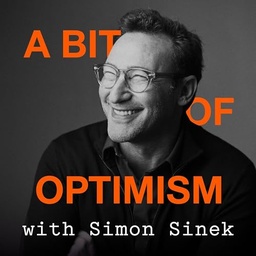
 Simon Sinek
You Are More Like Grammy-Winner Jacob Collier Than You Think | A Bit of Optimism Podcast
Simon Sinek and Jacob Collier on jacob Collier and Simon Sinek unpack creativity, music, and containers.
In this episode of Simon Sinek, featuring Jacob Collier and Simon Sinek, You Are More Like Grammy-Winner Jacob Collier Than You Think | A Bit of Optimism Podcast explores jacob Collier and Simon Sinek unpack creativity, music, and containers Jacob Collier describes music as a universal language built from intuitive human axes like high/low, loud/quiet, and tension/resolution that nearly everyone implicitly understands.
At a glance
WHAT IT’S REALLY ABOUT
Jacob Collier and Simon Sinek unpack creativity, music, and containers
- Jacob Collier describes music as a universal language built from intuitive human axes like high/low, loud/quiet, and tension/resolution that nearly everyone implicitly understands.
- The discussion reframes artistry as a cycle between chaos and order, where creators alternately “find order in chaos” and “find chaos in order” to avoid stagnation.
- Collier explains how his audience-choir technique works by giving people a simple container (like a key center) that lets collective intuition produce surprisingly accurate harmony without rehearsal.
- Both reflect on sustaining joy when a passion becomes a job, emphasizing play, emotional attunement, and changing the creative container rather than repeating old successes.
- They compare “catching ideas” to surfing—unpredictable inspiration paired with practiced skill in capturing and riding the wave into a finished output.
IDEAS WORTH REMEMBERING
7 ideasMost people are more musical than they believe.
Collier argues that simply having listened to music builds an intuitive sense of intervals, key centers, and movement; his audience-choir proves people can follow pitch direction and harmony without technical training.
A simple container can unlock complex creativity.
Giving constraints like a key (e.g., “we’re in F”) creates safety and shared orientation; within that boundary, improvisation and collective coordination become possible.
Music works by crafting satisfying tension and resolution.
Collier’s “arrival and departure” framing explains why “home” feels like home; even gnarly chords can become meaningful when voice-leading resolves them into rest.
Creativity is a two-way cycle between chaos and order.
Sinek defines creativity as finding order in chaos, while Collier adds the complementary move—scuffing up rigid systems to reintroduce chaos—then rebuilding into a new order.
Technical mastery can threaten novelty unless you keep breaking patterns.
They critique the “10,000 hours” narrative when it leads to ossification; staying fresh often requires disrupting routines, switching formats, or redesigning constraints rather than refining the same output.
Emotional expression improves when you have a medium to externalize it.
Collier describes using the piano as catharsis and self-understanding, echoing his candlelit-dinner upbringing where feelings were met with curiosity instead of judgment.
The advantage of creatives is not constant inspiration—it’s capturing it.
Using the surfing metaphor, inspiration is intermittent, but professionals carry tools and habits (notebooks, capturing shower ideas) so the moment doesn’t vanish before it’s shaped into work.
WORDS WORTH SAVING
5 quotesThe joy of music is how to make the best, most satisfying kind of tension, and then resolve it.
— Jacob Collier
I define creativity as finding order in chaos.
— Simon Sinek
An important part of making art… is finding chaos in the order.
— Jacob Collier
The friction between understanding exactly what a thing is and not understanding exactly what a thing is—that’s where the most creativity happens.
— Jacob Collier
Everybody has the moments of inspiration. What everybody’s not doing is capturing them.
— Simon Sinek
QUESTIONS ANSWERED IN THIS EPISODE
5 questionsWhen you say a “container” makes creativity feel safe, what are your go-to containers when you’re stuck—key, tempo, lyric premise, collaborator, deadline?
Jacob Collier describes music as a universal language built from intuitive human axes like high/low, loud/quiet, and tension/resolution that nearly everyone implicitly understands.
In the audience choir, what specific cues (hand height, gesture speed, facial cues) do you rely on most to get accurate pitch and dynamics quickly?
The discussion reframes artistry as a cycle between chaos and order, where creators alternately “find order in chaos” and “find chaos in order” to avoid stagnation.
You mentioned you need “over 50%” of the crowd to know what’s going on—what do you do in rooms where the audience is hesitant, self-conscious, or culturally less used to sing-alongs?
Collier explains how his audience-choir technique works by giving people a simple container (like a key center) that lets collective intuition produce surprisingly accurate harmony without rehearsal.
Can you walk through a concrete example of turning an emotion like “knotted anger” into musical choices (register, harmony density, rhythm, articulation) rather than happy/sad?
Both reflect on sustaining joy when a passion becomes a job, emphasizing play, emotional attunement, and changing the creative container rather than repeating old successes.
Do you think the ‘tortured artist’ narrative is harmful, or does it sometimes describe a real pathway for certain people—and how do you separate pain from performance of pain?
They compare “catching ideas” to surfing—unpredictable inspiration paired with practiced skill in capturing and riding the wave into a finished output.
EVERY SPOKEN WORD
Install uListen for AI-powered chat & search across the full episode — Get Full Transcript
Get more out of YouTube videos.
High quality summaries for YouTube videos. Accurate transcripts to search & find moments. Powered by ChatGPT & Claude AI.
Add to Chrome