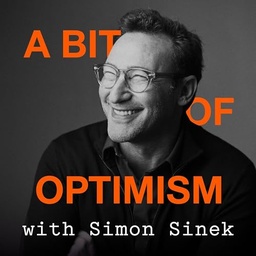
 Simon Sinek
Choose Your Seven Humans Wisely with author Fredrik Backman | Simon Sinek
Simon Sinek and Fredrik Backman on backman and Sinek on choosing friends and earning relationships daily.
In this episode of Simon Sinek, featuring Fredrik Backman and Simon Sinek, Choose Your Seven Humans Wisely with author Fredrik Backman | Simon Sinek explores backman and Sinek on choosing friends and earning relationships daily Fredrik Backman explains how his closest relationships were formed through real-life proximity and difference, not algorithms or perfect “compatibility.”
At a glance
WHAT IT’S REALLY ABOUT
Backman and Sinek on choosing friends and earning relationships daily
- Fredrik Backman explains how his closest relationships were formed through real-life proximity and difference, not algorithms or perfect “compatibility.”
- Backman’s best friend models friendship as consistent presence—showing up, offering time, and serving others—especially during grief or hardship.
- They argue that strong relationships depend on doing the work on oneself: learning communication, setting rules for conflict, and continually re-earning trust and closeness.
- The pair contrast healthy venting with social-media reactivity, describing friends as “editors” who help refine emotions into constructive truth.
- Backman discusses humility, insecurity, and empathy—finding commonality with bullies and acknowledging personal flaws as a path to better behavior.
IDEAS WORTH REMEMBERING
7 ideasChoose a small set of “humans” and invest deeply.
Backman distinguishes between “people” (strangers, like at the airport) and a handful of “humans” you choose; depth requires time, so you can’t sustainably do it with hundreds of relationships.
Be the friend you wish you had—presence is the currency.
Sinek challenges the idea that great friends are pure luck; showing up (“I’m here—give me something to do”) creates the reciprocal conditions for deep friendship.
Friends should function as editors, not amplifiers.
Venting to a trusted friend helps you externalize an exaggerated first draft of emotion, then refine it into what you truly mean—rather than using social media as an unfiltered outlet.
Healthy relationships require “rules of fighting.”
Backman and his wife agreed early that threats like “maybe we shouldn’t be together” are off-limits because they end discussion by introducing existential fear instead of solving the issue.
The real work in relationships is self-work.
Backman reframes “relationships take work” as working on your own communication, self-understanding, and emotional regulation, especially as both partners change over years and life stages.
Priorities change; communicate transitions explicitly.
Backman’s friend directly told the group he would stop weekly movie nights to invest in his relationship and later affirmed he wanted to be with his family—modeling mature, non-passive boundary setting.
Empathy can come from recognizing your proximity to wrongdoing.
To understand bullies without excusing them, Backman looks for the bully’s traits in himself (pettiness, envy, narcissism) and treats self-awareness as motivation to actively “fight” those impulses.
WORDS WORTH SAVING
5 quotes“You need people around you who edit you.”
— Fredrik Backman
“It’s not that I have to be with them. It’s that I want to be with them.”
— Fredrik Backman (quoting his best friend)
“The only thing I can give you is time.”
— Fredrik Backman (describing his best friend’s philosophy)
“The work is not on the relationship… The work is on you.”
— Fredrik Backman
“Humans, you have maybe seven humans that you chose… and then people are the ones at the airport.”
— Fredrik Backman
QUESTIONS ANSWERED IN THIS EPISODE
5 questionsBackman says we each have “maybe seven humans.” How would you practically decide who makes that list—and what behaviors would disqualify someone even if you’ve known them for years?
Fredrik Backman explains how his closest relationships were formed through real-life proximity and difference, not algorithms or perfect “compatibility.”
What does a “friend as editor” relationship look like in practice—how do you ask for editing without turning it into advice-giving or judgment?
Backman’s best friend models friendship as consistent presence—showing up, offering time, and serving others—especially during grief or hardship.
Backman favors “quantity time” over “quality time.” Where is the line where quantity becomes avoidance of deeper intimacy or intentionality?
They argue that strong relationships depend on doing the work on oneself: learning communication, setting rules for conflict, and continually re-earning trust and closeness.
The ‘rules of fighting’ idea forbids breakup threats. What other “atomic bomb” phrases or tactics should couples pre-agree to avoid, and what should replace them?
The pair contrast healthy venting with social-media reactivity, describing friends as “editors” who help refine emotions into constructive truth.
Sinek argues friendship isn’t a lottery—you get it by being it first. What’s the first concrete action someone should take this week if they feel lonely and have no close friends?
Backman discusses humility, insecurity, and empathy—finding commonality with bullies and acknowledging personal flaws as a path to better behavior.
EVERY SPOKEN WORD
Install uListen for AI-powered chat & search across the full episode — Get Full Transcript
Get more out of YouTube videos.
High quality summaries for YouTube videos. Accurate transcripts to search & find moments. Powered by ChatGPT & Claude AI.
Add to Chrome