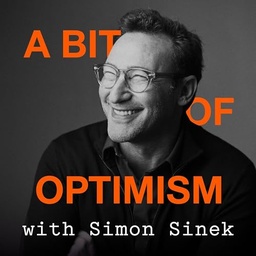
 Simon Sinek
Who Are You, Really? with journalist Maria Shriver | A Bit of Optimism Podcast
Simon Sinek and Maria Shriver on maria Shriver on identity, heartbreak, healing, friendship, and finding home.
In this episode of Simon Sinek, featuring Simon Sinek and Maria Shriver, Who Are You, Really? with journalist Maria Shriver | A Bit of Optimism Podcast explores maria Shriver on identity, heartbreak, healing, friendship, and finding home Maria Shriver describes growing up inside the Kennedy/Shriver spotlight and how that legacy pressure shaped her lifelong search to answer “Who am I?” beyond titles and surnames.
At a glance
WHAT IT’S REALLY ABOUT
Maria Shriver on identity, heartbreak, healing, friendship, and finding home
- Maria Shriver describes growing up inside the Kennedy/Shriver spotlight and how that legacy pressure shaped her lifelong search to answer “Who am I?” beyond titles and surnames.
- The conversation reframes identity as an internal, self-claimed “I am,” contrasting it with society’s default habit of defining people by what they do (jobs, roles, achievements).
- Shriver shares how a rapid succession of losses—her mother’s death, father’s death, the end of her marriage, and the end of her public role—forced a deep identity reset and a commitment to “rise differently.”
- Both emphasize friendship as essential infrastructure for vulnerability and resilience, including the “eight-minute” practice and the intentional creation of safe relational “containers.”
- Shriver’s book I Am Maria uses “reporter poetry” to process heartbreak and healing, arguing that a meaningful life prioritizes home within, faith, and relationships over productivity culture.
IDEAS WORTH REMEMBERING
7 ideasReclaim identity by leading with “who I am,” not “what I do.”
Shriver highlights how social scripts push people to summarize themselves by occupation or status; redirecting to personal qualities (e.g., scared, strong, artistic, loving) creates real connection and self-ownership.
Inherited legacies can become a job unless you consciously opt out.
She describes feeling on-stage in the Kennedy/Shriver family—expected to perform—and intentionally parenting her children to value being loved “for who they are, not what they do,” with freedom to depart from family narratives.
Major losses often trigger identity collapse—but also the chance to rebuild differently.
Shriver’s clustered upheavals (parents’ deaths, marriage ending, losing the First Lady role) revealed how many identities had served as protection; healing required breaking denial and choosing a new path.
“Doing the work” is personal, but rarely solo.
She combines solitary practices (therapy, retreats, a convent, spiritual journeys) with community support, arguing that transformation happens in relationship even when the inner work is yours.
Friendship is foundational support for work and romantic relationships.
They argue that careers and marriages strain without friends who can hold uncomfortable emotions; friendships provide the safe space to process fear, insecurity, self-doubt, and change.
Treat friendship like a practice with rituals, not an afterthought.
Shriver advocates structured check-ins—borrowed from couples’ tools (love languages, “36 questions,” relationship reviews)—to deepen friendships through feedback, curiosity, and shared vulnerability.
Workplaces offer routine and belonging, but they are not home.
Her CBS firing taught her that jobs can disappear overnight; “home” must be built internally and through relationships so professional loss doesn’t become total personal dislocation.
WORDS WORTH SAVING
5 quotes“I am a woman. I’m a… spiritual, loving, kind… wise, broken, scared, strong, vulnerable 69-year-old woman.”
— Maria Shriver
“I grew up being asked all the time, ‘Which Kennedy are you?’”
— Maria Shriver
“I need to rise… and I’m going to rise differently.”
— Maria Shriver
“All a friend needs is eight minutes.”
— Maria Shriver
“But this is my home.” … “It’s not your home.”
— Maria Shriver
QUESTIONS ANSWERED IN THIS EPISODE
5 questionsMaria, when you say “I am” feels spiritual and even religious, what specific practices helped you move from titles to that deeper identity?
Maria Shriver describes growing up inside the Kennedy/Shriver spotlight and how that legacy pressure shaped her lifelong search to answer “Who am I?” beyond titles and surnames.
You describe legacy as feeling like being “on a stage” with a “job”—what were the concrete rules or moments that taught you that performance mindset as a child?
The conversation reframes identity as an internal, self-claimed “I am,” contrasting it with society’s default habit of defining people by what they do (jobs, roles, achievements).
In parenting, what did you do day-to-day to keep your home from becoming a fundraiser/political arena and instead a “place of calm”?
Shriver shares how a rapid succession of losses—her mother’s death, father’s death, the end of her marriage, and the end of her public role—forced a deep identity reset and a commitment to “rise differently.”
You mention breaking through “denial” after the cascade of losses—what were you in denial about, and how did you recognize it?
Both emphasize friendship as essential infrastructure for vulnerability and resilience, including the “eight-minute” practice and the intentional creation of safe relational “containers.”
What does a “container of safety” look like in practice (boundaries, rituals, language) when a friend is in crisis?
Shriver’s book I Am Maria uses “reporter poetry” to process heartbreak and healing, arguing that a meaningful life prioritizes home within, faith, and relationships over productivity culture.
EVERY SPOKEN WORD
Install uListen for AI-powered chat & search across the full episode — Get Full Transcript
Get more out of YouTube videos.
High quality summaries for YouTube videos. Accurate transcripts to search & find moments. Powered by ChatGPT & Claude AI.
Add to Chrome