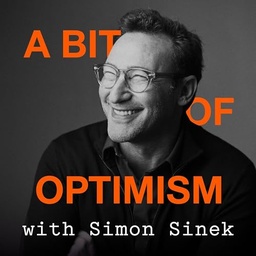
 Simon Sinek
Your Unhappy Brain Needs Some Assistance with happiness expert Mo Gawdat | A Bit of Optimism Podcast
Simon Sinek and Mo Gawdat on mo Gawdat’s practical roadmap to happiness by removing unhappiness daily.
In this episode of Simon Sinek, featuring Simon Sinek and Mo Gawdat, Your Unhappy Brain Needs Some Assistance with happiness expert Mo Gawdat | A Bit of Optimism Podcast explores mo Gawdat’s practical roadmap to happiness by removing unhappiness daily Mo Gawdat argues happiness is our default setting and is recovered by removing sources of unhappiness rather than adding external rewards.
At a glance
WHAT IT’S REALLY ABOUT
Mo Gawdat’s practical roadmap to happiness by removing unhappiness daily
- Mo Gawdat argues happiness is our default setting and is recovered by removing sources of unhappiness rather than adding external rewards.
- The conversation uses Mo’s grief after his son Ali’s death to illustrate how tragedy can force a “season change” and a re-evaluation of priorities, meaning, and identity.
- They challenge simplistic slogans about money by reframing wealth as a symbol and a “problem of privilege,” emphasizing sufficiency, context, and giving as a path to joy.
- Mo offers concrete practices—weekly reflection, stress inventory, expectation-setting, and “tricking” the brain into finding positives—to counter negativity bias and rumination.
- Both highlight presence and “negative space” (doing nothing, silence, attention to small moments) as essential to slowing perceived time and reducing mind-made suffering.
IDEAS WORTH REMEMBERING
7 ideasTreat happiness as a default you return to, not a prize you earn.
Mo claims we start life “unboxed” as happy; adulthood layers on cynicism, rumination, and mismatched desires. The practical implication is to stop chasing new external additions and instead identify what’s obscuring baseline wellbeing.
Use a “negation strategy”: remove unhappiness before trying to add happiness.
Instead of listing what you think will make you happy, list what reliably stresses you and systematically reduce it. Mo’s Saturday routine operationalizes this by turning stressors into either boundaries, conversations, or action items.
Happiness depends on the gap between life events and your expectations.
Mo frames unhappiness as arising when reality differs from what you want reality to be, emphasizing perception and desire as variables you can influence. This reframes many triggers (traffic, delays, mistakes) as expectation problems rather than “life problems.”
Train your brain to find positives on demand to counter negativity bias.
Because the brain is optimized for threat-detection, it defaults to “what’s wrong.” Mo’s method is to ask “What’s good about this?”—and escalate from one positive to nine—to force cognitive flexibility and gratitude in real time.
Presence reduces suffering because most negative emotions are past/future anchored.
Mo argues regret (past) and anxiety (future) dominate negative states, while calm and joy live in the present. Paying close attention to ordinary moments (e.g., making coffee) becomes a repeatable gateway back to “now.”
Create scheduled “negative space” to restore clarity and creativity.
Both describe how constant stimulation (phone, news, scrolling) eliminates subconscious processing. Blocking time for silence, wandering, and unstructured thought makes life feel longer and improves problem-solving without brute-force effort.
External success can amplify distress if it serves an outdated identity.
Mo explains people keep optimizing for money/status because those symbols once meant safety, belonging, or worth (e.g., bullying, poverty, insecurity). Regularly “observe the season” helps you stop solving yesterday’s problems with today’s life.
WORDS WORTH SAVING
6 quotesIf you understand that your default setting is happy… there is nothing you need to bring from outside you to find happiness. You need to remove shit to be happy.
— Mo Gawdat
Death is the opposite of birth. It is not the opposite of life.
— Mo Gawdat
The gravity of the battle means nothing to those at peace.
— Mo Gawdat (quoting Ali’s tattoo)
Your happiness is equal to or greater than the difference between the events of your life… and your hopes and desires and wishes of how life should be.
— Mo Gawdat
Every minute you live fully… registers as a moment of life. Every minute you live inside your head is a moment you’ll never remember.
— Mo Gawdat
If this is the worst thing that happens to me all week, I’m way ahead of the game.
— Simon Sinek
QUESTIONS ANSWERED IN THIS EPISODE
5 questionsIn Mo’s “negation strategy,” what are the first 3–5 categories of unhappiness to target (people, news, work structure, health habits, expectations), and how do you prioritize them without feeling overwhelmed?
Mo Gawdat argues happiness is our default setting and is recovered by removing sources of unhappiness rather than adding external rewards.
Mo says poverty can “buy unhappiness,” yet also notes some of the poorest people are happiest—what’s his precise distinction between material struggle and psychological unhappiness?
The conversation uses Mo’s grief after his son Ali’s death to illustrate how tragedy can force a “season change” and a re-evaluation of priorities, meaning, and identity.
How does Mo recommend adjusting expectations without slipping into complacency or tolerating harmful situations (e.g., toxic work, abusive relationships)?
They challenge simplistic slogans about money by reframing wealth as a symbol and a “problem of privilege,” emphasizing sufficiency, context, and giving as a path to joy.
Can you walk through a real example of the Saturday stress stock-take: one stressor you kept, one you removed, and one you turned into an action plan?
Mo offers concrete practices—weekly reflection, stress inventory, expectation-setting, and “tricking” the brain into finding positives—to counter negativity bias and rumination.
In the ‘Meet Becky’ exercise, what should someone do if the brain fixates on one traumatic thought that keeps returning—does Mo modify the ‘no repeats’ rule?
Both highlight presence and “negative space” (doing nothing, silence, attention to small moments) as essential to slowing perceived time and reducing mind-made suffering.
EVERY SPOKEN WORD
Install uListen for AI-powered chat & search across the full episode — Get Full Transcript
Get more out of YouTube videos.
High quality summaries for YouTube videos. Accurate transcripts to search & find moments. Powered by ChatGPT & Claude AI.
Add to Chrome