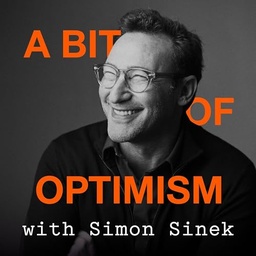
 Simon Sinek
Chief Angela Averiett on What It Really Takes to Change Police Culture | A Bit of Optimism
Simon Sinek and Angela Averiett on changing police culture through leadership, trust, wellness, and compassion inside-out.
In this episode of Simon Sinek, featuring Angela Averiett and Simon Sinek, Chief Angela Averiett on What It Really Takes to Change Police Culture | A Bit of Optimism explores changing police culture through leadership, trust, wellness, and compassion inside-out Averiett explains that policing exposes officers to repeated trauma, which often produces cynicism and unhealthy coping unless departments actively support wellness and recovery.
At a glance
WHAT IT’S REALLY ABOUT
Changing police culture through leadership, trust, wellness, and compassion inside-out
- Averiett explains that policing exposes officers to repeated trauma, which often produces cynicism and unhealthy coping unless departments actively support wellness and recovery.
- They argue many public scandals and uses of excessive force are symptoms of broken internal culture and weak leadership development, not isolated “bad apple” incidents.
- The conversation emphasizes psychological safety—being able to admit mistakes, ask for help, or show emotion—as foundational to healthier officers and better decision-making in the field.
- They propose reframing policing’s purpose as “protect the vulnerable from harm,” enabling officers to switch appropriately between enforcement and compassion as situations evolve.
- They challenge arrest/ticket-driven performance metrics and suggest trust-centered indicators (community engagement, oversight, lived experience) matter as much as crime stats for legitimate public safety.
IDEAS WORTH REMEMBERING
7 ideasOfficer behavior on the street reflects the culture inside the station.
Averiett argues departments that “treat each other like crap” internally shouldn’t be surprised when officers struggle to treat the public with humanity; internal respect and safety shape external discretion and professionalism.
Cynicism is hard to remove, but wellness can reduce its harms.
They frame cynicism as a coping mechanism from seeing people on their worst days; structured decompression, mental-health support, and normalization of help-seeking can prevent it from turning into aggression or burnout.
Psychological safety is an operational necessity, not softness.
Allowing officers to say “I’m not okay today” (without stigma or career damage) decreases the likelihood of stressed, reactive policing and supports safer decisions under pressure.
Leadership selection by testing can miss the human skills that prevent scandals.
Both note promotions often reward technical knowledge and test-taking; without deliberate leader development, poor leaders can perpetuate toxic norms and enable predictable failures.
“Protect the vulnerable from harm” clarifies when to be forceful and when to be compassionate.
They stress a key distinction: enforcement focus during the threat, compassion after control; once a suspect is secured, the vulnerable party can shift—including the person in handcuffs.
Discretion is a core competency that depends on maturity and support.
Averiett’s examples (helping a struggling driver avoid compounding harm; building rapport with armed suspects until backup arrives) show discretion improves outcomes and can increase safety when used wisely.
If the community doesn’t trust the police, good crime stats won’t feel like safety.
They argue fear and personal experience override statistics; trust must be measured and actively cultivated through engagement, transparency, and consistent respectful treatment.
WORDS WORTH SAVING
5 quotesIt wasn’t until 2015 that I felt comfortable enough to cry in front of people.
— Angela Averiett
We don’t build psychological safety into our cultures… vulnerability… people mistake it as a sign of weakness. I think it’s a superpower.
— Angela Averiett
If cops can’t even see each other as human beings, how impossible is that [to see the public that way]?
— Simon Sinek
Modernizing policing starts from the inside out.
— Simon Sinek
If the people that we serve don’t trust us, then nothing else matters.
— Angela Averiett
QUESTIONS ANSWERED IN THIS EPISODE
5 questionsWhat specific practices did you implement as chief to create psychological safety (e.g., debriefs, time-off after critical incidents, supervisor training)?
Averiett explains that policing exposes officers to repeated trauma, which often produces cynicism and unhealthy coping unless departments actively support wellness and recovery.
How would you redesign promotion systems so leadership potential and character outweigh test performance—without sacrificing technical competence?
They argue many public scandals and uses of excessive force are symptoms of broken internal culture and weak leadership development, not isolated “bad apple” incidents.
What are the most reliable early warning signs of a “powder keg” officer or unit, and what interventions actually work before a public crisis occurs?
The conversation emphasizes psychological safety—being able to admit mistakes, ask for help, or show emotion—as foundational to healthier officers and better decision-making in the field.
How can departments measure community trust rigorously (beyond event attendance) while accounting for the fact that fear is emotional and localized?
They propose reframing policing’s purpose as “protect the vulnerable from harm,” enabling officers to switch appropriately between enforcement and compassion as situations evolve.
Where is the line between compassion and enabling—especially when repeated offenders cite desperate circumstances (like needing medication money)?
They challenge arrest/ticket-driven performance metrics and suggest trust-centered indicators (community engagement, oversight, lived experience) matter as much as crime stats for legitimate public safety.
EVERY SPOKEN WORD
Install uListen for AI-powered chat & search across the full episode — Get Full Transcript
Get more out of YouTube videos.
High quality summaries for YouTube videos. Accurate transcripts to search & find moments. Powered by ChatGPT & Claude AI.
Add to Chrome