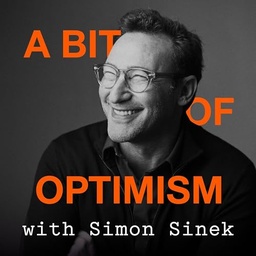
 Simon Sinek
The Secret Art of Micromanagement with Airbnb CEO Brian Chesky | A Bit of Optimism Podcast
Simon Sinek and Brian Chesky on brian Chesky redefines micromanagement, culture, and crisis leadership at Airbnb.
In this episode of Simon Sinek, featuring Simon Sinek and Brian Chesky, The Secret Art of Micromanagement with Airbnb CEO Brian Chesky | A Bit of Optimism Podcast explores brian Chesky redefines micromanagement, culture, and crisis leadership at Airbnb Chesky argues “micromanagement” is often misdefined, and that effective leadership is being “in the details” as a partner who sets standards rather than controlling tasks.
At a glance
WHAT IT’S REALLY ABOUT
Brian Chesky redefines micromanagement, culture, and crisis leadership at Airbnb
- Chesky argues “micromanagement” is often misdefined, and that effective leadership is being “in the details” as a partner who sets standards rather than controlling tasks.
- He critiques Silicon Valley’s hyper-growth dogma, saying over-optimizing for growth can degrade quality, efficiency, and customer love—then becomes painfully exposed in a crisis.
- Airbnb’s COVID survival hinged on psychology-first leadership, radical prioritization, decisive cash preservation, transparent communication, and compassionate but significant layoffs.
- He describes building a high-performance culture by being explicit about how he leads, recruiting people who opt into that intensity, and enforcing values through daily behavior and standards.
- Chesky outlines Airbnb’s longer-term ambition to evolve from a stays marketplace into a community that fosters real-world belonging and connection, and he challenges conventional succession thinking that favors “safe operator” CEOs over visionary leaders.
IDEAS WORTH REMEMBERING
7 ideas“In the details” can be mentorship and standard-setting, not control.
Chesky frames hands-on involvement like coaching a golf swing: early intensity calibrates excellence; later, involvement becomes selective as standards become “muscle memory.”
Micromanagement is often the absence of partnership.
He contrasts Steve Jobs’ detail obsession with how it felt to colleagues: Jony Ive didn’t feel micromanaged because Jobs “was partnering,” making it a shared mission rather than a turf battle.
Growth is oxygen, but direction and quality are the destination.
Chesky warns that chasing speed without a clear “north” can trade away service quality and resilience; customer love, not investor optics, is the true language of business.
Crisis leadership starts with the leader’s psychology.
He believes organizational emotional tone mirrors the leader; decisions made from fear tend to be worse, while optimism supports creativity, decisiveness, and morale under uncertainty.
In a crisis, prioritize brutally and act decisively.
Airbnb audited 1,000+ initiatives and cut ~70–80% to focus resources; Chesky emphasizes that indecision in volatility is more dangerous than choosing a path and adapting quickly.
Transparency builds trust fast—especially when answers are hard.
He increased cadence (weekly all-hands, weekly board touchpoints) and answered difficult questions openly, rejecting advice to avoid forums where layoffs might be discussed.
Strong cultures are explicit, selective, and behavior-enforced.
Chesky argues culture is not perks; it’s a distinct “way we do things,” strengthened by values-based hiring (opt-in intensity) and accountability to standards day after day.
WORDS WORTH SAVING
5 quotes“Numbers are just the language of board meetings… The language of a business is if people actually love your product.”
— Brian Chesky
“You don’t do your job, I don’t do my job, we do the job together.”
— Brian Chesky
“Bad companies are destroyed by a crisis. Good companies survive a crisis. But great companies are defined by a crisis.”
— Brian Chesky (quoting Andy Grove)
“I think the psychology of the leader becomes the psychology of the organization.”
— Brian Chesky
“Culture… [is] strong cultures versus weak cultures.”
— Brian Chesky
QUESTIONS ANSWERED IN THIS EPISODE
5 questionsHow would you operationally define “micromanagement” versus “eyes on, hands off” in a way employees can feel is fair?
Chesky argues “micromanagement” is often misdefined, and that effective leadership is being “in the details” as a partner who sets standards rather than controlling tasks.
What specific signals told you Airbnb’s growth focus had started degrading quality—before COVID forced the reset?
He critiques Silicon Valley’s hyper-growth dogma, saying over-optimizing for growth can degrade quality, efficiency, and customer love—then becomes painfully exposed in a crisis.
When you reviewed “every single thing we shipped,” what review rules prevented you from becoming a bottleneck?
Airbnb’s COVID survival hinged on psychology-first leadership, radical prioritization, decisive cash preservation, transparent communication, and compassionate but significant layoffs.
In the COVID project audit, what criteria determined the 70–80% of work that got cut, and what did you protect at all costs?
He describes building a high-performance culture by being explicit about how he leads, recruiting people who opt into that intensity, and enforcing values through daily behavior and standards.
Your layoff approach emphasized compassion and non-algorithmic decisions—what tradeoffs did that create versus a more formulaic approach?
Chesky outlines Airbnb’s longer-term ambition to evolve from a stays marketplace into a community that fosters real-world belonging and connection, and he challenges conventional succession thinking that favors “safe operator” CEOs over visionary leaders.
EVERY SPOKEN WORD
Install uListen for AI-powered chat & search across the full episode — Get Full Transcript
Get more out of YouTube videos.
High quality summaries for YouTube videos. Accurate transcripts to search & find moments. Powered by ChatGPT & Claude AI.
Add to Chrome