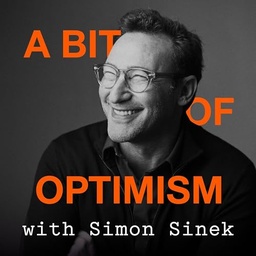
 Simon Sinek
The Climb Out of Pain is Taller Than Everest with Nat Geo photographer Cory Richards PART 2
Simon Sinek and Cory Richards on cory Richards on agency, community, and transforming pain into purpose.
In this episode of Simon Sinek, featuring Cory Richards and Simon Sinek, The Climb Out of Pain is Taller Than Everest with Nat Geo photographer Cory Richards PART 2 explores cory Richards on agency, community, and transforming pain into purpose Richards argues that under threat people default to binary thinking, and resilience begins by slowing down to self-regulate and return to critical thought.
At a glance
WHAT IT’S REALLY ABOUT
Cory Richards on agency, community, and transforming pain into purpose
- Richards argues that under threat people default to binary thinking, and resilience begins by slowing down to self-regulate and return to critical thought.
- He outlines a four-part framework—agency, discomfort, curiosity, and adaptation—to move from victimhood and blame into forward-focused action.
- Richards recounts leaving an expedition during a severe bipolar episode, a subsequent suicidal crisis, and how reaching out for help and embodied support saved his life.
- The conversation emphasizes that community “holding space” without fixing or silver-lining pain is foundational to surviving and integrating trauma.
- They redefine purpose as compassion expressed through storytelling and reject “failure” as a myth, reframing endings as transitions in an ongoing cycle of change.
IDEAS WORTH REMEMBERING
7 ideasSlow down to move from panic to problem-solving.
Richards links threat responses to “splitting” (binary thinking) and argues that self-regulation helps shift from sympathetic activation into a calmer, more critical, options-oriented mindset.
Agency is the pivot from victimhood to forward motion.
Blame and “why did this happen to me?” keep you backward-looking; naming the current reality (“My house burned down. Now what?”) restores choice, focus, and capacity to act.
Discovery requires staying with discomfort instead of escaping it.
Richards frames discomfort as the price of growth—identity loss, financial fear, grief, and heartbreak can’t be bypassed, only metabolized by sitting with what’s true.
Certainty is often a comfort-grab that kills growth.
He treats rigid stories (“why she left,” “what I lack,” “who’s at fault”) as attempts to regain control that actually erode agency; replacing them with questions reopens learning and compassion.
Adaptation means reimagining from the ground up, not recreating the past.
Richards distinguishes between using useful pieces of the past versus clinging to old identities; evolution comes from building anew when prior “anchors” (roles, status, relationships) collapse.
Community makes resilience practices possible when you’re at your weakest.
Both emphasize that people who validate pain without trying to fix it (“That’s gotta hurt”) provide the relational safety that enables agency, endurance, and curiosity—especially during suicidal lows.
Rejecting ‘failure’ changes how you relate to endings and outcomes.
Richards argues nothing truly “fails”—it transitions; decisions produce results, and “good/bad” labels are temporary stories applied after the fact, which reduces shame and supports iteration.
WORDS WORTH SAVING
5 quotesAgency is everything.
— Cory Richards
Discovery demands discomfort.
— Cory Richards
Certainty kills curiosity.
— Cory Richards
When you try to change somebody's pain, you are rejecting it.
— Cory Richards
In the history of the universe, there's never been a failure.
— Cory Richards
QUESTIONS ANSWERED IN THIS EPISODE
5 questionsCan you unpack what “slowing down” looks like in the body—specific breath, grounding, or self-regulation techniques you use in real time?
Richards argues that under threat people default to binary thinking, and resilience begins by slowing down to self-regulate and return to critical thought.
In your four-part model, why does agency come first—what happens if someone starts with curiosity or discomfort before agency?
He outlines a four-part framework—agency, discomfort, curiosity, and adaptation—to move from victimhood and blame into forward-focused action.
How do you distinguish healthy accountability (owning your part) from self-blame when reclaiming agency after trauma or conflict?
Richards recounts leaving an expedition during a severe bipolar episode, a subsequent suicidal crisis, and how reaching out for help and embodied support saved his life.
In the Dhaulagiri story, what were the earliest signals you were entering a mixed bipolar episode, and what would you do differently now at the first signs?
The conversation emphasizes that community “holding space” without fixing or silver-lining pain is foundational to surviving and integrating trauma.
What does “holding space” actually sound like in conversation—what phrases help, and which common ‘comfort lines’ do harm?
They redefine purpose as compassion expressed through storytelling and reject “failure” as a myth, reframing endings as transitions in an ongoing cycle of change.
EVERY SPOKEN WORD
Install uListen for AI-powered chat & search across the full episode — Get Full Transcript
Get more out of YouTube videos.
High quality summaries for YouTube videos. Accurate transcripts to search & find moments. Powered by ChatGPT & Claude AI.
Add to Chrome