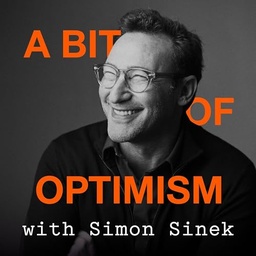
 Simon Sinek
The Search for Self-Love with podcaster Lewis Howes | A Bit of Optimism Podcast
Simon Sinek and Lewis Howes on turning self-worth wounds into self-love, peace, and healthier money relationships.
In this episode of Simon Sinek, featuring Simon Sinek and Lewis Howes, The Search for Self-Love with podcaster Lewis Howes | A Bit of Optimism Podcast explores turning self-worth wounds into self-love, peace, and healthier money relationships Lewis Howes explains how early trauma and a lifelong “not enough” story can drive achievement while still leaving persistent inner pain until consciously addressed.
At a glance
WHAT IT’S REALLY ABOUT
Turning self-worth wounds into self-love, peace, and healthier money relationships
- Lewis Howes explains how early trauma and a lifelong “not enough” story can drive achievement while still leaving persistent inner pain until consciously addressed.
- They argue self-love is not a single breakthrough moment but a daily, sustainable practice built through small actions aligned with values and self-care.
- The conversation reframes money stress as a relationship problem rooted in personal “money stories,” advocating reflection, therapy-like perspective shifts, and emotional safety around finances.
- Simon proposes courage is largely external—enabled by safety nets and supportive relationships—while Lewis counters that inner safety and self-acceptance are crucial when external validation disappears.
- Both emphasize reducing pressure and perfectionism by choosing practices that work for your current season, even if they only last a few months.
IDEAS WORTH REMEMBERING
7 ideasScarcity and validation can masquerade as ambition.
Lewis links overcommitting and difficulty saying “no” to a scarcity mindset: chasing projects and visibility to feel worthy. Progress comes from creating without needing approval as the primary fuel.
Unprocessed trauma can produce high achievement but low peace.
Lewis describes sexual abuse and social rejection as drivers of relentless accomplishment meant to outrun shame. He highlights the turning point: achieving externally yet still feeling “not enough,” prompting deeper healing work.
Self-love grows like romantic love—gradually, through repeated care.
Simon argues there’s rarely a single day you “start” loving yourself; it accrues from small consistent acts (treating yourself with the same consideration you’d give a partner). This reframes self-love from a goal to a relationship you build.
Make practices sustainable, not perfect.
Both warn against rigid self-improvement routines that create self-blame when you fall off. If something works for two months, let it be enough—then switch to what fits the next season.
Money stress is often a nervous-system and story problem, not just math.
Lewis frames financial shame as a product of “money wounds” (family conflict, humiliation, instability). Addressing it starts with naming your money story, creating perspective, and integrating new behaviors over time.
Use “money as a person” to reveal your real financial relationship.
Personifying money exposes avoidance, performative friendliness, exploitation, or fear (e.g., hiding, gossiping, ghosting). The emotional reaction becomes diagnostic data for what to heal and change.
Courage is amplified by external support—but inner safety matters too.
Simon says safety nets and relationships create the conditions for risk-taking (“I got you”). Lewis adds that many fears persist when you don’t feel safe with yourself, so building self-trust is part of becoming courageous.
WORDS WORTH SAVING
5 quotes“I am the hero that my younger child always wished he had.”
— Lewis Howes
“What’s the point of having everything that other people want and not loving yourself?”
— Lewis Howes
“Gratitude is the gateway to abundance.”
— Lewis Howes
“Money therapy… It’s a relationship.”
— Lewis Howes / Simon Sinek
“I think courage is external, not internal.”
— Simon Sinek
QUESTIONS ANSWERED IN THIS EPISODE
5 questionsLewis, what specific steps did your 12-year healing journey include (therapy modalities, practices, routines), and what helped most at different stages?
Lewis Howes explains how early trauma and a lifelong “not enough” story can drive achievement while still leaving persistent inner pain until consciously addressed.
If someone identifies a painful “money wound,” what’s a practical first week of “money therapy” look like—journaling prompts, conversations, or actions?
They argue self-love is not a single breakthrough moment but a daily, sustainable practice built through small actions aligned with values and self-care.
Simon, how would you reconcile your “courage is external” view with cases where someone has no safety net—what substitutes can they build?
The conversation reframes money stress as a relationship problem rooted in personal “money stories,” advocating reflection, therapy-like perspective shifts, and emotional safety around finances.
Lewis, you say “love yourself” is the first step for money shame; how do you help someone who finds self-love language triggering or unbelievable?
Simon proposes courage is largely external—enabled by safety nets and supportive relationships—while Lewis counters that inner safety and self-acceptance are crucial when external validation disappears.
What are examples of ‘small acts’ that function like learning your own love language—especially for people who default to achievement as self-worth?
Both emphasize reducing pressure and perfectionism by choosing practices that work for your current season, even if they only last a few months.
EVERY SPOKEN WORD
Install uListen for AI-powered chat & search across the full episode — Get Full Transcript
Get more out of YouTube videos.
High quality summaries for YouTube videos. Accurate transcripts to search & find moments. Powered by ChatGPT & Claude AI.
Add to Chrome