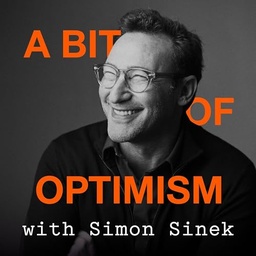
 Simon Sinek
Rob Lowe Names Names: The Power of ‘Screw It’ | A Bit of Optimism Podcast
Simon Sinek and Rob Lowe on rob Lowe on risk, authenticity, and laughing through failure long-term.
In this episode of Simon Sinek, featuring Simon Sinek and Rob Lowe, Rob Lowe Names Names: The Power of ‘Screw It’ | A Bit of Optimism Podcast explores rob Lowe on risk, authenticity, and laughing through failure long-term Rob Lowe credits his longevity to taking career risks others avoid, from pivoting into TV to hosting a game show, guided by a “screw it” mindset and curiosity.
At a glance
WHAT IT’S REALLY ABOUT
Rob Lowe on risk, authenticity, and laughing through failure long-term
- Rob Lowe credits his longevity to taking career risks others avoid, from pivoting into TV to hosting a game show, guided by a “screw it” mindset and curiosity.
- They argue fame can freeze personal growth unless you actively work on yourself, making self-awareness and humility essential for long-term success.
- Lowe reframes authenticity as speaking without heavy self-editing, trusting instincts, and openly acknowledging flaws rather than performing a polished persona.
- The conversation highlights how humor and self-deprecation function as tools for coping with humiliation, lowering stress, and staying emotionally resilient through long down cycles.
- They compare past celebrity (mystique, distance) with today’s brand-era expectations (access, parasocial connection), warning that “performative authenticity” is just a new kind of artifice.
IDEAS WORTH REMEMBERING
7 ideasPut yourself in position to get lucky by taking asymmetric risks.
Lowe repeatedly chooses projects with stigma (movies-to-TV, game shows, writing memoirs) because novelty creates new opportunity surfaces—even when the “industry wisdom” says don’t.
Treat public failure as survivable—and sometimes useful.
From the Oscars song-and-dance disaster to being roasted, Lowe shows that humiliation doesn’t end you if you can metabolize it; it can even expand your range and likability.
Authenticity is less a brand and more a behavior: don’t over self-edit.
Lowe defines authenticity practically as letting your real instincts come out in real time, instead of filtering every line for optics, safety, or approval.
Use your worst moments to recalibrate toward your own instincts.
After Letterman publicly undercut a canned pre-interview story, Lowe decided “it couldn’t have gone worse checking the boxes,” and committed to trusting his gut going forward.
Healthy ego needs a counterweight: humor and perspective.
Lowe argues some narcissism inoculates actors against constant judgment, but longevity comes from simultaneously seeing the game for what it is and not becoming self-important.
Own flaws and blind spots—sometimes they’re your edge.
He suggests leaders and performers should highlight what they’re afraid to talk about, because it’s often the most relatable and compelling material.
Modern audiences reward perceived realness because truth feels scarce.
Lowe contrasts old Hollywood’s mystique with today’s demand for “authenticity,” driven by a culture where people feel unsure what’s real; the risk is slipping into performative ‘regular guy’ theater.
WORDS WORTH SAVING
5 quotesUnless you do a ton of work on yourself, you're frozen in amber at the minute you get famous.
— Rob Lowe
I've always had a healthy case of the fuck its.
— Rob Lowe
What I learned from that is I'm going to trust my instincts.
— Rob Lowe
Do not self-edit.
— Rob Lowe
If you can find humor in that, you can find humor in anything.
— Rob Lowe
QUESTIONS ANSWERED IN THIS EPISODE
5 questionsYou say you “put yourself in a position to get lucky”—what specific decision rules help you choose a ‘smart risk’ versus a reckless one?
Rob Lowe credits his longevity to taking career risks others avoid, from pivoting into TV to hosting a game show, guided by a “screw it” mindset and curiosity.
When you describe fame as freezing growth, what did “doing work on yourself” practically look like for you over the years?
They argue fame can freeze personal growth unless you actively work on yourself, making self-awareness and humility essential for long-term success.
Your definition of authenticity is “do not self-edit”—how do you balance that with professional diplomacy when the stakes are high?
Lowe reframes authenticity as speaking without heavy self-editing, trusting instincts, and openly acknowledging flaws rather than performing a polished persona.
What are the early warning signs that someone’s ‘authenticity’ is sliding into performative authenticity (especially on social media)?
The conversation highlights how humor and self-deprecation function as tools for coping with humiliation, lowering stress, and staying emotionally resilient through long down cycles.
How did the Oscars opening backlash change your willingness to say yes to big, public, high-risk opportunities afterward?
They compare past celebrity (mystique, distance) with today’s brand-era expectations (access, parasocial connection), warning that “performative authenticity” is just a new kind of artifice.
EVERY SPOKEN WORD
Install uListen for AI-powered chat & search across the full episode — Get Full Transcript
Get more out of YouTube videos.
High quality summaries for YouTube videos. Accurate transcripts to search & find moments. Powered by ChatGPT & Claude AI.
Add to Chrome