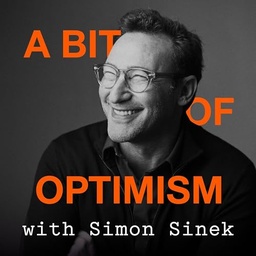
 Simon Sinek
What Your Love Life Can Teach You About Work Relationships with Esther Perel | A Bit of Optimism
Simon Sinek and Esther Perel on esther Perel connects love-life lessons to healthier workplace relationships today.
In this episode of Simon Sinek, featuring Esther Perel and Simon Sinek, What Your Love Life Can Teach You About Work Relationships with Esther Perel | A Bit of Optimism explores esther Perel connects love-life lessons to healthier workplace relationships today Perel traces how shifts like no-fault divorce, contraception, and identity-driven careers moved relationships from duty-based structures to choice-based, high-expectation arrangements.
At a glance
WHAT IT’S REALLY ABOUT
Esther Perel connects love-life lessons to healthier workplace relationships today
- Perel traces how shifts like no-fault divorce, contraception, and identity-driven careers moved relationships from duty-based structures to choice-based, high-expectation arrangements.
- They argue that as job and partner mobility increase, “happiness” becomes glue rather than a perk, forcing leaders and couples to prioritize fulfillment, trust, and repair.
- The conversation links reduced unstructured childhood social play and increased “frictionless” app-mediated living to weaker real-world skills for conflict, negotiation, and connection.
- Perel reframes workplace “soft skills” as a competitive edge in an AI era, warning that polished communication (even AI-generated apologies) cannot replace accountability and lived relational competence.
- They advocate building broader “circles of care” beyond romance, using play/storytelling/rituals to create connection—especially for early-career workers navigating remote or hybrid work.
IDEAS WORTH REMEMBERING
7 ideasModern relationships shifted from duty to choice—bringing freedom and confusion.
Perel argues traditional structures provided clarity (roles, obligations) but limited expression; today’s choice-driven model increases autonomy while placing the burden of decisions and meaning on individuals.
When exit becomes easier, happiness turns from a perk into the glue.
Both romance and work now require higher-quality emotional experience to sustain commitment, because divorce/job switching is more accessible and less stigmatized.
Work and love now mirror each other as “service/identity economies.”
People increasingly expect work (and partners) to deliver belonging, purpose, and community—needs previously met by religion and local civic life—raising the stakes of workplace culture and leadership.
Skill loss starts early: less free play means less practice in real conflict and repair.
Perel links declining unstructured peer play to weaker “social negotiation” abilities, making adults more brittle when facing disagreement, boundaries, and reconciliation.
Frictionless tech trains people to expect simple solutions to complex human paradoxes.
Predictive apps and algorithmic convenience can reduce tolerance for nuance, leading people to treat relational dilemmas as problems to “solve” rather than tensions to manage.
“Soft skills” are becoming the hard advantage in the AI era.
Perel notes organizations increasingly recognize mediation, listening, and conflict navigation as differentiators—especially when AI can mimic the form of communication without the substance (e.g., apology letters without remorse).
Connection requires intentional rituals; presence alone is not enough.
They emphasize hybrid flexibility, but Perel adds “in person, then what?”—leaders must design moments that foster curiosity, storytelling, and enjoyable risk-taking rather than purely transactional meetings.
WORDS WORTH SAVING
5 quotesHe’s not being trained for mobility. He’s a five-year-old who is being trained for long-term relationships.
— Esther Perel
The survival of the family depended on the happiness of the couple.
— Esther Perel
We went from relationships that were tight knots… to relationships that are loose threads.
— Esther Perel
People come to work with two CVs: their work resume and their relationship history.
— Esther Perel
Trust is an active engagement with the unknown.
— Esther Perel
QUESTIONS ANSWERED IN THIS EPISODE
5 questionsPerel describes a shift from “duty” to “choice” in relationships—what specific workplace policies unintentionally reinforce the downside of that shift (confusion, isolation, disposability)?
Perel traces how shifts like no-fault divorce, contraception, and identity-driven careers moved relationships from duty-based structures to choice-based, high-expectation arrangements.
If “happiness is glue, not a perk,” what are the most reliable indicators a team is experiencing real fulfillment rather than surface-level perks?
They argue that as job and partner mobility increase, “happiness” becomes glue rather than a perk, forcing leaders and couples to prioritize fulfillment, trust, and repair.
How would you redesign onboarding for entry-level employees to rebuild the “playground skills” of negotiation, repair, and conflict tolerance—especially in hybrid settings?
The conversation links reduced unstructured childhood social play and increased “frictionless” app-mediated living to weaker real-world skills for conflict, negotiation, and connection.
Perel warns that AI can generate an apology without remorse—what would an “accountability standard” look like for leaders using AI-assisted communication?
Perel reframes workplace “soft skills” as a competitive edge in an AI era, warning that polished communication (even AI-generated apologies) cannot replace accountability and lived relational competence.
Perel says relationships are stories and conflict arises when stories differ—what practical framework helps two coworkers reconcile competing narratives without escalating blame?
They advocate building broader “circles of care” beyond romance, using play/storytelling/rituals to create connection—especially for early-career workers navigating remote or hybrid work.
EVERY SPOKEN WORD
Install uListen for AI-powered chat & search across the full episode — Get Full Transcript
Get more out of YouTube videos.
High quality summaries for YouTube videos. Accurate transcripts to search & find moments. Powered by ChatGPT & Claude AI.
Add to Chrome