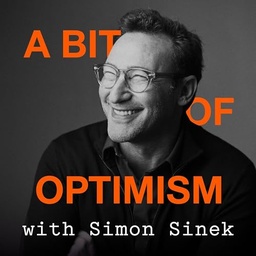
 Simon Sinek
When Your 'Flaw' Becomes Your Edge with Comedian Hasan Minhaj | A Bit of Optimism Podcast
Simon Sinek and Hasan Minhaj on turning perceived flaws into strengths through mentors, courage, and comedy.
In this episode of Simon Sinek, featuring Hasan Minhaj and Simon Sinek, When Your 'Flaw' Becomes Your Edge with Comedian Hasan Minhaj | A Bit of Optimism Podcast explores turning perceived flaws into strengths through mentors, courage, and comedy Hasan Minhaj credits a high-school teacher’s recognition of his “gift of gab” and a later exposure to stand-up as the catalyst that turned a classroom nuisance into a career path.
At a glance
WHAT IT’S REALLY ABOUT
Turning perceived flaws into strengths through mentors, courage, and comedy
- Hasan Minhaj credits a high-school teacher’s recognition of his “gift of gab” and a later exposure to stand-up as the catalyst that turned a classroom nuisance into a career path.
- Sinek and Minhaj argue that children display more courage and accountability than adults, who often learn to avoid conflict and responsibility through workplace bureaucracy and social politics.
- They explore how nontraditional strengths—discernment, EQ, resilience, and “figure-it-out-ness”—often go unmeasured in school but become decisive in real-world success.
- The conversation reframes persistence as iterative adaptation: keep playing your hand, pivot with new information, and avoid “litigating the past” when opportunities don’t pan out.
- Minhaj explains how stand-up evolved from an intimate live art form into a global, digitally mediated medium, and insists a comedian’s primary job is entertainment, with social commentary as optional.
IDEAS WORTH REMEMBERING
8 ideasA “nuisance trait” can be a professional superpower in the right arena.
Minhaj’s talkativeness became an asset once a teacher redirected it into speech and debate, illustrating how reframing behavior as talent changes trajectories.
Objective validation matters more than encouragement from close family.
Both highlight the difference between supportive praise and credible third-party recognition that signals a skill might translate into a viable craft or career.
Adults often lose the brave, direct accountability kids naturally show.
They contrast children volunteering for leadership and owning mistakes with adult workplaces where blame and responsibility get diluted by systems and politics.
Real-world success often depends on intangible skills schools don’t grade.
They emphasize discernment, POV, EQ, organizing people, and improvisational problem-solving—capabilities that can outperform traditional “book smart” metrics later in life.
Persistence works best as iteration, not stubborn attachment.
Minhaj describes continuing to audition and perform while constantly adjusting route and goals based on feedback, rather than clinging to one fixed version of the dream.
Misalignment is detectable—and costly—in “survival jobs.”
Minhaj’s pattern of being fired stemmed from wanting to be elsewhere; the lesson is to notice chronic mismatch early and reorient before it becomes identity damage.
Comedy’s first obligation is laughter; meaning is a bonus, not a requirement.
Minhaj draws a necessary/sufficient distinction: being funny is necessary, while social commentary or moral insight is optional depending on the comic’s taste and audience.
Optimism is sustained through relationships, not headlines.
Sinek frames confidence in the future as rooted in having (and being) the person who will “sit in mud with you,” creating resilience amid uncertainty.
WORDS WORTH SAVING
8 quotesStand-up comedy’s somewhere between magicians and clowns.
— Hasan Minhaj
You have this gift… the gift of gab. It’s certainly not helpful in class… but there is a place for you to do it here.
— Hasan Minhaj (recounting Ms. Takeuchi)
I think the solutions we find to the struggles we have when we’re kids become our strengths as adults.
— Simon Sinek
For some reason… it didn’t destroy my self-confidence.
— Simon Sinek
The primary job of the comedian is to entertain… If they don’t laugh, it’s a speech.
— Hasan Minhaj
Don’t make the sufficient condition the necessary condition.
— Hasan Minhaj
The future tends toward good… you can maintain confidence… based on the quality of your relationships.
— Simon Sinek
I’ve met you before. I know how this ends.
— Hasan Minhaj
QUESTIONS ANSWERED IN THIS EPISODE
5 questionsWhat specific behaviors did Ms. Takeuchi notice that made her confident Hasan’s “gift of gab” could become a craft, not just a personality trait?
Hasan Minhaj credits a high-school teacher’s recognition of his “gift of gab” and a later exposure to stand-up as the catalyst that turned a classroom nuisance into a career path.
How can schools or managers create “and” systems that measure traditional performance while also identifying EQ, discernment, or organizing ability?
Sinek and Minhaj argue that children display more courage and accountability than adults, who often learn to avoid conflict and responsibility through workplace bureaucracy and social politics.
Hasan describes adulthood and modern work as “condoms for conflict”—what concrete workplace rituals or norms could restore kid-like accountability without chaos?
They explore how nontraditional strengths—discernment, EQ, resilience, and “figure-it-out-ness”—often go unmeasured in school but become decisive in real-world success.
What are practical signals that you’re in the “misalignment” zone (like Hasan in his jobs) versus simply going through a hard season of growth?
The conversation reframes persistence as iterative adaptation: keep playing your hand, pivot with new information, and avoid “litigating the past” when opportunities don’t pan out.
In the dream-vs-quit dilemma, what would an ‘objective validator’ look like for fields without clear gatekeepers (e.g., creators, entrepreneurs)?
Minhaj explains how stand-up evolved from an intimate live art form into a global, digitally mediated medium, and insists a comedian’s primary job is entertainment, with social commentary as optional.
EVERY SPOKEN WORD
Install uListen for AI-powered chat & search across the full episode — Get Full Transcript
Get more out of YouTube videos.
High quality summaries for YouTube videos. Accurate transcripts to search & find moments. Powered by ChatGPT & Claude AI.
Add to Chrome