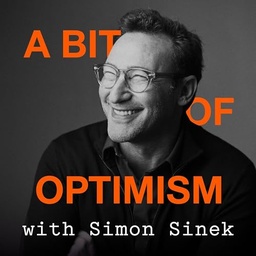
 Simon Sinek
A Rebel With a Cause (and a Cone) with Jeni’s Ice Cream Founder Jeni Britton | A Bit of Optimism
Simon Sinek and Jeni Britton on jeni Britton on rebellion, service, and purpose-driven entrepreneurship today.
In this episode of Simon Sinek, featuring Jeni Britton and Simon Sinek, A Rebel With a Cause (and a Cone) with Jeni’s Ice Cream Founder Jeni Britton | A Bit of Optimism explores jeni Britton on rebellion, service, and purpose-driven entrepreneurship today Britton frames entrepreneurship as a rebellious act of risking comfort to build something value-driven, not a venture-backed race for scalability or investor returns.
At a glance
WHAT IT’S REALLY ABOUT
Jeni Britton on rebellion, service, and purpose-driven entrepreneurship today
- Britton frames entrepreneurship as a rebellious act of risking comfort to build something value-driven, not a venture-backed race for scalability or investor returns.
- Jeni’s began from an epiphany about ice cream as a carrier of scent and evolved into a brand designed to spark conversation and togetherness, with creativity expressed through unexpected flavor pairings.
- She argues the most durable businesses are built one dollar at a time—bootstrapped, customer-led, and improved incrementally—rather than optimized for rapid scale.
- Britton describes service as a dignified craft learned on the front line, teaching young employees to treat hospitality as a gift that generates connection and meaning.
- A 2015 listeria recall nearly ended the company but ultimately forced simplification, sharper focus on core strengths, and a more resilient operating model; she later left Jeni’s and founded Floura after discovering fiber’s health and mood impacts and the opportunity to upcycle produce waste into usable ingredients.
IDEAS WORTH REMEMBERING
7 ideasTreat entrepreneurship as an act of love, not a wealth strategy.
They compare building a business to making a mixtape: labor-intensive, personal, risky, and designed to communicate something meaningful rather than to chase status or speed.
Start small and stay customer-led before you chase capital.
Britton emphasizes surviving “$1 at a time,” using SBA loans and discipline, and warns that modern entrepreneurship often centers fundraising over serving customers.
A vision should eventually ‘lead you’—and attract others.
She describes a shift where the founder stops merely following an idea and becomes compelled by it; that clarity then draws teammates who want to help build it.
Not every business needs to be scalable to be valuable.
Both critique VC/PE “growth at all costs” thinking and defend viable, local businesses (e.g., a single coffee shop with limited hours) as legitimate, fulfilling entrepreneurship.
Incremental improvement beats perfection at launch.
Early constraints (not being able to source ideal small-farm dairy, for example) didn’t stop progress; the operating principle became getting better as resources and leverage grew.
Great service is a learned craft that shapes culture.
Britton reframes hospitality as dignity and “a gift you give,” training teams to stay present with customers (endless tastes, unhurried attention) and read emotional cues in real time.
Crisis can reveal what’s essential and eliminate harmful complexity.
The 2015 listeria event forced Jeni’s to drop “90%” of non-essentials, outsource components to specialist partners, reduce operational risk, and strengthen values and cohesion.
WORDS WORTH SAVING
5 quotesEntrepreneurship is a rebellion.
— Jeni Britton
If you take money from someone, you work for them.
— Jeni Britton
Sometimes when you have a vision… it starts to lead you.
— Jeni Britton
Service is a gift you give to the world.
— Jeni Britton
It takes a long time to become an overnight success.
— Simon Sinek
QUESTIONS ANSWERED IN THIS EPISODE
5 questionsWhen you say “entrepreneurship is rebellion,” what specific decisions did you make at Jeni’s that felt most like rebelling against industry norms?
Britton frames entrepreneurship as a rebellious act of risking comfort to build something value-driven, not a venture-backed race for scalability or investor returns.
What were the concrete early tradeoffs you made while “inching toward the bigger vision” (e.g., ingredients, sourcing, process), and how did you decide what could wait?
Jeni’s began from an epiphany about ice cream as a carrier of scent and evolved into a brand designed to spark conversation and togetherness, with creativity expressed through unexpected flavor pairings.
You claim raising money can make you “work for” investors—what funding structures (if any) still preserve founder independence and mission integrity?
She argues the most durable businesses are built one dollar at a time—bootstrapped, customer-led, and improved incrementally—rather than optimized for rapid scale.
What did Jeni’s stop doing after the 2015 recall that you now see as obviously unnecessary, and what warning signs could other founders watch for before crisis hits?
Britton describes service as a dignified craft learned on the front line, teaching young employees to treat hospitality as a gift that generates connection and meaning.
How did you operationalize “make people feel loved” into training, hiring, and store metrics without turning it into performative scripts?
A 2015 listeria recall nearly ended the company but ultimately forced simplification, sharper focus on core strengths, and a more resilient operating model; she later left Jeni’s and founded Floura after discovering fiber’s health and mood impacts and the opportunity to upcycle produce waste into usable ingredients.
EVERY SPOKEN WORD
Install uListen for AI-powered chat & search across the full episode — Get Full Transcript
Get more out of YouTube videos.
High quality summaries for YouTube videos. Accurate transcripts to search & find moments. Powered by ChatGPT & Claude AI.
Add to Chrome