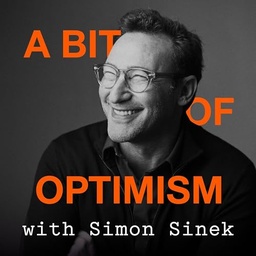
 Simon Sinek
Spite Is The Greatest Motivator with Watch Duty Founder John Mills | A Bit of Optimism Podcast
Simon Sinek and John Mills on watch Duty’s founder on spite, service, and wildfire lifesaving tech.
In this episode of Simon Sinek, featuring Simon Sinek and John Mills, Spite Is The Greatest Motivator with Watch Duty Founder John Mills | A Bit of Optimism Podcast explores watch Duty’s founder on spite, service, and wildfire lifesaving tech John Mills created Watch Duty after near-miss wildfires exposed dangerous gaps in official alerting and real-time public information.
At a glance
WHAT IT’S REALLY ABOUT
Watch Duty’s founder on spite, service, and wildfire lifesaving tech
- John Mills created Watch Duty after near-miss wildfires exposed dangerous gaps in official alerting and real-time public information.
- The app’s key differentiator is human-powered reporting—trained radio operators and volunteers who listen to fireground scanners and publish fast, trusted updates.
- Mills argues AI can assist with signal detection but is not reliable enough to make life-safety decisions without human verification.
- He chose a nonprofit model to keep the service mission-first, avoid extractive incentives, and make the organization “delete itself” if government ever does the job well.
- The conversation broadens into a critique of the “charity industrial complex” and a call for radical transparency, measurable impact, and more operators applying their skills to public-good problems.
IDEAS WORTH REMEMBERING
7 ideasLife-safety products win on trust and speed, not just UI.
Mills notes that “anyone could” build the tech layer, but Watch Duty becomes a lifeline because updates are timely, accurate, and actionable (evacuation orders, perimeters, wind shifts) in moments when delays cost lives.
Human-in-the-loop is a feature, not a compromise, in crisis intelligence.
Watch Duty relies on radio operators monitoring scanners and interpreting events in real time; AI helps filter signals and scrape sources, but humans decide what’s credible enough to push as alerts.
AI is currently too error-prone for autonomous emergency guidance.
Mills frames the risk plainly: this isn’t a “silly chatbot,” it’s deciding whether to flee east or west, so mistakes are unacceptable and require human verification akin to pilots supervising autopilot.
Nonprofit structure can protect mission integrity when incentives matter most.
Mills refuses the standard Silicon Valley “liquidity event” path because the service cannot be allowed to stop or be monetized in ways that undermine public trust; he positions the ideal nonprofit as one that completes its mission and becomes unnecessary.
Radical transparency is a practical antidote to donor cynicism.
He describes an annual report written like a founder update, publishing granular operating metrics (e.g., office cost: zero; dollars per page view) to show stewardship of capital beyond standard nonprofit disclosures.
Many social problems persist because organizations compete instead of coordinating.
Mills criticizes “industrial complexes” (homelessness, even fire-safety groups) where leaders vie for funding and attention, sometimes even scheduling meetings to force community members to “pick one,” which undermines outcomes.
Service creates fulfillment that wealth and status cannot replicate.
Both men contrast “investor” identity after success with a life of service, arguing disaster response reveals the best in people and provides a sense of meaning that no IPO, client win, or luxury lifestyle can match.
WORDS WORTH SAVING
5 quotesI said I’m building this out of spite… spite’s a powerful motivator.
— John Mills
The magic is actually in the people… listening to fire scanners constantly.
— John Mills
This isn’t… a silly chatbot… This is like, do I run east or west when I leave my house?
— John Mills
A nonprofit’s job should be to finish its job and delete itself.
— John Mills
Computers are cheap to operate, but rebuilding 12,000 homes and restoring lives… is just not possible.
— John Mills
QUESTIONS ANSWERED IN THIS EPISODE
5 questionsWhat are the specific training standards, shift practices, and verification steps Watch Duty uses to ensure scanner-based reports don’t amplify rumors during fast-moving incidents?
John Mills created Watch Duty after near-miss wildfires exposed dangerous gaps in official alerting and real-time public information.
Which parts of Watch Duty’s workflow are currently AI-assisted (signal/noise, scraping, clustering), and what would have to change before you’d trust AI with higher-stakes alert decisions?
The app’s key differentiator is human-powered reporting—trained radio operators and volunteers who listen to fireground scanners and publish fast, trusted updates.
You said the tech is the “easy part” and the people are the hard part—how do you recruit, retain, and prevent burnout among volunteer radio operators during weeks like the LA fires?
Mills argues AI can assist with signal detection but is not reliable enough to make life-safety decisions without human verification.
What metrics in your “startup-style” annual report best predict real-world impact—reduced evacuation time, fewer injuries, higher compliance with orders—and how do you measure them?
He chose a nonprofit model to keep the service mission-first, avoid extractive incentives, and make the organization “delete itself” if government ever does the job well.
If government agencies wanted to truly “do it right,” what data-sharing, staffing, and operational model would you recommend based on what Watch Duty learned?
The conversation broadens into a critique of the “charity industrial complex” and a call for radical transparency, measurable impact, and more operators applying their skills to public-good problems.
EVERY SPOKEN WORD
Install uListen for AI-powered chat & search across the full episode — Get Full Transcript
Get more out of YouTube videos.
High quality summaries for YouTube videos. Accurate transcripts to search & find moments. Powered by ChatGPT & Claude AI.
Add to Chrome