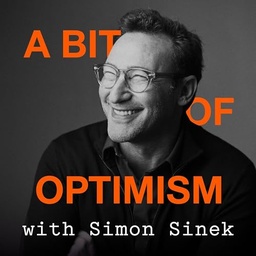
 Simon Sinek
The Man Who Proved Me Right with CEO Bob Chapman and the Barry-Wehmiller Team | A Bit of Optimism
Simon Sinek and Bob Chapman on bob Chapman shows business can create human value at scale.
In this episode of Simon Sinek, featuring Simon Sinek and Bob Chapman, The Man Who Proved Me Right with CEO Bob Chapman and the Barry-Wehmiller Team | A Bit of Optimism explores bob Chapman shows business can create human value at scale Bob Chapman reframes leadership as stewardship of “someone’s precious child,” shifting business from extracting value to creating human value alongside economic results.
At a glance
WHAT IT’S REALLY ABOUT
Bob Chapman shows business can create human value at scale
- Bob Chapman reframes leadership as stewardship of “someone’s precious child,” shifting business from extracting value to creating human value alongside economic results.
- Barry-Wehmiller operationalizes care through an internal “university” that teaches empathetic listening, recognition, and a culture of service—voluntarily—with ripple effects into families and communities.
- Employees describe tangible culture change: psychological safety, mutual support, and empowerment (e.g., frontline operators trusted to choose major capital equipment), which increases ownership and performance.
- Chapman argues layoffs reflect leadership and business-model failure, citing Barry-Wehmiller’s response to the 2008 crisis and the downstream fear and harm layoffs create.
- The episode positions work as a major driver of health outcomes and social cohesion, contending that leaders must be taught how to care and that business education should include human skills.
IDEAS WORTH REMEMBERING
7 ideasThe lens you use to see people determines how you lead them.
Chapman’s turning point was realizing each employee is “someone’s precious child,” which transforms leadership from managing labor to caring for human beings whose lives are in your hands for 40 hours a week.
Caring isn’t a personality trait; it’s a teachable capability.
Barry-Wehmiller treats listening, recognition, and service as trainable skills—like learning a language—rather than hoping managers will “just care,” and the training is designed to create self-reflection and behavioral change.
Empathetic listening is a foundational performance and life skill.
The goal is listening without judgment to validate another’s worth; Chapman notes that the overwhelming feedback was not workplace benefits but improved marriages and parenting, indicating workplace practices reshape home life.
Culture change sticks when it’s invitational, not forced.
Instead of “assigned-day” change management, BW invites participation in voluntary classes; stories like Randall Fleming’s show skepticism dissolves when people experience consistent behavior over time.
Psychological safety is part of the leader’s business model, not a perk.
Chapman frames safety as the ability to plan a life—raise a family, buy a home—without fear of being discarded, and argues leaders must design operations so people can “trust in my care.”
Layoffs create human harm and organizational fear, and should signal leadership failure.
Chapman argues layoffs are normalized through dehumanizing language (“right-sizing”), but they damage both those laid off and survivors who learn to keep their heads down; BW’s stance is to seek alternatives (e.g., during 2008) rather than default to cutting people.
Empowerment increases ownership, quality, and cost discipline.
Frontline experts were entrusted to help select major equipment, resulting in better decisions and stronger buy-in; the underlying claim is that people closest to the work protect value because it becomes “their machine,” “their place,” and “their team.”
WORDS WORTH SAVING
7 quotes“You can retire from a job, but you cannot retire from a calling.”
— Bob Chapman
“The lens through which you see people affects the way you treat people.”
— Bob Chapman
“We don’t know how to listen… we’re taught to speak and debate, but we’re not taught to listen.”
— Bob Chapman
“You can’t ask people to care. You have to teach them how to care.”
— Bob Chapman
“Layoffs are a broken part of our society. It means your business model failed.”
— Bob Chapman
“We’ve been talking about our product for the last hour and a half. It’s our people.”
— Bob Chapman
“I can no longer be accused of being a crazy idealist because what I imagine exists in reality.”
— Simon Sinek
QUESTIONS ANSWERED IN THIS EPISODE
5 questionsWhat specifically happens in Barry-Wehmiller’s empathetic listening class (exercises, rules, and practices) that makes it feel different from typical “communication training”?
Bob Chapman reframes leadership as stewardship of “someone’s precious child,” shifting business from extracting value to creating human value alongside economic results.
In 2008, if orders dropped 30% and you didn’t lay people off, what concrete financial/operational mechanisms did you use instead (reduced hours, redeployment, pay adjustments, inventory strategy, etc.)?
Barry-Wehmiller operationalizes care through an internal “university” that teaches empathetic listening, recognition, and a culture of service—voluntarily—with ripple effects into families and communities.
Chapman calls layoffs a leadership failure—how should leaders handle truly existential downturns where payroll cannot be met without external capital?
Employees describe tangible culture change: psychological safety, mutual support, and empowerment (e.g., frontline operators trusted to choose major capital equipment), which increases ownership and performance.
How does Barry-Wehmiller measure whether “Truly Human Leadership” is working beyond anecdotes—what metrics track safety, engagement, retention, internal mobility, and wellbeing?
Chapman argues layoffs reflect leadership and business-model failure, citing Barry-Wehmiller’s response to the 2008 crisis and the downstream fear and harm layoffs create.
Randall describes becoming “180 degrees” different as a person—what parts of the work environment most commonly create anger or withdrawal, and what are the first changes leaders should make to reverse it?
The episode positions work as a major driver of health outcomes and social cohesion, contending that leaders must be taught how to care and that business education should include human skills.
EVERY SPOKEN WORD
Install uListen for AI-powered chat & search across the full episode — Get Full Transcript
Get more out of YouTube videos.
High quality summaries for YouTube videos. Accurate transcripts to search & find moments. Powered by ChatGPT & Claude AI.
Add to Chrome