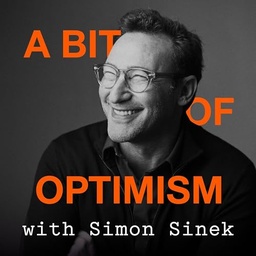
 Simon Sinek
The Business Case for Good Manners with etiquette coach William Hanson | A Bit of Optimism Podcast
Simon Sinek and William Hanson on good manners boost relationships, careers, and trust through everyday consideration.
In this episode of Simon Sinek, featuring Simon Sinek and William Hanson, The Business Case for Good Manners with etiquette coach William Hanson | A Bit of Optimism Podcast explores good manners boost relationships, careers, and trust through everyday consideration Hanson reframes etiquette as practical, selfless behavior that puts others first rather than signaling class or sophistication.
At a glance
WHAT IT’S REALLY ABOUT
Good manners boost relationships, careers, and trust through everyday consideration
- Hanson reframes etiquette as practical, selfless behavior that puts others first rather than signaling class or sophistication.
- Small behaviors—like saying please/thank you, listening well, and avoiding conversational one-upmanship—create outsized trust and likability effects.
- Business etiquette has real financial and career consequences, from promotion readiness to cross-cultural protocol mistakes that can kill deals.
- Etiquette rules should evolve with society, cuisine, workplace norms, and post-COVID boundaries, while preserving the core aim of consideration.
- They discuss tactful ways to handle others’ annoying public behaviors (noise, devices, speakerphone) and to disagree without forcing consensus.
IDEAS WORTH REMEMBERING
7 ideasEtiquette is fundamentally about making other people feel they matter.
Hanson repeatedly grounds manners in selflessness—prioritizing others’ comfort (e.g., serving others first, minimizing disruptive behaviors) rather than performing “poshness.”
Stop “story-matching”; ask follow-up questions instead.
In networking, dating, and client conversations, people often listen only to find a competing or parallel story; Hanson argues curiosity and follow-ups build rapport faster and feel less insecure and exhausting.
Minor dining behaviors can materially affect careers.
A CFO candidate’s “noise,” open-mouth chewing, and self-first serving signaled poor interpersonal awareness; polishing these basics removed friction and improved perceived leadership readiness.
In business etiquette, rank overrides age and gender.
Hanson contrasts social precedence (e.g., honoring an elder) with professional settings where hierarchy/role determines introductions, reflecting modern norms around equality and workplace relevance.
Cross-cultural protocol errors can destroy deals—train proactively, not after disaster.
He cites an American bank losing negotiations in Japan after greeting the #2 before the #1; companies often only invest in etiquette once a mistake hits the bottom line.
Post-COVID etiquette is trending toward clearer boundaries in greetings.
They criticize default first-meeting hugs (“I’m a hugger”) as forced familiarity; the better approach is earning closeness over time and allowing space for different comfort levels.
Correcting strangers’ disruptive behavior works best with calm politeness and context.
For theaters/planes/restaurants, Hanson recommends a polite request with a friendly tone (and sometimes a soft preface) to avoid letting frustration turn the interaction “tart,” while accepting some situations may require staff intervention.
WORDS WORTH SAVING
5 quotesManners are about making other people feel like they matter.
— Simon Sinek
Putting themselves first… that’s really what manners are about, is just putting other people first before you.
— William Hanson
Ask a follow-up question… people are obsessed with trying to match or beat the story, and it becomes competitive.
— William Hanson
If you’re gonna hug them on the first time, what are you doing the second time you meet them?
— William Hanson
You don’t have to comment on everything. You don’t have to have a reaction to everyone else’s reactions.
— William Hanson
QUESTIONS ANSWERED IN THIS EPISODE
5 questionsIn practical terms, what are your top 5 “low-effort, high-impact” manners that most improve someone’s professional presence in the first 60 seconds?
Hanson reframes etiquette as practical, selfless behavior that puts others first rather than signaling class or sophistication.
Where’s the line between healthy rapport-building (sharing similar experiences) and the “story-matching” that Hanson says feels competitive—how can listeners tell in the moment?
Small behaviors—like saying please/thank you, listening well, and avoiding conversational one-upmanship—create outsized trust and likability effects.
In cross-cultural business settings, what’s the minimum research a team should do before an international meeting to avoid the Osaka-style hierarchy mistake?
Business etiquette has real financial and career consequences, from promotion readiness to cross-cultural protocol mistakes that can kill deals.
How should a “non-hugger” gracefully respond to “I’m a hugger” without sounding cold—what exact phrases work best in American vs British contexts?
Etiquette rules should evolve with society, cuisine, workplace norms, and post-COVID boundaries, while preserving the core aim of consideration.
Hanson says etiquette rules must evolve; which traditional rules should be retired now, and which ones are timeless because they protect others’ comfort?
They discuss tactful ways to handle others’ annoying public behaviors (noise, devices, speakerphone) and to disagree without forcing consensus.
EVERY SPOKEN WORD
Install uListen for AI-powered chat & search across the full episode — Get Full Transcript
Get more out of YouTube videos.
High quality summaries for YouTube videos. Accurate transcripts to search & find moments. Powered by ChatGPT & Claude AI.
Add to Chrome