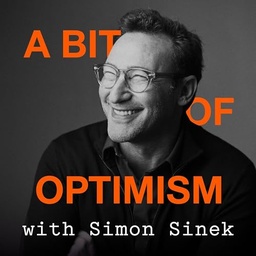
 Simon Sinek
Simon Goes Nuclear with nuclear energy influencer Isabelle Boemeke | A Bit of Optimism Podcast
Simon Sinek and Isabelle Boemeke on rebranding nuclear power as climate solution for an AI-hungry world.
In this episode of Simon Sinek, featuring Isabelle Boemeke and Simon Sinek, Simon Goes Nuclear with nuclear energy influencer Isabelle Boemeke | A Bit of Optimism Podcast explores rebranding nuclear power as climate solution for an AI-hungry world Boemeke argues nuclear power’s negative public perception stems primarily from its origins in WWII weapons development, cementing an emotional fear-based “brand” rather than a science-based risk assessment.
At a glance
WHAT IT’S REALLY ABOUT
Rebranding nuclear power as climate solution for an AI-hungry world
- Boemeke argues nuclear power’s negative public perception stems primarily from its origins in WWII weapons development, cementing an emotional fear-based “brand” rather than a science-based risk assessment.
- They walk through Three Mile Island, Chernobyl, and Fukushima to show how the most infamous incidents are often misunderstood in terms of deaths, radiation impacts, and the role of design flaws and political mismanagement.
- The conversation frames nuclear electricity as a high-density, low-emissions complement to renewables, particularly as AI and data centers dramatically increase electricity demand.
- Boemeke explains how cost escalations and overregulation—amplified by politics and lobbying—helped make nuclear uneconomic in places like the U.S., enabling critics to claim it is “too expensive.”
- Boemeke describes creating her “Isodope” persona to translate complex nuclear information into engaging social media content, citing improving public opinion metrics as evidence that attitudes are shifting.
IDEAS WORTH REMEMBERING
7 ideasNuclear’s biggest obstacle is psychological, not technical.
Boemeke calls the “original sin” the 1938 Germany discovery and wartime weaponization, which emotionally fused “nuclear” with bombs and the Cold War—making later fact-based safety arguments hard to hear.
The three famous nuclear accidents are real—but widely misinterpreted.
They distinguish Three Mile Island as an incident with no radiation-linked deaths, Chernobyl as a tragedy worsened by flawed design and Soviet secrecy, and Fukushima as a disaster driven by tsunami-related backup power failure with no radiation deaths but significant evacuation-related fatalities.
Risk comparisons change when you include fossil fuels’ everyday harm.
Boemeke contrasts nuclear incidents with the routine health toll of air pollution from fossil fuels (millions of deaths annually), arguing nuclear’s downside risk is perceived as larger than its statistical danger.
Exploding electricity demand (especially from AI) strengthens the nuclear case.
They argue efficiency gains won’t erase the scale effect: AI queries and data-center training workloads increase power needs substantially, pushing even non-climate-motivated companies to seek firm, high-output electricity sources.
Nuclear’s U.S. cost problem is partly self-inflicted through policy and project risk.
Boemeke notes nuclear was once economic, but shifting regulations, financing difficulties, and post–Three Mile Island cancellations created a spiral where projects went over budget—then critics cited high costs as the reason to avoid nuclear.
“100% renewables everywhere” is a geography problem, not just an ideology debate.
They argue solar-heavy strategies can work in places like California, while countries with less sun/hydro (e.g., Germany) face tougher constraints—making nuclear a pragmatic complement rather than a competitor.
Public sentiment may be moving because younger generations lack Cold War conditioning.
Boemeke suggests younger audiences don’t carry the same visceral nuclear-war association, and she cites a rise in U.S. pro-nuclear opinion (49% to 61% over five years) as evidence of a shifting narrative.
WORDS WORTH SAVING
5 quotesIf you truly, truly, truly care about global warming and climate change and saving the environment, take fewer selfies.
— Simon Sinek
The number one reason—and that's the original sin—is that nuclear fission was discovered in 1938 in Germany. Full stop.
— Isabelle Boemeke
The confirmed number of fatalities is less than 100, period.
— Isabelle Boemeke
We would need to have 200 Chernobyls a year for nuclear to be as dangerous as fossil fuels.
— Isabelle Boemeke
It blows my mind that the whole resistance to nuclear has nothing to do with science, it has everything to do with branding.
— Simon Sinek
QUESTIONS ANSWERED IN THIS EPISODE
5 questionsBoemeke says the “original sin” is 1938 Germany—what other specific moments (media, politics, industry) most entrenched nuclear fear after WWII?
Boemeke argues nuclear power’s negative public perception stems primarily from its origins in WWII weapons development, cementing an emotional fear-based “brand” rather than a science-based risk assessment.
On Chernobyl, you cite ~4,000 potential cancer deaths: which studies are you relying on, and what are the biggest uncertainties in attributing cancers to the event?
They walk through Three Mile Island, Chernobyl, and Fukushima to show how the most infamous incidents are often misunderstood in terms of deaths, radiation impacts, and the role of design flaws and political mismanagement.
Fukushima had major evacuation-related fatalities—what policy changes would you recommend to prevent evacuation decisions from causing more harm than radiation risk?
The conversation frames nuclear electricity as a high-density, low-emissions complement to renewables, particularly as AI and data centers dramatically increase electricity demand.
You argue overregulation helped make nuclear expensive; which regulations would you change first without reducing safety, and how would you prove safety is maintained?
Boemeke explains how cost escalations and overregulation—amplified by politics and lobbying—helped make nuclear uneconomic in places like the U.S., enabling critics to claim it is “too expensive.”
If big reactors are your preferred U.S. path, what’s your view on the most realistic financing model (regulated utility, federal backing, private hyperscalers, or public-private hybrids)?
Boemeke describes creating her “Isodope” persona to translate complex nuclear information into engaging social media content, citing improving public opinion metrics as evidence that attitudes are shifting.
EVERY SPOKEN WORD
Install uListen for AI-powered chat & search across the full episode — Get Full Transcript
Get more out of YouTube videos.
High quality summaries for YouTube videos. Accurate transcripts to search & find moments. Powered by ChatGPT & Claude AI.
Add to Chrome