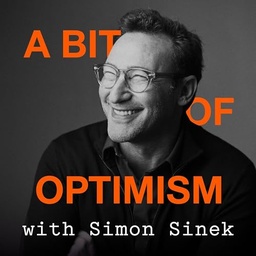
 Simon Sinek
Matthew McConaughey on How to Fall Back in Love with Your Life | A Bit Of Optimism
Simon Sinek and Matthew McConaughey on mcConaughey on reinvention, journaling, and self-curiosity as superpower.
In this episode of Simon Sinek, featuring Matthew McConaughey and Simon Sinek, Matthew McConaughey on How to Fall Back in Love with Your Life | A Bit Of Optimism explores mcConaughey on reinvention, journaling, and self-curiosity as superpower McConaughey explains how he escaped the “rom-com box” by saying no for years, accepting financial and status tradeoffs, and using independent projects to prove a new creative identity.
At a glance
WHAT IT’S REALLY ABOUT
McConaughey on reinvention, journaling, and self-curiosity as superpower
- McConaughey explains how he escaped the “rom-com box” by saying no for years, accepting financial and status tradeoffs, and using independent projects to prove a new creative identity.
- They argue that successful reinvention often requires carrying the risk first—reducing others’ perceived downside so the market can “see” your new capabilities.
- McConaughey reframes humility as “admitting you have more to learn,” distinguishing confident initiative from either arrogance or performative modesty.
- The conversation examines the paradox of selfishness and selflessness, concluding that healthy behavior requires continual check-ins with both self and others.
- Journaling and sustained time in discomfort are presented as practical tools for turning shame into insight and cultivating the self-curiosity that keeps life and work feeling alive.
IDEAS WORTH REMEMBERING
7 ideasReinvention works when you absorb the risk before others have to.
McConaughey’s pivot required going “off-market,” turning down easy offers, and taking lower-paid independent roles so studios could later trust him in dramas; Sinek generalizes this as reducing the decision-maker’s downside first.
Use “proof projects” to help people imagine you differently.
Like staging an empty house, indies and smaller opportunities can make a new identity visible; once someone influential sees it (e.g., a risk-tolerant director), the broader market follows.
Define humility in a way that strengthens action, not self-erasure.
McConaughey’s shift—from shoulders-down modesty to “I have more to learn” honesty—lets him act decisively while staying open to others, avoiding both arrogance and false politeness.
Balance self and group by running dual check-ins.
Sinek frames selfish/selfless choices as an everyday paradox; the practical resolution is consistent self-checks (is this right for me?) plus external checks (how is this landing on others?).
Discomfort is transformative only if you stay in it long enough to metabolize it.
McConaughey describes enduring loneliness in Australia and later the “hell” of rereading old journals until shame flipped into laughter and learning—suggesting growth comes after the initial urge to flee.
Resilience can become a trap if it normalizes repeated mistakes.
His line about getting comfortable with yesterday’s discomfort can create “repeat offender” behavior—getting up repeatedly without asking why you keep stepping into the same pattern.
Journaling converts fleeting moments into usable truth and pattern recognition.
He journals to “catch the truth,” memorialize insights before they vanish, and track what works when life is good—not only when it’s falling apart—so he can engineer repeatable improvement.
WORDS WORTH SAVING
5 quotes“My life has been more getting comfortable with what I was uncomfortable with yesterday than changing what I was uncomfortable with yesterday.”
— Matthew McConaughey
“When you have that sort of resilience, you’re a repeat offender… instead of ever stopping to go, ‘Why do I keep stepping in that same pile?’”
— Matthew McConaughey
“Humility [is] admitting we have more to learn.”
— Matthew McConaughey
“You have to be willing to bear some of the cost of their risk.”
— Simon Sinek
“I write stuff down so I can forget it.”
— Matthew McConaughey
QUESTIONS ANSWERED IN THIS EPISODE
5 questionsIn your rom-com exit, what were the specific “no” rules you used to decide which offers were misaligned, and how did you stick to them for two years without panicking?
McConaughey explains how he escaped the “rom-com box” by saying no for years, accepting financial and status tradeoffs, and using independent projects to prove a new creative identity.
When you say people need their “house staged” to imagine your reinvention, what are 2–3 concrete ways a non-celebrity can stage that proof inside a company (without quitting)?
They argue that successful reinvention often requires carrying the risk first—reducing others’ perceived downside so the market can “see” your new capabilities.
You describe resilience creating “repeat offender” patterns—what are your personal red flags that tell you grit has flipped into avoidance of the real lesson?
McConaughey reframes humility as “admitting you have more to learn,” distinguishing confident initiative from either arrogance or performative modesty.
How did taking a lower fee in indie projects change your leverage and creative control—did it buy you freedom, or did it introduce new constraints?
The conversation examines the paradox of selfishness and selflessness, concluding that healthy behavior requires continual check-ins with both self and others.
Your redefinition of humility clicked when you found the right wording; what other words (e.g., “discipline,” “success,” “ambition”) have you had to re-define to live better?
Journaling and sustained time in discomfort are presented as practical tools for turning shame into insight and cultivating the self-curiosity that keeps life and work feeling alive.
EVERY SPOKEN WORD
Install uListen for AI-powered chat & search across the full episode — Get Full Transcript
Get more out of YouTube videos.
High quality summaries for YouTube videos. Accurate transcripts to search & find moments. Powered by ChatGPT & Claude AI.
Add to Chrome