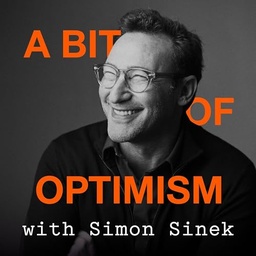
 Simon Sinek
Humble Leaders Lead Better Teams with Retired Navy SEAL Jocko Willink | A Bit of Optimism Podcast
Simon Sinek and Jocko Willink on jocko Willink on humility, trust, and leading teams effectively.
In this episode of Simon Sinek, featuring Jocko Willink and Simon Sinek, Humble Leaders Lead Better Teams with Retired Navy SEAL Jocko Willink | A Bit of Optimism Podcast explores jocko Willink on humility, trust, and leading teams effectively Willink argues that leadership principles from the SEAL Teams translate directly to civilian organizations because people are people regardless of mission or industry.
At a glance
WHAT IT’S REALLY ABOUT
Jocko Willink on humility, trust, and leading teams effectively
- Willink argues that leadership principles from the SEAL Teams translate directly to civilian organizations because people are people regardless of mission or industry.
- He explains how humility keeps a leader open-minded, preventing closed, ego-driven planning that kills team ownership and initiative.
- The conversation contrasts tyrannical “garrison” leadership that can look effective in low-chaos settings with adaptive, trust-based leadership required in uncertainty and combat.
- Willink shares a mutiny story to illustrate how arrogance erodes followership, while respectful humility earns commitment and discretionary effort.
- They emphasize that high performance comes primarily from relationships—trust, listening, respect, influence, and care—more than from individual “hero” competence.
IDEAS WORTH REMEMBERING
7 ideasLeadership lessons transfer because human nature is constant.
Willink’s biggest post-military realization is that the same leadership dynamics show up in sales teams, construction sites, and SEAL platoons—motivation, trust, and ownership matter everywhere.
Humility is a performance tool, not a personality trait.
Believing others may have better ideas keeps your mind open, improves the plan, and increases buy-in; ego closes the mind and creates compliance without ownership.
You don’t need to prove you’re in charge; you must prove you deserve trust.
For junior leaders especially, credibility comes from listening, making sound decisions, backing the team, and showing genuine care—not from asserting authority or claiming ideas.
Authoritarian leadership can look good in “inspection mode” but fails in chaos.
Tyrannical leaders can produce polished short-term outcomes in stable environments, yet the same closed mindset collapses when variables change and adaptation is required.
When a leadership vacuum appears, pause—then act with the smallest decision.
Willink intentionally lets the silence be felt so others can step up, then makes a minimal, iterative decision that moves the team forward while preserving flexibility and learning.
Decisiveness doesn’t require big bets; it often starts with small moves.
In combat and business alike, “small decisions” (e.g., gather information, reposition, clarify ownership) signal control and momentum without committing prematurely to high-risk paths.
Relationships can be operationalized into five components.
Willink defines relationships as trust, listen, respect, influence, and care—each reciprocal; ego is the primary blocker because it resists giving what it demands from others.
WORDS WORTH SAVING
5 quotesThere’s no one that’s an uber mensch in the SEAL teams.
— Jocko Willink
You have nothing to prove, but you have everything to prove.
— Jocko Willink
If you want people to listen to you, you have to listen to them.
— Jocko Willink
The biggest obstacle to all those things is my ego.
— Jocko Willink
The more you talk, the less people listen.
— Jocko Willink
QUESTIONS ANSWERED IN THIS EPISODE
5 questionsWillink says SEAL leadership translates almost perfectly to business—what are the few edge cases where it *doesn’t* translate cleanly (e.g., incentives, firing, risk tolerance)?
Willink argues that leadership principles from the SEAL Teams translate directly to civilian organizations because people are people regardless of mission or industry.
In the mutiny story, what specific behaviors signaled “ego and arrogance” early—and what could that leader have done in the first two weeks to recover trust?
He explains how humility keeps a leader open-minded, preventing closed, ego-driven planning that kills team ownership and initiative.
How can a civilian leader tell the difference between healthy humility and a lack of confidence (especially when stakeholders expect self-promotion)?
The conversation contrasts tyrannical “garrison” leadership that can look effective in low-chaos settings with adaptive, trust-based leadership required in uncertainty and combat.
What does “pause to let the leadership vacuum be felt” look like in fast-paced meetings without letting decisions stall or drift?
Willink shares a mutiny story to illustrate how arrogance erodes followership, while respectful humility earns commitment and discretionary effort.
Can you give a non-combat example of a “small iterative decision” that created momentum on a stuck team without triggering resistance?
They emphasize that high performance comes primarily from relationships—trust, listening, respect, influence, and care—more than from individual “hero” competence.
EVERY SPOKEN WORD
Install uListen for AI-powered chat & search across the full episode — Get Full Transcript
Get more out of YouTube videos.
High quality summaries for YouTube videos. Accurate transcripts to search & find moments. Powered by ChatGPT & Claude AI.
Add to Chrome