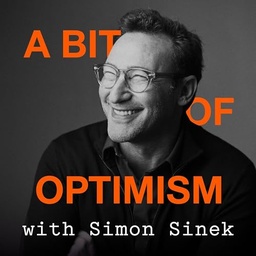
 Simon Sinek
The Climb Out of Pain is Taller Than Everest with Nat Geo photographer Cory Richards PART 1
Simon Sinek and Cory Richards on cory Richards on trauma, Everest, and the deceptive lure of success.
In this episode of Simon Sinek, featuring Simon Sinek and Cory Richards, The Climb Out of Pain is Taller Than Everest with Nat Geo photographer Cory Richards PART 1 explores cory Richards on trauma, Everest, and the deceptive lure of success Cory Richards recounts a winter ascent of Gasherbrum II and surviving an avalanche that catalyzed both his National Geographic fame and a long, delayed reckoning with PTSD.
At a glance
WHAT IT’S REALLY ABOUT
Cory Richards on trauma, Everest, and the deceptive lure of success
- Cory Richards recounts a winter ascent of Gasherbrum II and surviving an avalanche that catalyzed both his National Geographic fame and a long, delayed reckoning with PTSD.
- He traces his “shot nervous system” to complex childhood trauma, bipolar II, violence with his brother, hospitalization, homelessness, and a formative experience of sexual abuse during a runaway period.
- Richards and Sinek argue that climbing and elite achievement can be inherently selfish, often driven by dopamine and external validation that people mistakenly confuse with love or purpose.
- Everest becomes a metaphor for the limits of goal-chasing: reaching the highest point didn’t bring peace, it exposed that there was “nowhere else to go” to escape himself.
- The discussion reframes resilience as values-based response (letting go, curiosity, adaptability) rather than survival-based reaction (gripping, certainty-seeking), extending the idea to a broader mental-health crisis in modern culture.
IDEAS WORTH REMEMBERING
7 ideasCrutches aren’t the enemy—unconscious, destructive crutches are.
Richards frames whiskey/tobacco as self-soothing for a dysregulated nervous system; the key is recognizing coping strategies clearly and ensuring they don’t spiral into harm.
Survival-mode success can amplify inner collapse.
The avalanche image boosted his career, but PTSD kept him in constant survival, driving compulsions (problem drinking, sex addiction) and deep shame beneath a high-stimulation public life.
Secrecy quietly destroys intimacy faster than overt conflict.
Richards calls secrets “the termites of intimacy and love,” arguing the gap between persona and reality eventually becomes unbearable and leads to collapse.
Trauma can create an advantage for extreme environments—and a liability for ordinary life.
He suggests chaotic upbringings can reduce “future forecasting,” which can be “fantastic for extreme sports” but risky for relationships, stability, and long-term wellbeing.
Achievement is often mistaken for purpose; dopamine is mistaken for love.
Both criticize the post-goal crash seen in elite performers (e.g., Olympians), where the high of accomplishment fades and exposes unmet emotional needs.
Everest can be a summit—and a dead end.
Richards’ “rock bottom was the summit of Everest”: once the ultimate goal is reached, the strategy of outrunning oneself stops working and deeper issues surface.
Resilience is response, not reaction—and it depends on values.
They distinguish gritting/holding on (certainty-seeking survival) from letting go (discomfort, curiosity, adaptation); without clear values, people and cultures default to reactive, corrosive behavior.
WORDS WORTH SAVING
5 quotesSecrets are the termites of intimacy and love.
— Cory Richards
My rock bottom was the summit of Everest because I realized there's literally no place else I can go.
— Cory Richards
They confuse purpose with a goal.
— Simon Sinek
Our wounds become our weapons—in both positive and negative ways.
— Cory Richards
Resilience is not about holding on. Resilience is about letting go.
— Cory Richards
QUESTIONS ANSWERED IN THIS EPISODE
5 questionsRichards says he used the camera as a barrier after the avalanche—how has photography shaped (or distorted) his ability to be emotionally present off-mountain?
Cory Richards recounts a winter ascent of Gasherbrum II and surviving an avalanche that catalyzed both his National Geographic fame and a long, delayed reckoning with PTSD.
He describes a decade-long journey from “learning the language” of PTSD to actual “embodiment”—what specifically changed in practice (therapy modalities, community, sobriety work, somatic tools)?
He traces his “shot nervous system” to complex childhood trauma, bipolar II, violence with his brother, hospitalization, homelessness, and a formative experience of sexual abuse during a runaway period.
If climbing is “inherently selfish,” what would a genuinely service-oriented version of his work (photography/expeditions/storytelling) look like today?
Richards and Sinek argue that climbing and elite achievement can be inherently selfish, often driven by dopamine and external validation that people mistakenly confuse with love or purpose.
Richards links trauma to reduced “future forecasting” and extreme-sport aptitude—how can someone keep the strengths (boldness, calm in chaos) while mitigating the relational/health costs?
Everest becomes a metaphor for the limits of goal-chasing: reaching the highest point didn’t bring peace, it exposed that there was “nowhere else to go” to escape himself.
Sinek’s test is “Is the sacrifice worth it?”—how would Richards apply that test to Everest-style objectives when the payoff is partly validation or escape?
The discussion reframes resilience as values-based response (letting go, curiosity, adaptability) rather than survival-based reaction (gripping, certainty-seeking), extending the idea to a broader mental-health crisis in modern culture.
EVERY SPOKEN WORD
Install uListen for AI-powered chat & search across the full episode — Get Full Transcript
Get more out of YouTube videos.
High quality summaries for YouTube videos. Accurate transcripts to search & find moments. Powered by ChatGPT & Claude AI.
Add to Chrome