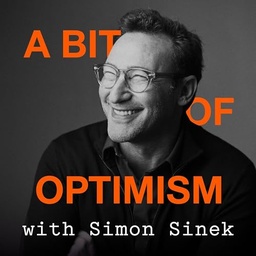
 Simon Sinek
The Myth of the Perfect Meditator with podcaster Jay Shetty | A Bit of Optimism Podcast
Simon Sinek and Jay Shetty on practical monk-inspired habits for rest, meditation, and human connection.
In this episode of Simon Sinek, featuring Simon Sinek and Jay Shetty, The Myth of the Perfect Meditator with podcaster Jay Shetty | A Bit of Optimism Podcast explores practical monk-inspired habits for rest, meditation, and human connection Jay Shetty explains how a mentor’s presence acts as a “multiplier,” deepening the same practices through attentiveness, reflection, and study.
At a glance
WHAT IT’S REALLY ABOUT
Practical monk-inspired habits for rest, meditation, and human connection
- Jay Shetty explains how a mentor’s presence acts as a “multiplier,” deepening the same practices through attentiveness, reflection, and study.
- They argue that rest is essential to high performance, and leaders must model switching off while aligning incentives and self-worth away from constant productivity.
- Shetty describes leaving monk life as a “divorce,” driven by hard-earned self-awareness, physical strain, and a desire to adapt teachings for modern living.
- Three transferable monk lessons are offered: reduce appearance obsession, design spaces/times to condition better habits, and resist artificial life-timeline pressure—especially in your 20s.
- They critique Western distortions of meditation and modern efficiency, warning that tech-driven bluntness and novelty-seeking can dehumanize relationships if it “bleeds” into human interaction.
IDEAS WORTH REMEMBERING
7 ideasModel rest publicly if you want your team to rest.
Shetty notes people switch off more easily when they see leaders do it; he logs out for a month annually, and Sinek uses policies (bonus penalties) to align incentives with true time off.
Separate self-worth from productivity—or rest will feel unsafe.
The hardest barrier isn’t knowing rest helps; it’s identity. Reframing rest as the source of best ideas and creativity can loosen the grip of “I’m only valuable when I’m working.”
Reduce “mirror time” to recover attention for inner life.
With constant self-view on screens, people overanalyze appearance and external perception; Shetty argues lowering exposure helps rebuild trust in your inner voice and reduces superficial decision-making.
Use location and time to classically condition better habits.
“Location has energy and time has memory”: repeating behaviors in consistent places/times (plus cues like scent, sound, and visuals) makes desired routines easier and reduces reliance on willpower.
Design your environment so good choices are the default.
Shetty keeps his phone in a place where he must stand to use it, removes TVs except in one zone, and leaves open books around the home—“tricking yourself” into behaviors you won’t regret.
Meditation isn’t mental perfection; it’s training attention amid thoughts.
They reject the myth that meditation eliminates problems or thoughts; intrusive or negative thoughts are normal, and Western “novelty” features can be acceptable if they keep people practicing consistently.
Don’t let tech efficiency habits dehumanize human relationships.
Speaking to AI and frictionless services can train blunt, controlling communication; Shetty warns to use tech efficiently but prevent that style from “bleeding” into how you treat real people. (The simple fix: acknowledge humans—say hello, please, thank you.)
WORDS WORTH SAVING
5 quotes“It’s like asking someone why did you get divorced… It felt like a divorce.”
— Jay Shetty
“When you rest, you refresh. When you rest, you sharpen. When you rest, you get stronger.”
— Jay Shetty
“Stop looking at your reflection so much.”
— Jay Shetty
“Location has energy and time has memory.”
— Jay Shetty
“You fight how you train.”
— Jay Shetty
QUESTIONS ANSWERED IN THIS EPISODE
5 questionsWhen your teacher “multiplies” you, what exactly is he doing—feedback, presence, standards, or something spiritual—and how can someone replicate that without a mentor at home?
Jay Shetty explains how a mentor’s presence acts as a “multiplier,” deepening the same practices through attentiveness, reflection, and study.
You described leaving monkhood as a divorce and a failure at the time—what helped you reinterpret it as valuable rather than shameful?
They argue that rest is essential to high performance, and leaders must model switching off while aligning incentives and self-worth away from constant productivity.
On the ‘no mirrors’ lesson: what are 3 concrete boundaries you’d recommend for Zoom/selfie culture that don’t require abandoning modern life?
Shetty describes leaving monk life as a “divorce,” driven by hard-earned self-awareness, physical strain, and a desire to adapt teachings for modern living.
If someone lives in a small apartment, what are the highest-impact ways to create distinct ‘energy zones’ (sleep/work/eat) without extra rooms?
Three transferable monk lessons are offered: reduce appearance obsession, design spaces/times to condition better habits, and resist artificial life-timeline pressure—especially in your 20s.
Where is the line between helpful “discipline hacks” (streaks, novelty, paid apps) and turning meditation into another productivity metric?
They critique Western distortions of meditation and modern efficiency, warning that tech-driven bluntness and novelty-seeking can dehumanize relationships if it “bleeds” into human interaction.
EVERY SPOKEN WORD
Install uListen for AI-powered chat & search across the full episode — Get Full Transcript
Get more out of YouTube videos.
High quality summaries for YouTube videos. Accurate transcripts to search & find moments. Powered by ChatGPT & Claude AI.
Add to Chrome